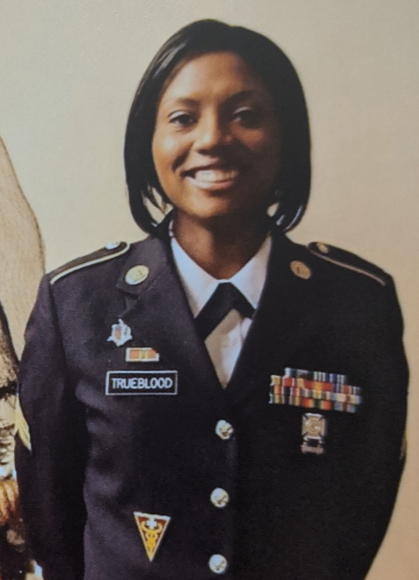
By Philip Yates
Philip Yates: How did you decide to combine working in the military with being a graduate student?
Cameron Trueblood: Honestly, my decision to go to grad school came after my decision to join the military. I joined the military in 2011 and applied to the program in 2013. My interest in how the mind works evolved from my interest in psychology during undergrad. However, after accumulating student loans, joining the army seemed like a good way to pay down my debt. Over the years I grew to really love being in the service, and being a combat medic in the army turned into a second passion of mine.
What kind of work do you do in the military?
I am a health care noncommissioned officer (AKA a medic). So essentially I am a first responder for soldiers. During peace time however, I more serve to manage and guide the soldiers I have under me. When we are called to a mission, my duties can range from working in a clinic, to administration, to working in an emergency room or ICU stateside.
What is it like to combine both disciplines in your training? Has it been difficult to interrupt your training?
Honestly, my background in health care has helped me quite a bit during my years in the graduate program, from simple things like knowing how to suture to the more complex, such as understanding a bit of human anatomy prior to my matriculation. However, my neuroscience discipline has yet to really translate over to my military career. And unfortunately, yes, it has been quite difficult, especially when it comes to returning to my graduate studies after a long military mission. Being a medic is not nearly as mentally challenging as grad school. I had to keep refreshing myself on what I learned in my classes while I completed the mission so I wouldn't fall behind mentally when I returned to Drexel. It's definitely a challenge.
How long is your commitment?
My first contract was for eight years, but I recently completed that contract and signed on for an additional eight years. As I said earlier, being in the military has truly become a second love of mine, so I plan on retiring from the military after 20 years: eight down, 12 to go.
What are your career goals? Do you want to continue to work in military science/health?
Currently, I would like to work for the Department of Defense researching spinal cord injury as a senior research scientist. However, that is a very fluid goal. I am still looking at other career options in the neuroscience field. As for your second question, although I do love being a medic, I must say, that part of my life will more than likely end once I complete the program. In the long run, I plan on merging my neuroscience background with my military career.
What other opportunities are there for graduate students in the military?
For many graduate students who are serving, your expertise can be used in the military, especially those pursuing degrees in the science fields. For example, there are biochemists who not only serve as officers in the Army, but also get to utilize their expertise in the service either as a reservist or active duty. On the other hand, if you prefer to keep your current job in the military, you could work as a DOD civilian in your desired field while still serving.
Additionally, if you have a top-secret security clearance through the military, your options expand exponentially. Whether you decide to merge your two worlds or keep them separate, you have abundant opportunities if you stick with both. So although it is quite challenging to be both a graduate student and a military service member, in the long run it will be worth it. Just make sure you love what you do.