A Choice Not to Get a Vaccine Is Not a Risk-Free Choice
By Riya Kumar, MD ’29
May 8, 2026
At a time in our healthcare system where vaccine mandates are facing increasing scrutiny by both the public and authoritative figures, and vaccine-preventable diseases are beginning to make their comeback in children, a recent keynote address by Dr. Paul Offit gave all of us an urgent and timely message of why vaccine science and prompt vaccination are of the utmost importance. The 2nd Annual Protecting Our Future: World Immunization Week event at Drexel University College of Medicine was organized by first-year medical students Riya Kumar and Ankith Alluri, along with second-year medical students Krisha Shah and Jaclyn Lo. It was co-hosted by the United Nations-Greater Philadelphia Shot@Life campaign, medical and graduate students, and healthcare professionals in the community.
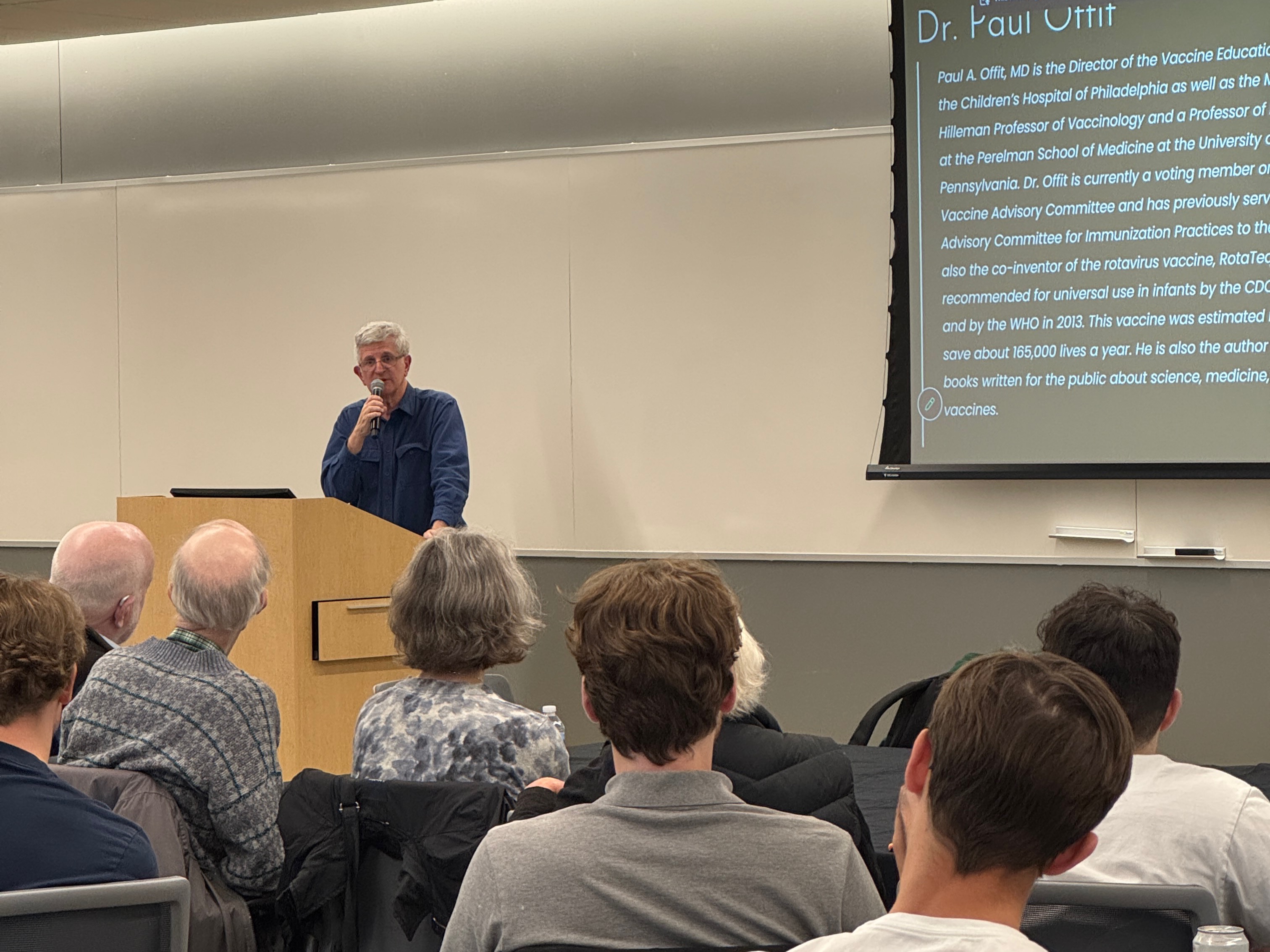
Attendees had an opportunity to hear from Dr. Offit, a nationally recognized pediatric infectious disease specialist who has built his career at the intersection of vaccine science and public health policy, becoming one of the nation’s most visible advocates for evidence-based immunization. It felt deeply personal, and I, as well as other attendees, left the event feeling empowered to promote vaccine equity within our own smaller communities.
As the director of the Vaccine Education Center at the Children’s Hospital of Philadelphia and a former member of the Advisory Committee on Immunization Practices to the Centers for Disease Control and Prevention, Offit gave a speech that kept drawing back to one common theme: the importance of trust. Trust in the science, trust in institutions, and trust between doctors and the communities they serve.
Rather than talking about himself and his own achievements, Offit instead recounted stories from his personal experience and clinical practice, such as patients and families he cared for who chose not to vaccinate, and the consequences they faced, not only medically, but societally. He painted vivid pictures of helpless children and frustrated parents, underscoring the emotions that fueled his patients who chose to circumvent vaccination. Dr. Offit underscored that while public health relies on statistics, it is the stories of children who suffer from vaccine‑preventable disease that most powerfully shape how parents think about vaccines.
He emphasized that to build this trust with the public, you don’t need to agree with those who choose not to vaccinate their children, but you need to understand their perspective at the very least. He reminded us that effective vaccine advocacy does not mean lecturing people into compliance but acknowledging their hesitancy with curiosity and humility and following up with honesty and transparency. It felt like a lesson in the more human side of public health.
A Q&A session followed the speech, with attendees asking questions covering topics such as the extent of child autonomy when their views clash with that of their parents’, how to work in tandem with a doctor who might be against vaccination, how medical students can make an impact with limited autonomy, and what health institutions are doing to advise patients on immunization benefits. Offit responded with the same sort of candor and clarity that he showed in his speech, emphasizing that vaccination is not an individual choice, but a shared responsibility, to protect people and communities.
Today, Dr. Offit is still making strides within the vaccination world. He is a professor of vaccinology at the Perelman School of Medicine at the University of Pennsylvania and remains an attending physician and director of the Vaccine Education Center at the Children’s Hospital of Philadelphia, where he oversees the creation of evidence‑based materials for parents and clinicians alike. Alongside his clinical and academic work, he writes and speaks widely on vaccine science and public trust, using platforms like his Substack “Beyond the Noise” and frequent media appearances to respond to emerging vaccine controversies and misinformation. Despite all the noise in today’s world, his mission is to continue to be a voice that speaks out for evidence‑based medicine and vaccine advocacy, and against misinformation and anti‑vaccine rhetoric.
He left us all with a drive that enabled us to see the bigger picture, beyond memorizing drug names and vaccine schedules, to understand that we are the future frontline workers in our communities. As we left the event, conversations turned to how we might talk to patients differently, how we might listen more closely to their concerns, and how we might use our future practices and platforms to promote vaccine confidence rather than simply defend policy.
We were fortunate enough to be able to purchase some of Dr. Offit’s books to raffle off, so many attendees left with a copy of his book, a memento to symbolize their newfound call to action. I personally was fortunate to grab a copy of his book “Vaccinated: From Cowpox to mRNA, the Remarkable Story of Vaccines,” which I am looking forward to reading to ingrain even more of his words into the way I go about my interactions with patients in the future.
Ultimately, Dr. Offit left us with a sense of optimism and hopefulness for the future. Even though the current landscape is far from ideal, we have the power to enact change in a way that honors both science and humanity. And that’s deeply motivating.