A Fraction of a Percent: Why That Number Should Concern All of Us
By Ankith Alluri, MD ’29
April 28, 2026
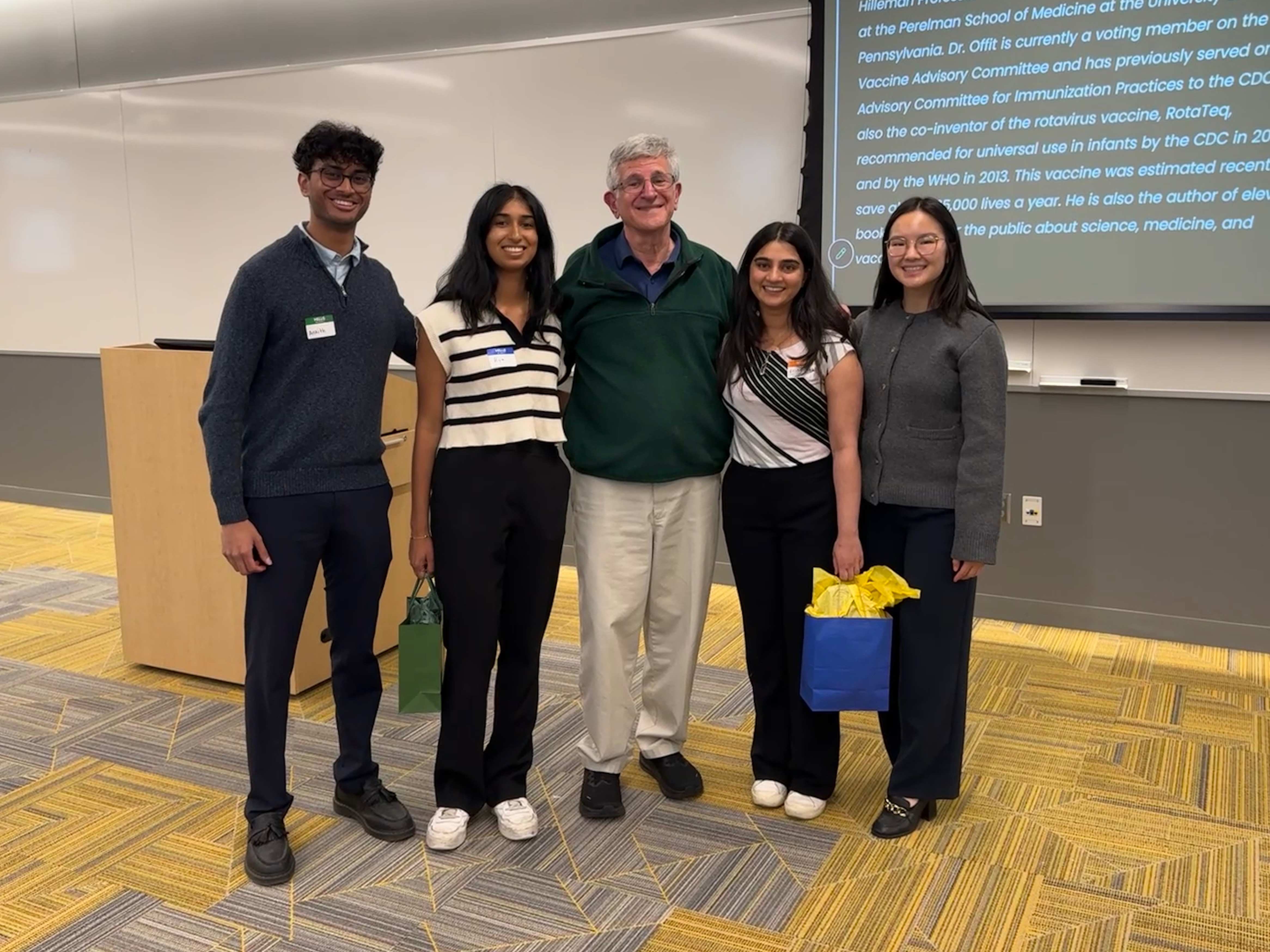
On April 28, 2026, medical students, undergraduate students and healthcare advocates gathered for an advocacy workshop co-led by Shot@Life champions Jaclyn Lo, MD ’27, Krisha Shah, MD ’28, Ankith Alluri, MD ’29 and Riya Kumar, MD ’29. Lo and Shah bring years of experience with the U.N.-affiliated organization to the table, while Alluri and Kumar are newer affiliates who rounded out a team that balanced seasoned expertise with fresh perspective.
The workshop opened with a question that stopped the room cold.
"How much of U.S. global investment do you think goes toward vaccines?" Shah asked. Audience members called out numbers, all of them far too generous. One attendee, sensing something was off, hedged: a fraction of a percent. They were right. That moment set the tone for everything that followed.
Lo built on that revelation, walking the room through why vaccines remain one of the most cost-effective public health interventions we have, returning over $50 in value for every $1 invested. More than a moral argument, she framed it as a practical one: Lawmakers respond to pragmatism. Advocates who lead with return on investment, not just human welfare, tend to get further in the room.
From there, the workshop expanded into the broader landscape of global vaccine equity, covering the partner organizations that make it possible, among them UNICEF, WHO, CDC and Gavi, and the ones that no longer can, including USAID, recently dismantled by the current administration. The picture they painted was urgent. Funding is at historic lows, and silence from constituents gets interpreted as indifference.
That's where medical students come in. The organizers emphasized the unique place medical professionals hold in this. As future clinicians, we carry credibility with lawmakers that most constituents don't. Our voices aren't just welcome in these conversations. They carry weight.
What the workshop did particularly well was to refuse to leave it there. The organizers handed out scripts, talking points, practical tips and direct resources specifically designed to lower the barrier to entry. The message was clear: Advocacy isn't reserved for people with extra time or existing connections. It's accessible to anyone willing to make a phone call or send an email.
By the end, the room felt different. People who came in as observers left as potential advocates — equipped, not just inspired.
That shift didn't happen by accident. Lo's commitment to Shot@Life stretches back years, and she has made attending the annual Champion Summit in Washington, D.C., a standing priority, even through the grind of third-year rotations. She has also taken her advocacy internationally, traveling to Switzerland to help organize a Model WHO conference.
Shah followed that tradition, attending the 2025 Champion Summit and continuing to support the cause in other capacities. Now, Alluri and Kumar are carrying it forward, with the goal of making vaccine equity advocacy a lasting presence at Drexel and across the Greater Philadelphia region throughout their remaining years in medical school.
The work of giving every child a Shot@Life doesn't end when the workshop does. It starts there.