Office of Research & Innovation Newsletter - Autumn 2026

In this issue:
An Introduction from Aleister Saunders, Executive Vice Provost for Research & Innovation
General
- Celebrating and Welcoming ORI Team Members
- Novelution Update: Where We Are and What’s Next
- STAR Students Showcase Summer Studies
- Reminder: Don’t Pay to Publish Open Access
- Connect with Your Drexel Subject Librarian
Applied Innovation
Research Compliance & Regulatory Affairs
- ORI Guidance and Procedure Update
- New and Updated HRPP Website Guidance
- New Responsible Conduct of Research Training Requirement Coming January 2027
- New Training Available: Certificates of Confidentiality
- ClinCard Is Now CCPay
- Building a Culture of Research Integrity: 2026 Responsible Conduct of Research Training Day
Sponsored Programs
Did You Know?
Other Research Training, Education, and Meeting Opportunities
Stay Connected with the Office of Research & Innovation!
An Introduction from Aleister Saunders, Executive Vice Provost for Research & Innovation
A Moment to Reflect, and to Look Ahead
As I write this introduction to our Autumn 2026 newsletter, I do so with a particular sense of gratitude and reflection. This will be my final newsletter as leader of Drexel’s Office of Research & Innovation. Transitions naturally invite us to look back, but they also offer an opportunity to look ahead. For me, this moment is less about taking stock of my individual tenure than about recognizing what we have built together, what we have learned along the way, and the extraordinary potential of Drexel’s research and innovation community.
I am deeply proud of what we have accomplished together.
During my time in this role, I have had the privilege of seeing Drexel’s research enterprise from a remarkable vantage point. Every day, our faculty, students and professional staff ask important questions, develop new technologies and creative approaches, build partnerships, translate discoveries, and apply their expertise to problems that matter. Equally important are the many people whose work, often behind the scenes, makes those efforts possible.
That spirit of collaboration has shaped our work in ORI. Together, we have sought to strengthen the infrastructure supporting research, build connections across disciplines and academic units, expand opportunities for collaboration and innovation, and develop partnerships extending well beyond the University. We have worked to ensure that our systems and practices support both the ambitions of our researchers and our responsibilities for integrity, compliance and stewardship. Throughout, we have continued to ask a fundamental question: How can we make it easier for members of the Drexel community to pursue great ideas and translate them into meaningful impact?
Our progress has not followed a straight line, nor has it come without challenges.
The environment for university research has grown increasingly complex. Changes in federal priorities, funding pressures, expanding regulatory and research-security expectations, rapid technological change, and institutional transitions have required us to continually adapt. We have faced difficult decisions and periods of uncertainty. Some challenges tested our systems and processes; others tested our resilience and our willingness to reconsider familiar ways of working.
I believe it is important to be clear-eyed about those experiences. Leadership is not about pretending difficulties did not occur. What matters is how a community responds to them. Time and again, I have seen colleagues across Drexel respond with creativity, persistence, professionalism and a willingness to solve problems together. We have learned from what worked and from what did not. We have adapted, strengthened relationships and continued moving forward.
Perhaps the lesson I will carry most strongly from this role is that research and innovation depend on an ecosystem.
A potentially transformative idea may begin with an individual investigator, a student, a laboratory or a conversation between colleagues. Turning that idea into impact requires much more. It requires collaborators across disciplines; staff who can navigate increasingly complex administrative and regulatory environments; colleges and schools willing to work across traditional boundaries; and relationships with government, industry, foundations, communities and other universities that allow ideas to travel farther than they could on their own.
ORI is one part of that ecosystem. Our greatest measure of success has never been the success of the office itself. It is the success we enable in others: helping a researcher pursue an important award, supporting a team building a new collaboration, connecting an idea with a partner, protecting the integrity of the research enterprise, helping an innovation move toward application, or creating the conditions in which the next generation of researchers and innovators can thrive.
To my ORI colleagues, I want to express my deepest gratitude. I have seen firsthand the expertise, dedication and care you bring to Drexel every day. I am extraordinarily proud to have served alongside you. I am equally grateful to our faculty, students, academic leaders, administrative colleagues and external partners. You have challenged us, partnered with us, trusted us and helped us become better. The relationships built through that work are among the accomplishments I value most.
As I conclude this chapter of my service to ORI, I do so proud of what we have accomplished, clear-eyed about the challenges that remain, and genuinely optimistic about what comes next. Drexel possesses extraordinary intellectual talent, deeply committed staff, an entrepreneurial spirit, and a longstanding instinct to put knowledge to work in service of society. Those strengths belong not to any one office or leader, but to this entire community.
It has been one of the great privileges of my career to help steward this research and innovation enterprise. I leave this role with profound gratitude for the people who have shared that responsibility with me, confidence in those who will carry the work forward, and excitement for all that Drexel’s research and innovation community has yet to accomplish.
Questions? Please email Aleister Saunders, Executive Vice Provost for Research & Innovation, at aleister.j.saunders@drexel.edu.
General
Celebrating and Welcoming ORI Team Members
Congratulations to the following ORI staff who recently received well-deserved promotions!
-
Stacy Bailey Steps into New Role as Lead Subawards Officer
The Office of Sponsored Programs is pleased to announce the promotion of Stacy Bailey to the role of Lead Subawards Officer. Stacy has been a valued member of the Drexel community for many years, most recently serving as a Contracts Coordinator. Her expertise, dedication, and commitment to service have made a lasting impact, and we are excited to see her take on this new opportunity.
With Stacy’s transition to her new role, OSP now has an opening for a Research Administrative Coordinator position and is currently recruiting to fill this vacancy. The department looks forward to welcoming a new team member to support their growing operations.
-
Carissa Miller Expands Support for Drexel's IACUC and IBC Programs
The Office of Research & Innovation is pleased to congratulate Carissa Miller on her promotion to Research Compliance Coordinator II.
Since joining ORI in 2023, Carissa has been a valued member of the team, providing exceptional support for a variety of research compliance and administrative initiatives. In her expanded role, she will take on additional responsibilities supporting Drexel's Institutional Animal Care and Use Committee (IACUC) and Institutional Biosafety Committee (IBC) programs. Her work will include protocol administration, committee coordination, investigator communications, and other activities that help advance Drexel's research compliance mission.
Please join us in congratulating Carissa on this promotion and wishing her continued success in her new role.
Congratulations, Carissa!
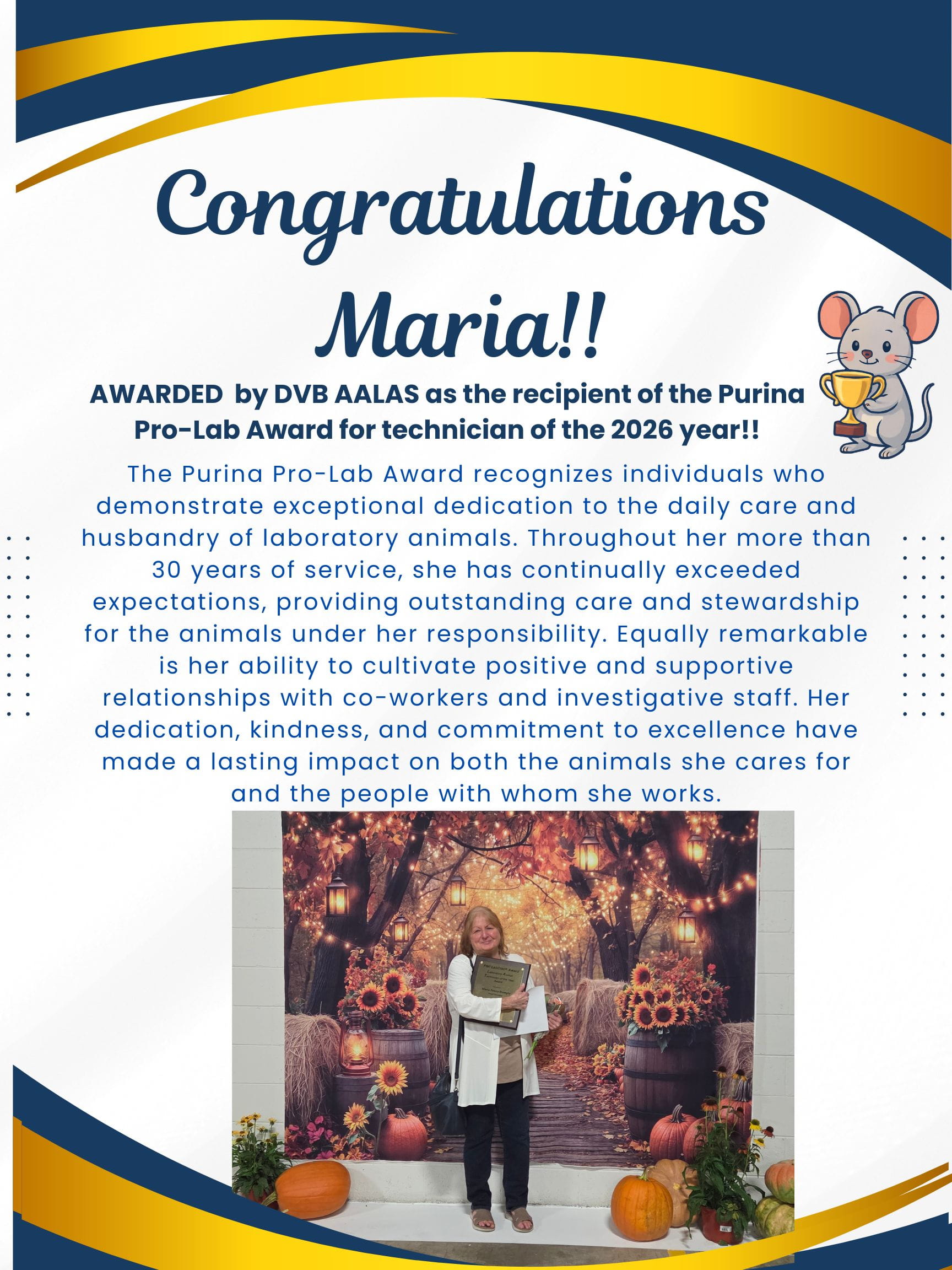
Maria Peters-Hample Honored with 2026 Purina Pro-Lab Award
Congratulations to Maria Peters-Hample, who was named the 2026 recipient of the Purina Pro-Lab Award for Technician of the Year by the Delaware Valley Branch of the American Association for Laboratory Animal Science (DVB AALAS).
Please join us in congratulating Maria on this prestigious recognition!
Welcoming New ORI Staff
Please join us in welcoming our new colleague to the following teams:
Joining the Research Business Operations & Technology Team
Sean Hobson, Director of Research Systems & Analytics. We’re pleased to welcome Sean Hobson to the Office of Research & Innovation as Director of Research Systems & Analytics.
Sean brings more than 14 years of experience in research operations, enterprise systems, and digital transformation at universities and academic medical centers, including Mass General Brigham, Dartmouth College, Columbia University, University Hospitals of Cleveland, and the Cleveland Clinic. Most recently, he led enterprise digital research operations at Mass General Brigham, where he oversaw innovative research technologies, managed enterprise research platforms, and partnered with institutional leadership to advance strategic technology initiatives.
In his new role, Sean will provide leadership for the implementation of Novelution, Drexel’s new enterprise research administration system. He will work closely with stakeholders across the University to guide the project, support change management and training, and help ensure the platform supports Drexel’s growing research enterprise. Sean will also oversee the University’s research systems portfolio, including COEUS and DragonSPOT, as well as ORI reporting, analytics, and related technology initiatives.
We’re delighted to have Sean on the team and look forward to the leadership, expertise, and innovation he will bring to RS&A and to the continued growth of Drexel’s research enterprise.
Joining the Research Compliance and Regulatory Affairs Team
Jim Elliott, Director, Export Control & Research Security. Please join us in welcoming James (Jim) Elliott to Drexel University.
Jim brings extensive experience in research compliance, export controls, and research security from both higher education and applied research environments. Most recently, he served as Export Control & Compliance Officer at Wichita State University and the National Institute for Aviation Research, where he built up and oversaw a research compliance program for a $600M+ portfolio, largely based in federal and Defense-related research. Prior to Wichita State, Jim served as an Export Control & Research Information Assurance Analyst at Purdue University, where he led initiatives related to biological and medical research, foreign influence, policy development, contract review, and compliance training, including co-authoring published CITI training modules.
Throughout his career, Jim has worked closely with faculty, research administrators, legal counsel, cybersecurity professionals, governmental and regulatory authorities, and executive leadership to develop and implement programs related to export controls, controlled unclassified information (CUI), foreign influence, and research security. He has extensive experience leading institutional compliance initiatives, supporting federal audits, engaging with agencies such as DDTC, BIS, and the FBI, developing practical compliance solutions that enable research while simultaneously mitigating institutional risk.
Jim brings a distinctly academic perspective to research administration; he approaches export controls, research security, and federal regulations not as bureaucratic hurdles and stopgaps, but as collaborative puzzles to discern and solve alongside faculty. In addition to his research administration experience, Jim also has a robust academic CV, having taught Philosophy, Religious Studies, Classics, and Communication at Purdue University, Indiana University, University of Saint Francis, and Butler University. He is active in academic research and is currently co-editing a forthcoming volume in Routledge in the Philosophy of Religion. Currently a PhD candidate in Philosophy at Purdue University, he also holds a master's and two bachelor's degrees from the University. More importantly, though, Jim's an unabashed people person and looks forward to getting to know everyone in the research enterprise; if you haven’t yet had the chance to connect with him, he’d love the opportunity!
His unique combination of research administration leadership, compliance expertise, and academic experience will be a tremendous asset to Drexel's research community.
Joining the University Laboratory Animal Resources (ULAR) Team
Kennedy Miller, Animal Care Technician II. Kennedy joins ULAR as an Animal Caretaker, bringing valuable laboratory animal care experience from the University of Pennsylvania, where she worked as a Cage Wash Technician supporting research operations and animal care programs. She also brings a strong background in community outreach, customer service, and team collaboration. Kennedy's enthusiasm for learning, dedication to service, and commitment to supporting animal welfare make her a wonderful addition to the team. ULAR is excited to welcome her to the department at their 15th Street New College Building Campus and look forward to the contributions she will make at Drexel.
Questions? Please email the Office of Research & Innovation's HR team at ori_hr@drexel.edu.
Novelution Update: Where We Are and What’s Next
Novelution is gradually replacing COEUS and DragonSPOT as the Office of Research & Innovation’s research administration system. Two months after the IRB module went live, here is a quick look at progress, upcoming launches, and what to watch for.

At a Glance
- IRB: Live since August 17 and now in post-launch stabilization.
- Sponsored Programs: User Acceptance Testing (UAT) is underway, with a soft launch targeted for December 2026 and full launch in February 2027.
- Other modules: IACUC and AFM are planned for early 2027. COI, IBC, and Current & Pending are planned for Q4 2027.
- Overall: The project is moving forward on its phased plan. Launch dates depend on successful testing and stakeholder readiness.
IRB Module
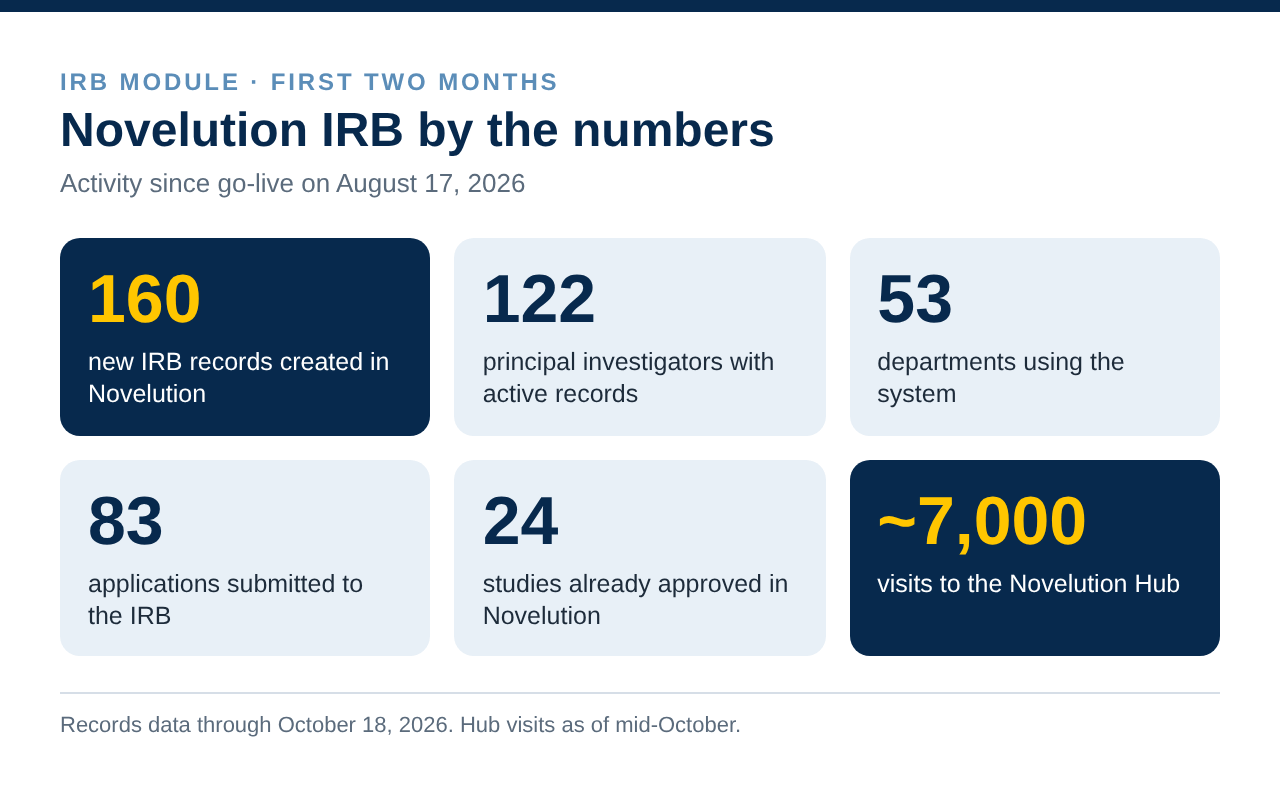
Adoption has grown steadily across campus. Our focus now is fixing reported issues and improving the system based on your feedback. The most common support questions involve CITI training integration, shell records for existing protocols, and departmental approval routing. We have reviewed and prioritized these issues with Novelution. We have also heard that the IRB eForm is lengthy. Internally, we are reviewing the design and purpose of each question. Our goal is to shorten the eForm as much as possible while still collecting the information required at submission for compliance.
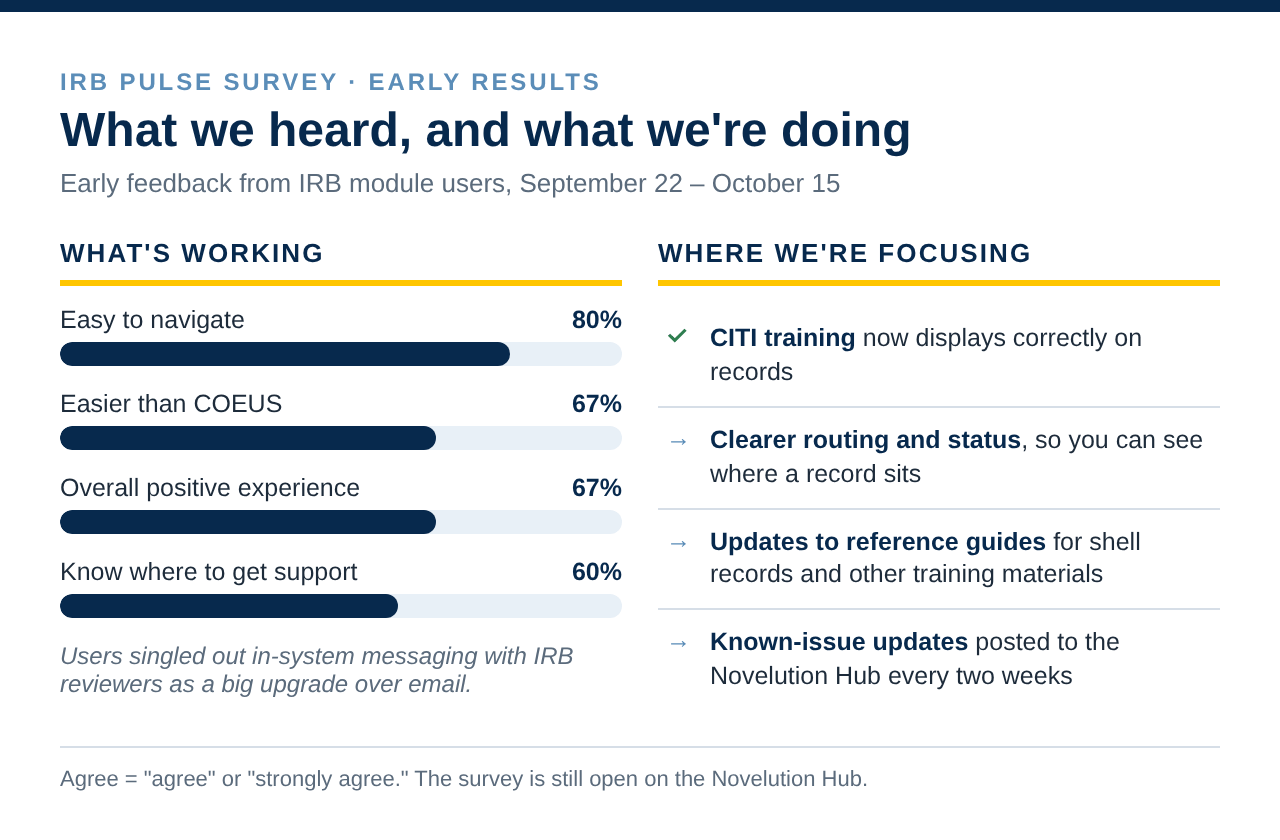
What to look out for:
- Biweekly office hours, running through December (schedule on the Novelution Hub)
- New quick reference guides and known issue updates on the Hub
- The pulse survey, which is still open on the Hub and in the system
Sponsored Programs Module
Testing of the Sponsored Programs module is nearly finished. Sponsored Programs staff and research community representatives have confirmed that the core features for both federal and private funding submissions are working, including forms, budgets, personnel, and attachments. The module will roll out in two phases: a December soft launch with a small group of high-volume departments and a full launch in February 2027 for the entire university. Training and implementation details will be shared ahead of the soft launch.
For updates, FAQs, and training resources, visit the Novelution Hub.
Questions? Please email the Novelution Implementation Team at novelution_info@drexel.edu.
STAR Students Showcase Summer Studies
This summer, 98 STAR Scholars representing more than 35 majors across 11 Drexel colleges, schools, and research centers spent 10 weeks gaining hands-on research experience alongside faculty mentors. At the STAR Summer Showcase on August 27, students shared the results of their work across fields ranging from engineering and cybersecurity to biological sciences and architecture.
Among this year’s featured projects:
- Ruth Makara, materials science and engineering ’30, investigated biodegradable polymer composites made with coffee grounds, exploring their strength, degradation, and potential applications, including more sustainable coffee pods.
- Ashvi Jain, computer science ’30, developed PrivacyLens, a tool that assesses a user’s exposure to known data breaches, provides an easy-to-understand risk score, and connects users with resources to help protect their personal information.
- Navneeth Nalajala, biological sciences ’30, studied the antibacterial properties of goji berry extracts against Cutibacterium acnes, identifying promising activity that could inform future research. Nalajala also earned second place in the STAR Quick Pitch Competition.
- Andy Deng, mechanical engineering ’30, explored ways to improve the manufacturing process for Drexel’s BioFiber technology, which is designed to help concrete autonomously repair cracks and potentially extend the lifespan of concrete structures.
- Natalia Rose Assetto, architecture ’31, examined the relationship between architecture, storytelling, and historic preservation, using a fictional Philadelphia rowhome to explore how buildings reflect the lives and experiences of the people who inhabit them.
Questions? Please email the Undergraduate Research & Enrichment Programs (UREP) in the Pennoni Honors College at urep@drexel.edu.
Reminder: Don’t Pay to Publish Open Access
The Drexel Libraries offers APC agreements with 11 journal publishers so Drexel researchers can publish their research as OA for FREE or at a discount. Since 2024, the Libraries has funded 792 journal articles and saved researchers almost $2.5million.
Check out the Libraries' Open Access website before you submit your articles for review.
Questions? Please email the Library Integrated Technology Systems team at libsystems@drexel.edu.
Connect with Your Drexel Subject Librarian
Earlier this summer, the Drexel Libraries identified a reorganization of its subject librarian team as a top strategic priority. As part of this reorg, each college and school at Drexel now has a dedicated subject librarian who serves as the first point of contact for any library-related questions or services.
Drexel subject librarians are highly trained with deep knowledge and expertise in research techniques and search strategies in the disciplines they support and can provide a wide range of services to help Drexel faculty and students with their research. Learn more about our services for faculty or contact your subject librarian to schedule a consultation.
Questions? Please email librarians@drexel.libanswers.com.
Applied Innovation
Reporting Federal Grants Related to Your Invention
When you disclose an Invention to the Drexel technology transfer office, the Applied Innovation team needs to know whether Federal Funding is related to the research that led to your invention. Drexel has an important compliance responsibility to disclose inventions to the Federal agency or the iEdison reporting system.
The US Government retains certain rights to these inventions that must then be noted on all patent filings and in eventual licensing of the invention to bring it to commercialization. The subject invention and its iEdison reporting date and number are also noted during the grant closeout process. Drexel's responsibilities on tracking the patenting and licensing of Federally-funded inventions continues throughout commercialization and years of patent efforts.
If you submit a disclosure and forget to check the box with Federal grant details, any omissions can be corrected, but it's harder and more expensive for Drexel to do once any original patent filing decisions have been made and get started.
So, it's best practice to disclose any Federal funding for your innovation from the outset at the time of first disclosure. We can work together with you to confirm details of any Federal funding as needed.
How to report? It's easy to do by answering the questions about any related funding that are already on the Disclosure form.
A downloadable Invention Disclosure Form can be found on our website. Submit your potential invention with details on all of the Funding that led to the innovation, with the Federal grant number(s) and agencies that are relevant. The licensing manager assigned to your work will ask you about this Federal component when reviewing your innovation to ensure we have the right information on file and reported for Compliance and Patent Filing purposes.
Reach out to our team and we’ll answer any questions you may have.
Questions? Please email the Applied Innovation team at applied_innovation@drexel.edu.
Research Compliance & Regulatory Affairs
ORI Guidance and Procedure Update
As the Office of Research & Innovation (ORI) continues its efforts toward Drexel University’s strategic plan and CLARITY project we are excited to introduce a new and updated SOPs and guidelines through ORI’s established workgroup processes that will continue to provide best practices, enhance collaboration, and reinforce our commitment to Drexel University and our Research Community:
HRP/IRB Procedure Updates
The HRP/IRB is in the process of updating our SOPs. Please refer to this memo [PDF] regarding the new procedures.
HRP-001: Definitions for the HRPP [PDF]
- This document establishes the definitions followed by the Drexel Human Research Protections Office. This is a non-exhaustive list. Please reference regulations and other documents (e.g., guidance documents issued by federal agencies) when applicable.
- Effective 09/28/2026
HRP-020: Quality Assurance [PDF]
- Drexel University performs Quality Assurance and Improvement activities for the purposes of monitoring the safety of ongoing studies and measuring and improving human research protection effectiveness, quality, and compliance with organizational policies and procedures and applicable federal, state, and local laws.
- Effective 09/28/2026
HRP-040: Institutional Review Board and IRB Process [PDF]
- Drexel University has established an Institutional Review Board (IRB) to ensure the protection of human subjects in research conducted under the auspices of Drexel University. All non‐exempt human subject research conducted under the auspices of Drexel University must be reviewed and approved by the Drexel University IRB or another designated IRB prior to the initiation of the research unless it has been determined that Drexel University is not engaged in the research. These procedures describe the requirements for review of research by the Drexel IRB.
- Effective 09/28/2026
HRP-071: Reportable New Information [PDF]
- Regulations require an organization to establish and follow written procedures for ensuring prompt reporting and review of unanticipated problems involving risk to subjects or others (UPIRSO), serious or continuing non-compliance, suspensions and terminations of IRB approval, changes made to research without IRB approval, and other significant information to the IRB, organizational officials, and applicable federal agencies.
- Effective 09/28/2026
HRP-100: Vulnerable Subjects in Research [PDF]
- When some or all participants in research conducted under the auspices of Drexel University are likely to be vulnerable to coercion or undue influence or have diminished decision-making capacity, the research must include additional safeguards to protect the rights and welfare of these participants. The Institutional Review Board (IRB) must ensure that all regulatory requirements for the protection of vulnerable subjects are met and that appropriate additional protections for vulnerable subjects are in place.
- Effective 09/28/2026
HRP-110: FDA-Regulated Research [PDF]
- U.S. Food and Drug Administration (FDA) regulations apply to research that involves an FDA-regulated test article in a clinical investigation involving human subjects as defined by the FDA regulations. For FDA-regulated research, Drexel University Institutional Review Board (IRB) must apply the FDA regulations at 21 CFR 50 and 21 CFR 56.
- Effective 09/28/2026
HRP-120: Investigator Responsibilities [PDF]
- Investigators are ultimately responsible for the conduct of research. Investigators may delegate tasks to appropriately trained and qualified members of their research team. However, investigators must maintain oversight and retain ultimate responsibility for the conduct of those to whom they delegate responsibilities.
- Effective 09/28/2026
HRP-130: Sponsored Research [PDF]
- These procedures describe the processes required to ensure that all sponsored human subjects research meets University requirements, including covering subject injury language and contractual obligations.
- Effective 09/28/2026
HRP-250: Community Partnerships in Research [PDF]
- Community based research (CBR) is research that is conducted as an equal partnership between academic investigators and members of a community. Where research is being conducted in communities, investigators are encouraged to involve members of the community in the research process, including the design and implementation of research and the dissemination of results when appropriate.
- Effective 09/28/2026
Feedback or Questions? Please email John Roberts, Executive Director of Human Research Protections, at john.thomas.roberts@drexel.edu.
New Responsible Conduct of Research Training Requirement Coming January 2027
Beginning January 1, 2027, Drexel University will expand its Responsible Conduct of Research (RCR) training requirement to all researchers identified on proposals for funding, regardless of their role on the project or the funding source.
The expanded requirement reflects Drexel’s commitment to research excellence, integrity, and accountability and establishes a consistent University-wide foundation for responsible research practices. Drexel joins other leading research universities in broadening RCR training requirements as federal agencies and other research sponsors place increasing emphasis on research integrity, security, transparency, and accountability.
Under the new requirement, RCR training will generally need to be completed every three years, or more frequently when required by a sponsor. The requirement will apply to proposals submitted on or after January 1, 2027.
Full guidance, including information about training options, how to verify completion, and steps researchers should take to prepare for the new requirement, will be shared by the Office of Research & Innovation soon. Researchers planning proposal submissions in early 2027 are encouraged to watch for additional information and prepare to complete any applicable training requirements in advance.
Questions? Please email RCRtraining@drexel.edu.
New and Updated HRPP Website Guidance
The Human Research Protection Program (HRPP) has expanded its online guidance to make it easier for researchers to understand and navigate key requirements for IRB submissions in Novelution.
New and updated resources include:
- CITI Training Requirements: Expanded guidance explains required and conditional CITI trainings for research personnel, training renewal timelines, how training information appears in Novelution, and important steps for ensuring your CITI account and Drexel information are properly connected.
- FCOI Disclosures for IRB Submissions: New step-by-step guidance outlines project-specific Financial Conflict of Interest (FCOI) disclosure requirements, including who must complete a disclosure, how disclosures differ from Drexel’s annual COI disclosure, and how to correctly submit the required information for a Novelution IRB protocol.
- Reliance Agreements: Additional website guidance is in development to help researchers better understand and navigate reliance agreements for collaborative human subjects research. Stay tuned!
Researchers are encouraged to visit the HRPP Researcher webpage to explore these resources and other guidance available to support IRB submissions and ongoing human subjects research.
Questions? Please email the Human Research Protections Program team, at hrpp@drexel.edu.
New Training Available: Certificates of Confidentiality
The Office of Research & Innovation has developed a new training video to help Drexel researchers understand Certificates of Confidentiality (CoCs) and the protections they provide for identifiable, sensitive research information.
Certificates of Confidentiality can help protect identifiable research information from compelled disclosure, including through subpoenas, court orders, and other legal demands. While many qualifying NIH-funded studies automatically receive CoC protections, researchers conducting non-NIH-funded studies may also be eligible to apply for a CoC in certain circumstances.
This training provides an overview of:
- What Certificates of Confidentiality are and what information they protect
- Which NIH-funded studies may receive automatic CoC protection
- When investigators conducting non-NIH-funded research may need to request a CoC
- How the CoC process works at Drexel
- Investigator responsibilities for protecting and sharing covered information
- Common questions and considerations related to CoC protections
Researchers who collect or use identifiable, sensitive information as part of human subjects research are encouraged to view the training and become familiar with the protections and responsibilities associated with CoCs.
Watch the Certificates of Confidentiality Training
Questions? Please email the Human Research Protections Program team, at hrpp@drexel.edu.
ClinCard Is Now CCPay
Drexel’s clinical trials participant payment platform has transitioned from ClinCard to CCPay following a change in service provider from Greenphire to Advarra.
CCPay will replace ClinCard for issuing cards and payments to research participants. While the name and card provider have changed, CCPay cards will function similarly to ClinCards and will continue to provide a convenient way for research teams to distribute clinical research participant payments.
Researchers who use clinical research participant payment cards should be aware of the new CCPay name and branding when communicating with participants and managing study payments. Participants receiving new payment cards will now receive CCPay cards rather than ClinCards.
Research teams should also review study materials that reference ClinCard, including consent forms and participant-facing documents, and update them to reflect CCPay as appropriate. If your study currently has participants using existing ClinCards, please contact the Drexel Participant Payments team for guidance regarding those cards and any steps that may be required as part of the transition.
Visit the Advarra CCPay Resource Page
Questions? Please email the Research Participant Payments team, at participant_payments@drexel.edu.
Building a Culture of Research Integrity: 2026 Responsible Conduct of Research Training Day
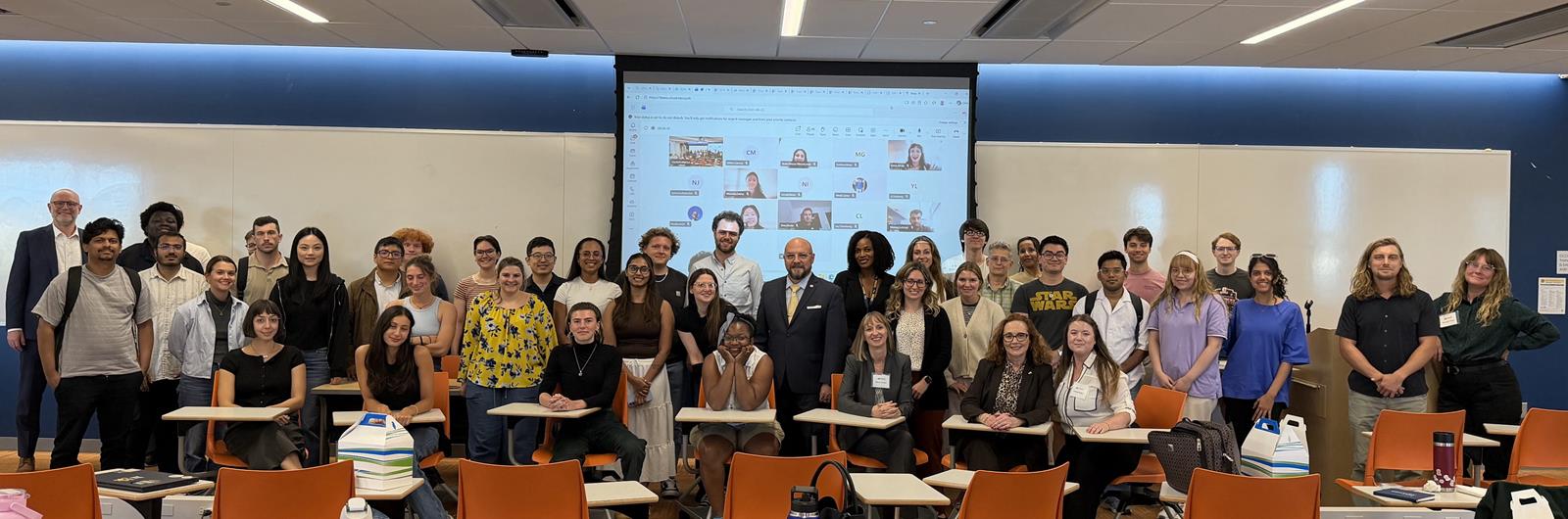
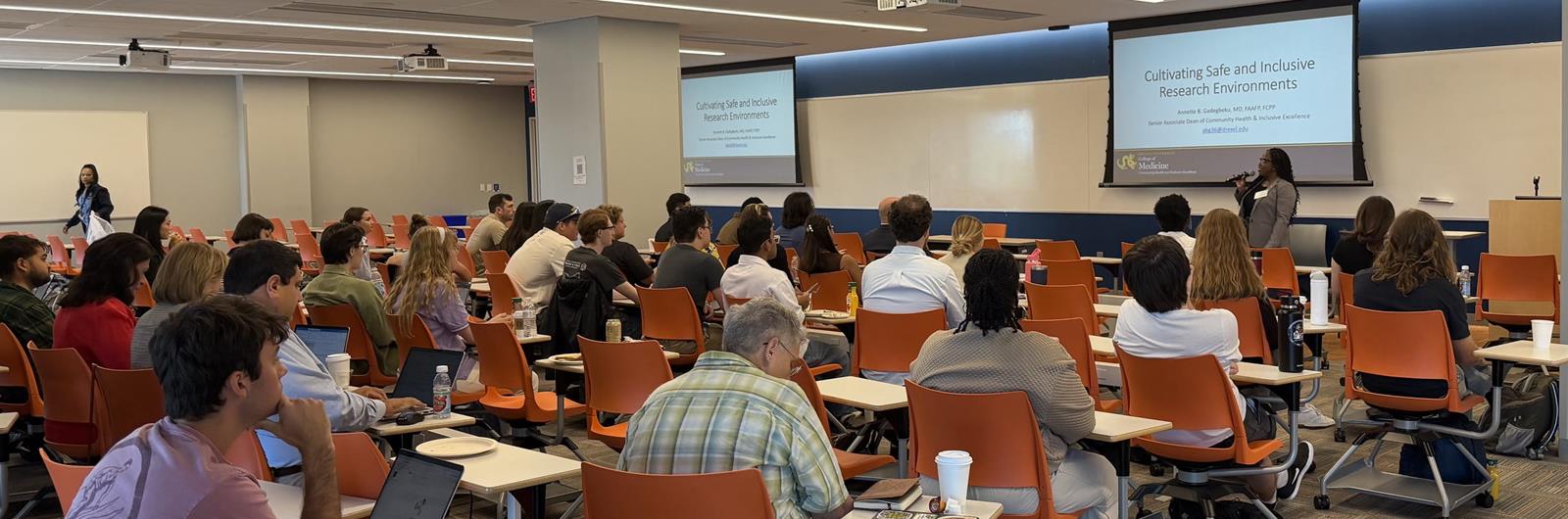
In September, over 100 Drexel researchers, staff, and students registered for the Responsible Conduct of Research (RCR) Training Day hosted by the Office of Research & Innovation!
With 80% of registrants representing Drexel’s graduate student community, the event provided an important opportunity to strengthen a shared commitment to responsible and ethical research among the next generation of researchers. RCR training provides an important foundation for producing high-quality research that is rigorous, reproducible, and conducted with integrity.
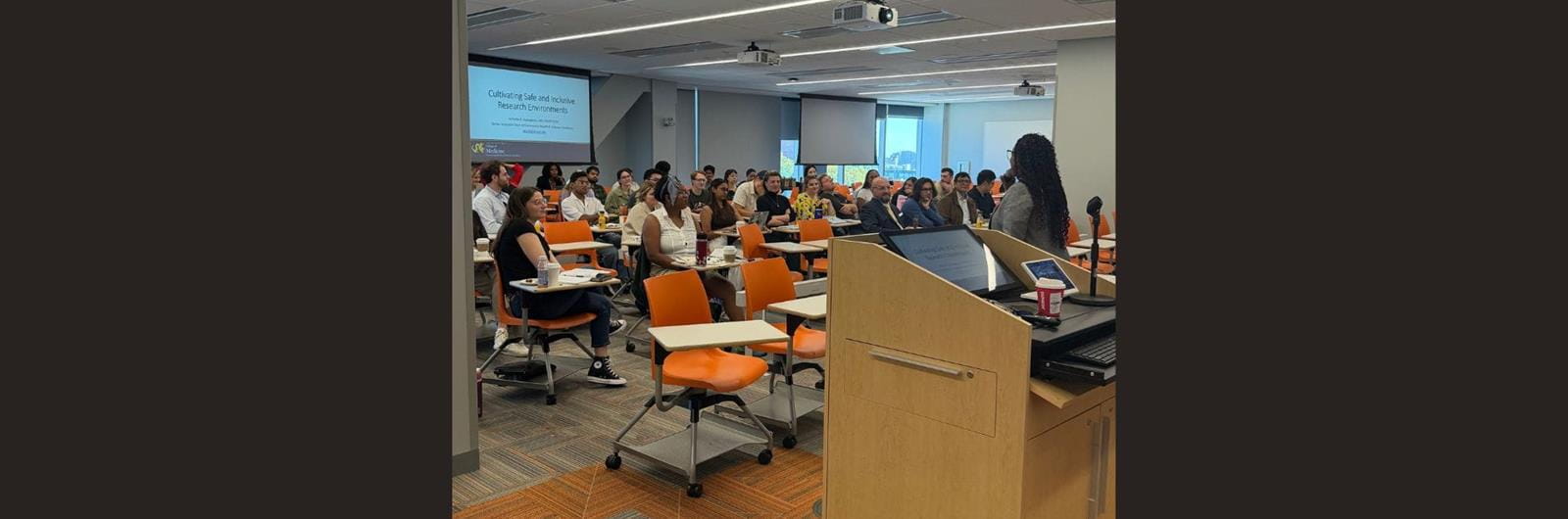
Throughout the day, experts from Research Compliance & Regulatory Affairs and across the University shared guidance on navigating regulatory expectations and institutional responsibilities. Interactive sessions also gave participants the opportunity to work through real-world scenarios involving topics such as authorship, data management, and conflicts of interest, putting principles of research integrity into practice.
Thank you to our presenters and the members of the Drexel research community who registered to participate! Events like RCR Training Day help foster a culture in which research integrity is a shared responsibility and reinforce Drexel’s commitment to conducting research responsibly and ethically.
Questions? Please email Marisa Corbett, Executive Director of Research Quality Assurance, at marisa.jo.corbett@drexel.edu.
Sponsored Programs
Federal Sponsor Updates
October 5, 2026 - One update stated that K awards would no longer require a Data Management and Sharing (DMS) Plan for application due dates on or after October 12, 2027. This change was announced because K awards focus on career development and do not provide primary support for research projects.
What this means is:
- Active K award recipients are not required to submit or update a DMS Plan, including through the Research Performance Progress Report (RPPR).
- Applicants with pending K award applications (i.e., those already submitted) are not required to submit a DMS Plan or to provide an updated or revised DMS Plan as part of the pre-award process, including at Just-in-Time.
- Applicants submitting future K award applications (i.e., those planning to submit) are not required to submit a DMS Plan.
August 14, 2026 - NOT-OD-26-088 is an NIH Request for Information proposing to change how peer-review outcomes are reported to applicants, replacing numerical overall impact scores and percentiles with broad categories such as “Most Competitive,” “Competitive,” or “Not Discussed.
NOT-OD-26-098: Notice of NIH Updates to Career Development (K) Award Programs
August 12, 2026 - NIH is restructuring its Career Development (K) Awards by consolidating funding opportunities, eliminating the Data Management and Sharing Plan requirement, and clarifying that K funds cannot directly support clinical trials.
NOT-OD-26-100: Implementation Update: NIH Data Management and Sharing Plan Requirements
July 29, 2026 - Announces the implementation timeline for the updated NIH Data Management and Sharing (DMS) Plan format. Beginning in FY 2027, all NIH awards and applications subject to the DMS Policy must transition to the new standardized DMS Plan format, regardless of when the application was originally submitted. Additionally, effective October 1, 2026, recipients will no longer need prior NIH approval to revise an approved DMS Plan; instead, updates and data sharing progress will be reported through the Research Performance Progress Report (RPPR).
July 27, 2026 - NIH Notice NOT-OD-26-094 announces that, beginning with Forms J implementation in FY 2027, (January), NIH will replace Letters of Support with Letters of Collaboration to reduce administrative burden and align more closely with NSF practices. Letters of Collaboration will be limited to documenting specific collaborative commitments or material support and may not include endorsements of the project; each letter must be no more than 100 words. Applications that continue to submit traditional Letters of Support after implementation may be returned without review.
Visit the Sponsor Updates Webpage
Questions? Please email Gia Boersema, Assistant Vice Provost, Sponsored Programs, at gia.d.boersema@drexel.edu.
Drexel Researchers Receive New Awards!
We’re proud to share that during Q1 of FY 2027, Drexel researchers have secured 88 new awards, totaling over $21.6 million in funding. These awards reflect a diverse range of support, including:
- 72% from federal sponsors
- 17% from private non-profit organizations
- 8% from state and local sponsors
- 4% from industry and foreign sponsors
Congratulations to the investigators below on the following projects, which reflect a selection of awards granted this quarter:
-
Advanced Training in Translational Research and Clinical Target Discovery
Dr. Olimpia Meucci – Pharmacology Control, College of Medicine
Dr. Seena Ajit – Pharmacology Control, College of Medicine
Dr. Zachary Klase – Rowan University
National Institute of General Medical Sciences
The “Advanced Training in Translational Research and Clinical Target Discovery” T32 program aims to create multidisciplinary scientists with the knowledge to translate basic science into therapeutics, and to promote lifelong learning and agile thinking in rapidly changing professional fields. The new program will capitalize on existing strengths in basic pharmacology and drug discovery to build a vibrant training environment open to PhD students from across Drexel University’s College of Medicine and School of Biomedical Engineering, Science and Health Systems, including five departments, five PhD programs, the MD/PhD program, and 24 mentors with varied expertise and over $8.5 million in active yearly funding. Trainees will receive essential training in both traditional and modern pharmacology - such as a deep understanding of the nuanced molecular interactions that drive normal physiology and disease states, how this information is used to discover new drug targets, and how these approaches can complement work in their chosen field of study – along with real-world training opportunities that can be applied to a variety of career paths. T32 training will also include the chance to mentor young scientists, access to mentors in varied careers, and the opportunity to help shape the future of the program and US biomedical workforce. Faculty in the program will provide a comprehensive scientific and mentoring experience rooted in empathy to their trainees, based around core strengths of target validation, drug discovery and development. The team aspires to align educational outcomes, goals, and competencies for all learners and develop new ways to effectively connect trainees to society to promote scientific literacy and accelerate progress in biomedical research. They emphasize flexible, student directed learning supported by interdisciplinary approaches, thus enabling the next generation of scientists to create meaningful and rigorous contributions that ultimately benefits society and improves the lives of patients.
It is the overarching goal of this T32 program to train students to translate basic science in their chosen field into the development of new therapeutics. To support this, the program will: 1) provide strong didactic training in pharmacology and drug discovery, 2) guide students to a varied set of career possibilities, 3) expose young scientists to research, drug discovery, business, entrepreneurship and community outreach, 4) nurture education in scientific rigor, 5) provide mentorship experience for T32 trainees, 6) enhance and improve faculty mentoring, 7) increase access to speakers and mentors from a variety of careers, and 8) improve science communication, service and civic engagement with the Philadelphia community. The team implements highly effective evidence-informed approaches to graduate training and mentoring that keep pace with the rapid evolution of biomedical research and thereby prepare trainees for careers that impact health-related research needs of the nation.
-
The Impact of Eviction on Preventive and Primary Care: a Large-Scale Administrative Linkage Study
Dr. Gabriel L. Schwartz – Urban Health Collaborative
National Institute of Nursing Research
Dr. Gabriel L. Schwartz (PI) has received five years of funding from the NIH through an R01 award. The project, conducted with partners at NYU, UCLA, and Johns Hopkins, will investigate the impact of rental evictions on health and healthcare. To do so, Dr. Schwartz’ team will merge 14 years of eviction data from New York City to Medicaid claims, creating the largest eviction-linked healthcare database in the country. Their work comes at a critical time, amidst a nationwide housing affordability crisis: roughly one in four renters are spending the majority of every dollar they earn on housing, while four million are evicted every year. Work by Dr. Schwartz and the project team shows these evictions harm health and impede healthcare access, leading tenants to lose Medicaid coverage, be unable to fill prescriptions, and rely on expensive acute care when routine health problems that could have been managed in primary care are instead left to spiral. This R01 will extend their work, focusing on the relationship between evictions and key preventive services like well-child visits or screenings for cancer and cardiovascular disease. It will also examine whether evictions interrupt care for chronic conditions like diabetes or substance use disorder, and whether they increase rates of preventable hospitalizations, driving up costs to Medicaid. Results will provide actionable targets for healthcare intervention and help policymakers weigh the full costs and benefits of investing in eviction prevention.
-
Project MOVE WELL: Advancing Whole-Person Health Through Mindful Movement
Dr. Minjung Shim – Creative Arts Therapies, College of Nursing and Health Professions
Dr. Adam Gonzalez – Stony Brook University
National Institutes of Health (NIH)
Drexel University researchers have received a five-year, approximately $3.2 million R01 grant from the National Institutes of Health (NIH) to investigate whether mindfulness-based dance/movement therapy (M-DMT) can promote physical activity and whole-person health among sedentary older adults.
Led by Dr. Minjung Shim, Assistant Professor in Drexel's Department of Creative Arts Therapies, in collaboration with Dr. Adam Gonzalez at Stony Brook University, Project MOVE WELL (Moving for Whole-Person Health, Engagement, Life, and Longevity) brings together an interdisciplinary research team from Drexel University, Stony Brook University, and Texas A&M University.
The study addresses a significant public health challenge: physical inactivity among older adults, which can negatively affect physical, cognitive, and psychological health. Recognizing that barriers to physical activity extend beyond physical limitations to include psychological and social factors, the project takes an innovative, whole-person approach to promoting movement and well-being.
The randomized controlled trial will compare a 12-week, online group M-DMT intervention with a health enhancement education program. M-DMT integrates mindfulness practices, creative movement, and therapeutic group processes to foster body awareness, emotional well-being, social connection, and greater confidence in movement.
Researchers will use wearable activity monitors, physical and cognitive assessments, and self-report measures to examine changes in physical activity and multiple dimensions of whole-person health.
By combining creative arts therapies with rigorous clinical research, Project MOVE WELL aims to advance understanding of how accessible, home-based, movement-oriented interventions may support healthy aging and improve older adults' quality of life.
-
Tiered Approach to Autism Diagnoses
Dr. Andrea Wieckowski – AJ Drexel Autism Institute
NIH National Institute of Mental Health (R01)
Dr. Wieckowski was awarded an R01 from the NIH with Drexel co-Investigators Dr. Ashley de Marchena, Dr. Diana Robins, Dr. Georgina Perez Liz, and Dr. Renee' Moore, along with external collaborators Dr. Sarabeth Broder-Finger from UMass Chen Medical School and Katherine Zuckerman from Oregon Health & Sciences University. The project will evaluate a tiered approach to diagnosing autism. Across the United States, children and families are facing a “waitlist crisis” for autism assessment: year(s) long delays between developmental concerns and formal autism diagnosis, which is needed for children to receive early, autism-specific interventions that improve outcomes. It is critical to establish new processes that streamline diagnosis, allowing children to begin services as early as possible. Autism diagnosis in primary care is an emerging practice that may accelerate diagnosis and improve disparities in access to care. Pediatric primary care clinicians (PCCs) are often the only health care professionals to interact with families during early childhood; many PCCs have a trusting and longitudinal relationship with families and are knowledgeable about local resources. This study will test aspects of a tiered diagnostic approach in which PCCs diagnose autism in children for whom diagnosis is clear, and refer less definite cases and cases for which there is screening or parental concern for telehealth evaluations with experts who can further diagnose or rule out autism for an additional subset of cases, alleviating the burden on specialty services to evaluate more complex cases with traditional in-person assessments. For this approach to occur accurately and sustainably, understanding factors impacting PCCs’ accuracy in autism classification, as well as acceptability of this approach for PCCs and families, is needed. Results from this study will inform science and practice to expedite early diagnosis and subsequent autism-specific intensive early intervention, addressing a major public health need by directly impacting the waitlist crisis experienced across the United States.
-
Materials Engineering as a Context for Middle School Chemistry and Chemical Engineering Learning: A Multi-Site Design-Based Research Study
Dr. Christopher Wright — Department of Teaching, Learning, & Curriculum, School of Education
Dr. H. Bernard Hall — Department of Teaching, Learning, & Curriculum, School of Education
National Science Foundation, Directorate for STEM Education
Dr. Christopher Wright and Dr. H. Bernard have received a three-year, $886,804 award (September 2026 — August 2029) from the NSF Directorate for STEM Education to develop and study an informal chemistry and chemical engineering program for youth ages 11–14, built around designing sneakers. Middle school is a critical window for whether young people see STEM as accessible and relevant to their futures, and cultural objects offer a compelling entry point into disciplinary learning.
Delivered through partnerships in Philadelphia, Wilmington, and Baltimore, cities historically central to the mid-Atlantic chemical industry, the program asks participants to investigate the foam, rubber, adhesives, and dyes in a sneaker. They test how these materials perform, propose design changes, and justify those changes using chemistry and chemical engineering concepts. Each site will offer 50–60 contact hours through three phases: community-based problem framing, iterative materials testing, and a public design presentation at the end. The project will produce an open-source curriculum framework with facilitation guides and safety protocols that inform informal education organizations nationwide can adopt. It will also train informal science educators at each site and publish peer-reviewed design principles for informal chemistry and chemical engineering education.
Questions? Please email Rose Ann DiMaria-Ghalili, Interim Associate Vice Provost for Research & Innovation, at rose.a.dimaria-ghalili@drexel.edu.
Did You Know?
"Did You Know?" is a recurring newsletter feature that shares helpful tips, tools, and guidance from Office of Research & Innovation teams to support the Drexel research community. An archive of previous "Did You Know?" sections can be found under the Resources section of the ORI website.
Did You Know?: Study Start-Up Is Part of Research Quality
A successful study doesn’t begin with the first participant – it begins with study start-up. Before enrollment begins, taking time to confirm that the research team, regulatory documents, study procedures, personnel training, and systems are ready can help prevent regulatory and documentation problems later.
Study start-up may include confirming that:
- The research team understands the IRB-approved protocol, any specialized procedures, and their assigned/delegated responsibilities.
- Recruitment materials and strategies match what was approved by the IRB.
- Consent processes are clearly defined, and staff know the process for documenting consent.
- Surveys, interview guides, questionnaires, data collection tools, and other study materials are the current, IRB-approved versions.
- Electronic systems or platforms used to collect or store participant data are appropriate and accessible to authorized study personnel, and the data collection forms match the approved protocol procedures.
- The study team understands how to document and report protocol deviations, participant concerns, adverse events, and other unexpected issues.
- Study-specific training has been completed and documented before team members begin conducting research activities.
A little preparation at study start-up can go a long way toward ensuring that research activities are conducted consistently, participants are protected, and the study is ready to begin successfully. Please see ORI’s Clinical Research Guidelines and Tools for more resources about study start-up activities, including Guidelines for Site Initiation. In addition, the Research Quality Assurance Program can perform a study start-up quality assurance review upon request.
Questions? Please email Marisa Corbett, Executive Director of Research Quality Assurance, at marisa.jo.corbett@drexel.edu.
Other Research Training, Education, and Meeting Opportunities
Have an event you'd like to share with the Drexel research community? Email Becky Campbell, Associate Director, Strategic Operations & Communications, at becky.campbell@drexel.edu.
Get Started with LabArchives: Upcoming Online Training
Looking for ways to better organize research data, manage lab resources, and coordinate shared equipment? Drexel faculty, staff, and students have free access to LabArchives Notebook, Inventory, and Scheduler, a suite of tools designed to support more efficient and organized research.
Join an upcoming online training session to learn the essentials of all three tools:
LabArchives 101: The Essentials of LabArchives ELN, Inventory, and Scheduler
Wednesday, November 11, 2026
10 – 11 AM
Register Here
During the session, participants will learn how LabArchives can support their research through:
- LabArchives Electronic Lab Notebook (ELN): Organize, document, and securely manage research data in a digital environment that supports collaboration, reproducibility, and effective research data management.
- LabArchives Inventory: Keep track of lab materials, supplies, and orders in one centralized system to make inventory management easier and more efficient.
- LabArchives Scheduler: Coordinate shared equipment and resources by creating calendars, managing reservations, and providing access to members of your research team.
Whether you’re new to LabArchives or looking to make greater use of the tools available to you, this session is a great opportunity to explore how the platform can support your research workflows.
Visit ORI’s Electronic Research Notebooks Website
Questions? Please email the Drexel Electronic Research Notebook team at ern@drexel.edu or LabArchives Support at support@labarchives.com.
Stay Connected with the Office of Research & Innovation!
Ways to Engage with ORI
- Quarterly Newsletter Archive: Read past issues of the ORI newsletter for key announcements and updates.
- Novelution Hub SharePoint: Explore implementation updates, resources, and guidance for the COEUS Replacement Project.
- ORI Training Library SharePoint: Access training materials, user guides, and webinar recordings.
- Email Announcements: Browse an archive of important ORI communications.
- Upcoming Events: Discover upcoming research-related events and training opportunities.
- LinkedIn: Follow the ORI on social media for the latest news, accomplishments, and updates from Drexel's research community.
Questions? Please email Becky Campbell, Associate Director, Strategic Operations & Communications, at becky.campbell@drexel.edu.
Bringing the ORI Team Together
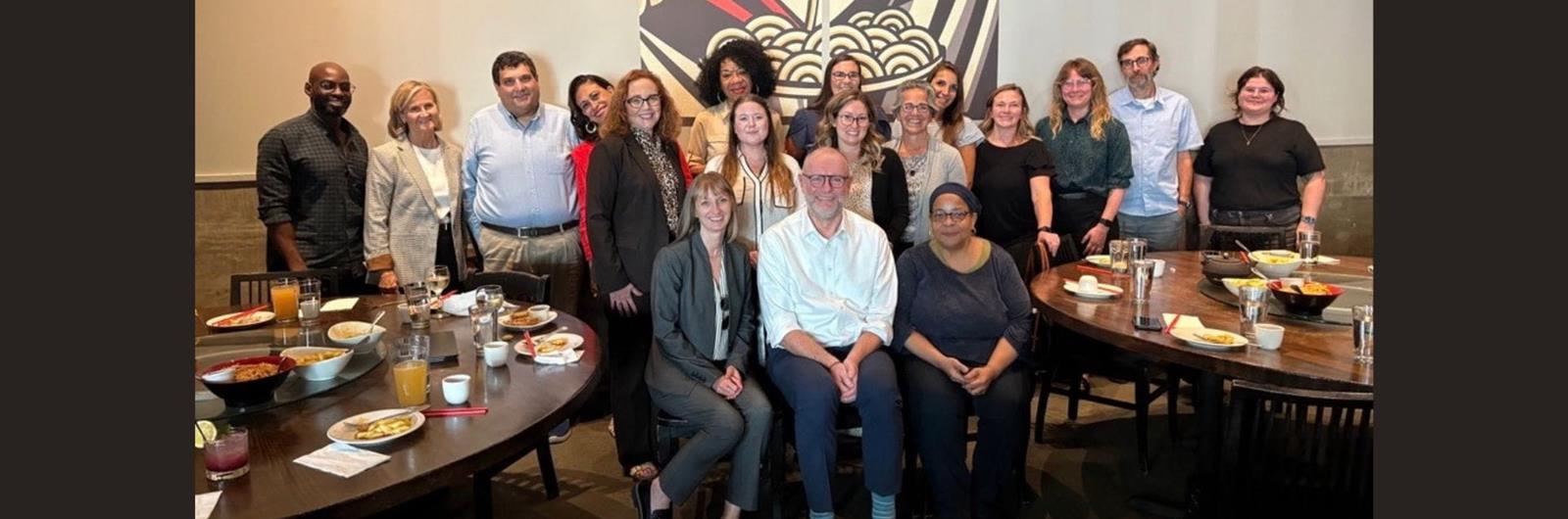
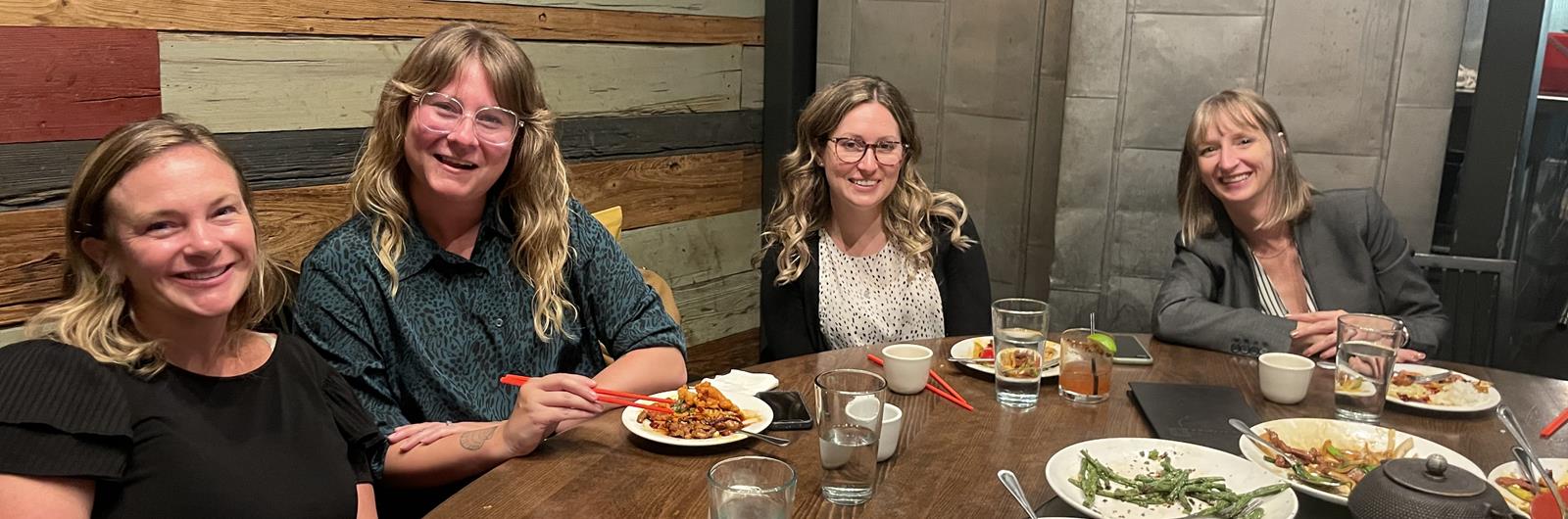
Last month, ORI staff enjoyed an evening together at Han Dynasty near campus following this year’s Responsible Conduct of Research Training Day. With many of our colleagues working remotely and some joining us from outside the Philadelphia area, the gathering was a welcome opportunity to connect in person, catch up, and spend time together as a team. Check out photos from the group outing!