Drexel University is renowned for its experiential learning opportunities. The University receives consistent high marks for its co-operative education program while offering students study abroad, simulation labs and projects and other innovative classroom experiences.
As an R1 Doctoral University, Drexel can provide its undergraduate and graduate students specialized learning experiences through research, too. This quarter, Nick Howley College School of Computer and Information Sciences faculty have received funding to advance diverse research projects, which will provide students opportunities to work alongside their professors as they:
- build out AI lab capacity;
- advance black hole identification methods;
- enhance US digital archiving;
- boost K-12 students’ communication skills with AI;
- ensure responsible AI use in business; and
- address medical challenges, including substance-use disorder, rare-disease diagnosis, and data privacy and protection for vulnerable populations.
Jane Greenberg, Professor of Information Science

Jane Greenberg, PhD, Alice B. Kroeger Professor of Information Science, is a co-principal investigator on a Purdue University-led project selected for the National Science Foundation's $380 million initiative to build a nationwide network of artificial intelligence-enabled automated laboratories. The Purdue Intelligent Codesign Cloud Lab for Non-Equilibrium and Low-Dimensional Materials, known as ICoN-PCL, is one of 20 teams funded under the program. Greenberg will lead the participation of Drexel's Metadata Research Center, which is responsible for developing the framework that allows data generated across the network to be shared, trusted, and reused.
The center's team, comprising Howley College School of Computer and Information Sciences’ faculty members Yuan An, PhD, Mat Kelly, PhD, Michelle Rogers, PhD, David Breen, PhD, Xiaohua “Tony” Hu, PhD, and Heather Willever-Farr, PhD—alongside graduate and undergraduate researchers—will design the project's metadata standards, assign persistent identifiers to datasets and equipment, and apply ontology tools to keep terminology consistent across sites. The team will also guide data governance and community engagement across the network, work that underpins reproducible and AI-ready materials research.
|
Start date
|
End date
|
|
August 1, 2026
|
July 31, 2030
|
Drexel University has received a FY2026 Institute of Museum and Library Services (IMLS) Laura Bush 21st Century Librarian Program award of $166,334 to lead CAMP-250 (Computational Archival Science and Metadata in Practice for America 250), a national initiative focused on strengthening librarian and archivist workforce development, professional practice and infrastructure readiness for managing the nation's rapidly growing digital archival record.
Nick Howley College of Engineering and Computing School of Computer and Information Sciences (SCIS) faculty Jane Greenberg, PhD, Alice B. Kroeger Professor of Information Science, is the Principal Investigator, with Matthew Kelly, PhD, and Heather Willever-Farr, PhD, serving as Co-PIs. They will convene archivists, librarians, and educators to establish shared frameworks for computational archival science, metadata practices, and AI-enabled archival work. Running from September 2026 through February 2028, the initiative positions Drexel as a national leader in advancing the skills, tools and collaborative strategies needed to preserve and provide access to the digital documentary heritage of the United States.
|
Start date
|
End date
|
|
September 1, 2026
|
February 29, 2028
|
Shadi Rezapour, Assistant Professor of Information Science
 Shadi Rezapour, PhD, assistant professor of information science, has received funding from the National Institutes of Health and the National Institute on Drug Abuse for NIH/NIDA R03: Reducing Stigma In Digital Spaces Through Human-Centered AI. This proposal aims to identify and characterize stigma and recovery capital in online substance use disorder (SUD) narratives using natural language processing (NLP) methods as well as develop a prototype generative storytelling tool to support recovery and self-affirming language. Rezapour serves as the Principal Investigator.
|
Start date
|
End date
|
|
August 15, 2026
|
July 31, 2028
|
Jake Williams, Associate Professor of Information Science
 Through the NSF's Division of Astronomical Sciences funding, Jake Williams, PhD, associate professor of information science, will work on combining astronomy and data science to develop advanced AI and machine-learning methods that identify black holes while Co-PI on CDS&E: Application of Machine Learning to Supermassive Black Hole Discovery with LSST.
To aid next-generation astronomical surveys, this project will identify active galactic nuclei (AGN), or actively growing supermassive black holes, by integrating multiple types of observational data into a single model. The project will provide an accurate, interpretable and scalable framework for AGN discovery, while producing publicly available catalogs, open-source software and reproducible tools that will support future astronomical research and improve our understanding of black hole evolution.
In addition to advancing astronomical research, the project will create valuable educational opportunities for Drexel students. Graduate and undergraduate researchers from physics and information science programs will gain cross-disciplinary experience in astronomy and informatics, with training in machine learning, data management and scientific communication.
The project's impact will also extend beyond the University. Outreach activities will be conducted through Drexel's Lynch Observatory and the Dornsife Center for Neighborhood Partnerships, creating learning opportunities open to all Philadelphia residents.
Gordon T. Richards, PhD, of Drexel’s College of Arts and Sciences, Department of Physics, is the Principal Investigator.
|
Start date
|
End date
|
|
September 1, 2026
|
July 31, 2029
|
Helena Mentis, Professor and Department Chair, Information Science
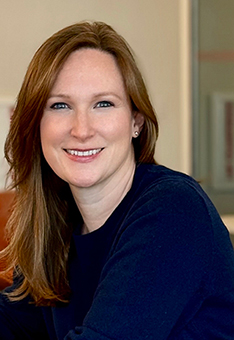
NIH and the National Institute of Aging will support “Enhancing Online Privacy and Reducing Scam Risk for Older Adults with Dementia and their Care Partners,” with Helena Mentis, PhD, professor and information science department head, serving among the project’s senior personnel.
People living with cognitive impairment (PLWCI) rely on the internet to connect with loved ones, stay abreast of current events, and manage their finances and medical care: activities that likely slow cognitive decline. However, doing so routinely exposes PLWCI and care partners to tracking technologies that transfer personal data to advertisers, data brokers, and technology firms. This tracking facilitates targeting and may expose PLWCI and care partners to advertisements that may harm their health and finances.
The proposed research uniquely contributes to the field by advancing innovative research into the privacy of older PLWCI and those living with dementia and by refining existing interventions for PLWCI and care partners to protect them from online risks. The proposed work will enhance the health and financial safety of PLWCI and care partners through innovative methods across computer science, ethics, cognitive neurology, and causal inference.
Ari Friedman, MD, PhD and Matthew McCoy, PhD, both of the University of Pennsylvania, are the Principal Investigators.
|
Start date
|
End date
|
|
September 1, 2026
|
June 30, 2031
|
Preetha Chatterjee, Assistant Professor of Computer Science

The NSF Directorate for Technology, Innovation and Partnerships (TIP) awarded 50 teams a planning grant (Phase 1) under the FINDER FOUNDRY program.
Among these 50 teams, Preetha Chatterjee, PhD, as Principal Investigator, and her interdisciplinary team composed of Jen Katz-Buonincontro, PhD (Co-PI, Drexel’s College of Arts and Sciences), Jessica Hoffman, PhD (consultant, Yale Child Support Center, Yale Center for Emotional Intelligence), a K-12 educator, and a parent of a high-school student, will work on “NSF FF: Planning: Co-Designing an AI-Supported Empathic Communication Platform for High School Classrooms.”
Through this planning grant, the team will develop a proof of concept for the “PEACE Project: Platform for Empathetic AI-informed Communication in Education,” an AI-based conversational assistant that can offer scenario-based guidance to help students and teachers rephrase statements, reframe conflict, promote self-empathy, and engage in reflective practice to improve their communication skills.
The team will be submitting a full proposal (Phase 2) in November.
|
Start date
|
End date
|
|
July 15, 2026
|
October 31, 2026 (estimated)
|
Chatterjee was also awarded a three-year NSF CyberAICorps SFS, Innovation Track grant, titled “Collaborative Research: CyberAI Innovation: Preparing AI-Native Software Engineers for Secure Software Development.”
The Innovation Track supports projects that enhance preparation of AI and cybersecurity professionals. With the project, Chatterjee aims to serve the national interest by preparing undergraduate computing students to use artificial intelligence coding tools responsibly and securely.
AI coding tools can now examine software projects, use other software tools, install code packages, and suggest changes with limited human oversight. These abilities can help people build software faster, but they can also create security risks when users do not know how to guide, limit, and check the tools.
The project intends to strengthen students’ ability to recognize risky tool behavior, protect software projects, and make sound decisions before AI generated changes are accepted. It will help students build skills needed for safer software development in workplaces that increasingly rely on AI. The project advances education in artificial intelligence and cybersecurity while helping build a stronger technical workforce, drawing on best practices in hands-on security education, threat modeling, and evidence-based curriculum design. The resulting materials are intended to help instructors at many institutions prepare students for the changing needs of industry, government, and society.
|
Start date
|
End date
|
|
September 1, 2026
|
August 31, 2029 (estimated)
|
Edward Kim, Associate Professor of Computer Science
|
Start date
|
End date
|
|
September 1, 2026
|
August 31, 2027
|
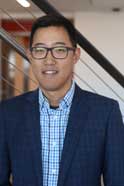
Edward Kim, PhD, associate professor of computer science, was recently awarded an internal Drexel grant funded through the Drexel Coulter Translational Research Partnership Program, with Charles Cairn, PhD (Drexel College of Medicine) as Co-PI, titled “Drexel Health MedCoder Agent.” (Timeline information is above.)
Kim was also awarded $50,000 of in-kind credits by Anthropic through its AI for Science rare disease research program.
As PI, Kim will aim to provide a missing reference to phenotype-driven diagnosis through his project, titled “Millions of clinical notes reveal which symptoms are genuinely rare.”
According to the project's proposal, diagnosing a rare genetic disease means reasoning backward from a patient's observable features to the gene responsible, and that inference depends entirely on knowing which features are genuinely informative. A distinctive ocular finding narrows the search sharply; a cough narrows it almost not at all. Thus, every phenotype-driven diagnostic tool needs to know how often a given symptom appears in patients who don't have the disease in question but unfortunately, that number has never been measured. In its place, tools substitute a proxy: how frequently a symptom is mentioned across curated disease descriptions in the literature. It is a measure of what has been written about, not of what is observed.
This project builds the missing reference directly. Using large language models to extract ontology-linked phenotypes from millions of de-identified clinical notes, it establishes how often each symptom is actually documented in patients receiving care. Preliminary results show that everyday findings such as cough and wheeze appear orders of magnitude more often in clinical practice than the curated corpora suggest, meaning diagnostic tools have been assigning evidentiary weight to observations that carry almost none.
The resulting phenotype frequencies will be released openly, with confidence intervals and coverage limits, for use by researchers and diagnostic tool developers. This data would give phenotype-driven diagnosis something it has never had: an empirical answer to how surprising a patient's presentation really is, and with it the prospect of reaching the right gene earlier in a rare-disease diagnostic odyssey that still averages years or even decades.