The WIMSC Leadership Summit, hosted by the Office of Faculty and the Women in Medicine & Science Committee, convenes leaders from basic science, clinical care, industry, and policy to explore how biomedical discoveries are translated into real-world impact. By highlighting the translational pathway alongside the collaborative and policy environments that shape it, the Summit frames translational medicine as a dynamic ecosystem—one that depends on scientific innovation, cross-sector partnerships, and informed leadership to advance equity, support careers in academic medicine, and transform discovery into lasting improvements in health.
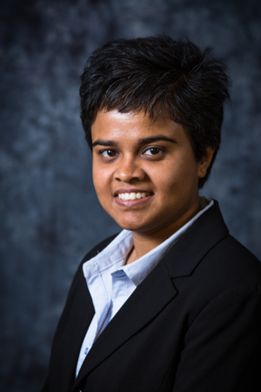
Director of the Coulter-Drexel Translational Research Partnership Program
Jaya Ghosh, PhD, is the director of the Coulter-Drexel Translational Research Partnership program. She has experience in translational research program and project management and served as the assistant Coulter program director (2015-2018), the Coulter program director (2019-2023) and the MBArC (funded by the National Institutes of Health Research Evaluation and Commercialization Hubs or NIH REACH) Lead Program Manager (2019-2023) at the University of Missouri prior to joining Drexel. As the Drexel Coulter program director, she is responsible for managing all processes associated with de-risking, reviewing, funding and tracking of Coulter projects.
Jaya is also a consultant program manager for the NIH Concept to Clinic: Commercializing Innovation (C3i) program, a trained National Science Foundation (NSF) I-Corps instructor (Phase 1) and serves regularly as a proposal review panelist for the NSF Small Business Innovation Research/Small Business Technology Transfer (SBIR/STTR) programs. At MU, she was an adjunct faculty in the Chemical and Biomedical Engineering and Management departments and taught the Coulter Business Boot Camp which was offered annually to teams of engineering and clinical researchers, pressure-testing the commercial viability of their translational research ideas using universal business criteria as well as the unique requirements of biomedical product commercialization. Before joining the MU Coulter program, she completed a one-year engineering fellowship with the MU Biodesign & Innovation program. Jaya has a PhD in bioengineering from MU and a bachelor’s degree in instrumentation and control engineering from Manipal Institute of Technology in India.

Professor, Department of Medicine
Meera Nair Harhay, MD, MSCE, is a professor of medicine and professor of clinical epidemiology and biostatistics at Drexel University, where she also serves as medical director of clinical research, and a transplant nephrologist at the Penn Transplant Institute. Her research focuses on understanding how typically unmeasured risk factors — including frailty, physical function, cognitive impairment, and body composition — influence health outcomes for people with chronic kidney disease and end-stage kidney disease, with particular emphasis on obesity management and health equity in access to kidney transplantation. A nationally recognized leader in transplant frailty research, she served as writing team lead for the American Society of Transplantation Frailty Consensus Conference and contributed to international consensus statements on kidney disease and global public health.
She is principal investigator of multiple NIH-funded grants, including an R01 examining personalized approaches to obesity management in dialysis patients, and is the Drexel principal investigator for the NIH U2CDK136784 training grant (PERFORM-KUH). She serves on the editorial board of the , served two terms on the American Society of Nephrology Policy and Advocacy Committee, and has been recognized with multiple Golden Apple Teaching Awards. Dr. Harhay earned her MD and MSCE from the University of Pennsylvania, completed nephrology and transplant nephrology fellowships at the Hospital of the University of Pennsylvania, and is a fellow of the American Society of Nephrology.

Medical Science Liaison at Bristol Myers Squibb
Chelsea Maniscalco, PhD, received her doctorate in developmental genetics from NYU School of Medicine and currently works as a medical science liaison at Bristol Myers Squibb. She has six years of experience in the pharmaceutical industry, with a background spanning medical communications and field medical affairs. In her current role, Dr. Maniscalco supports scientific exchange and collaboration within the neurology space, in addition to supporting clinical trials. Outside of her professional work, she is an avid outdoors enthusiast and has climbed Half Dome in Yosemite National Park three times.

Associate Professor, Department of Microbiology & Immunology
Will Dampier, PhD, serves as an associate professor in the Department of Microbiology & Immunology at Drexel University College of Medicine, where he plays a pivotal role in biomedical education. He directs and instructs Applied Statistics for Biomedical Sciences, employing an innovative hands-on methodology to teach quantitative techniques for modern datasets. Additionally, he co-directs the Structural Bioinformatics course, delivering a six-week thread on machine-learning applications for genomic sequence data. His teaching extends to guest lectures in multiple PhD and master’s level courses centered on genomic-scale data analysis, underscoring his commitment to training the next generation of researchers in computational biology.
As a bioinformatician with an engineering mindset, Dr. Dampier’s research primarily focuses on HIV genetics and the development of curative therapies. He leverages third-generation sequencing technologies, such as the portable Nanopore device, to investigate HIV genetic variation and its impact on disease progression. Notably, he was the first to publish on the targeting efficacy of CRISPR/Cas9 guide RNAs within mixed HIV-1 quasispecies derived from patient deep sequencing, a critical step toward achieving a sterilizing cure. His work also explores pairwise correlated genome-wide changes in HIV, revealing mutations in the viral promoter and trans-activating factor linked to viral tropism. Beyond HIV, he has contributed to open-source projects like scikit-learn and Glueviz, enhancing their capacity to handle biological data, and has applied machine learning to predict drug synergy and pathways common to multiple diseases from transcriptomic data.
Dr. Dampier’s innovative contributions are further evidenced by his co-inventorship on two U.S. provisional patents. The first, filed in 2014, addresses methods for HIV quasi-species excision from infected patients, while the second, filed in 2015, focuses on novel approaches to determining clinical disease severity in HIV patients. His research portfolio demonstrates a consistent theme of developing and refining computational tools to answer complex biological questions, from predicting sequence-to-phenotype relationships to estimating antiretroviral therapy effectiveness using eukaryotic linear motifs. Through his pioneering work in HIV cure strategies, open-source software development, and cross-disease pathway analysis, Dr. Dampier exemplifies the integration of engineering principles with biomedical research to address pressing global health challenges.

Professor of Medicine and Chair of the Medicine Institute at Allegheny Health Network
Susan Manzi, MD, MPH, is currently professor of medicine and chair of the Medicine Institute at Allegheny Health Network, Pittsburgh, Pennsylvania. Dr. Manzi received her MD from the University of Pittsburgh School of Medicine. She completed her medical internship and residency at Duke University Medical Center, after which she completed her fellowship in rheumatology at UPMC, and received her Master of Public Health from the University of Pittsburgh Graduate School of Public Health. Dr. Manzi is recognized internationally as a pioneer in the investigation of premature cardiovascular disease in systemic lupus erythematosus and in the discovery of biomarkers for lupus diagnosis, monitoring and stratification. She has published over 250 scientific reports and book chapters and is inventor of the cell-bound complement activation products (CB- CAPs) technology platform for which she holds more than 20 patents. Her research program has received multi-million dollar support from many organizations including the NIH, the Department of Defense, the Lupus Foundation of America and the Arthritis Foundation. Dr. Manzi has served on Advisory Boards for the Food and Drug Administration and more than 20 pharmaceutical and biotech companies and has chaired or served on numerous NIH study sections and data safety monitoring boards. She has served Chair of the Board of Directors of the Lupus Foundation of America and currently serves as their Medical Director. Dr. Manzi has been recognized by the NIH for her outstanding mentorship of medical students, residents, graduate students and faculty.
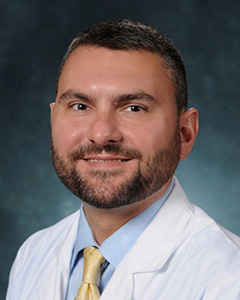
Associate Professor, Department of Pharmacology, Physiology & Cancer Biology, Thomas Jefferson University
Adam Snook, PhD, is an accomplished cancer immunologist and associate professor at Thomas Jefferson University, holding appointments in the Departments of Pharmacology, Physiology & Cancer Biology, and Microbiology & Immunology. His work centers on translational immunotherapies, focusing on developing innovative strategies such as GUCY2C-directed cancer vaccines and CAR-T cell therapies. He serves as the co-leader of the Immune Cell Regulation and Targeting program at the Sidney Kimmel Comprehensive Cancer Center. Recognized for his contributions to cancer research, Dr. Snook has received numerous awards for innovation, mentoring and training, research excellence, and team science. He holds several patents related to cancer immunotherapy and has published extensively in high-impact journals, contributing to the understanding and treatment of gastrointestinal cancers. In 2022, he was identified as the most prolific colorectal cancer immunotherapy researcher of the last decade worldwide. As a mentor, he has guided numerous PhD students, postdoctoral fellows, and medical trainees, fostering the next generation of scientific leaders.

Vice Dean of Research and Innovation; Professor, Department of Microbiology & Immunology
Sandhya Kortagere, PhD, is a tenured professor in the Departments of Microbiology & Immunology and Pharmacology & Physiology at Drexel University College of Medicine, where she also serves as vice dean of research and innovation. A member of ASPET since 2015, she has made pioneering contributions to neuroscience drug discovery, particularly in the design of biased signaling dopamine D3 receptor agonists. She led the development of SK609, a first-in-class therapeutic candidate for Parkinson’s disease, and co-founded PolyCore Therapeutics to advance this discovery through IND-enabling studies. Her research program, continuously supported by NIH, and foundations, has produced more than 80 peer-reviewed publications, 13 patent applications, edited a book on in silico models for drug discovery and has made significant advances in neuroprotective therapies.
Dr. Kortagere is also a dedicated mentor, having trained over a dozen graduate students, four postdoctoral fellows and staff scientists. In 2025, she received the Inaugural Dean’s Award for Innovation from Drexel University College of Medicine. Recently, she received the ASPET society Drug Discovery and Development division’s 2026 scientific achievement award.

Senior Manager of Government Affairs and Science Policy at the American Society for Pharmacology and Experimental Therapeutics (ASPET)
Marah Wahbeh, PhD, is the senior manager of government affairs and science policy at the American Society for Pharmacology and Experimental Therapeutics (ASPET). Her work connects policy makers and scientists through advocacy, education, and outreach. She manages the operations of ASPET’s Washington Fellows program, an early career scientist policy training program. Dr. Wahbeh is also a scientist by training and has earned her PhD in human genetics and genomics at the Johns Hopkins School of Medicine, where her work was focused on illuminating the impact of recently discovered genetic schizophrenia-associated variants.

Senior Vice President of Government and Community Relations, Drexel University
David Wilson serves as the senior vice president of Drexel University’s Office of Government and Community Relations. Prior to being named to this role, he served for nearly 15 years as the vice president of this department. He has more than 30 years of government experience, having previously worked in the Office of the Senate Majority Leader for the Commonwealth of Pennsylvania and as the lead lobbyist for a local public utility. He remains actively involved in numerous professional and civic organizations including serving on the Board of Directors for the Schuylkill River Development Corporation, the Greater Philadelphia Chamber of Commerce’s federal, state and local legislative committees and the Pennsylvania Cancer Alliance. Mr. Wilson has a Bachelor of Arts degree in economics from the University of Pennsylvania and a Master of Business Administration degree in management from Saint Joseph’s University.