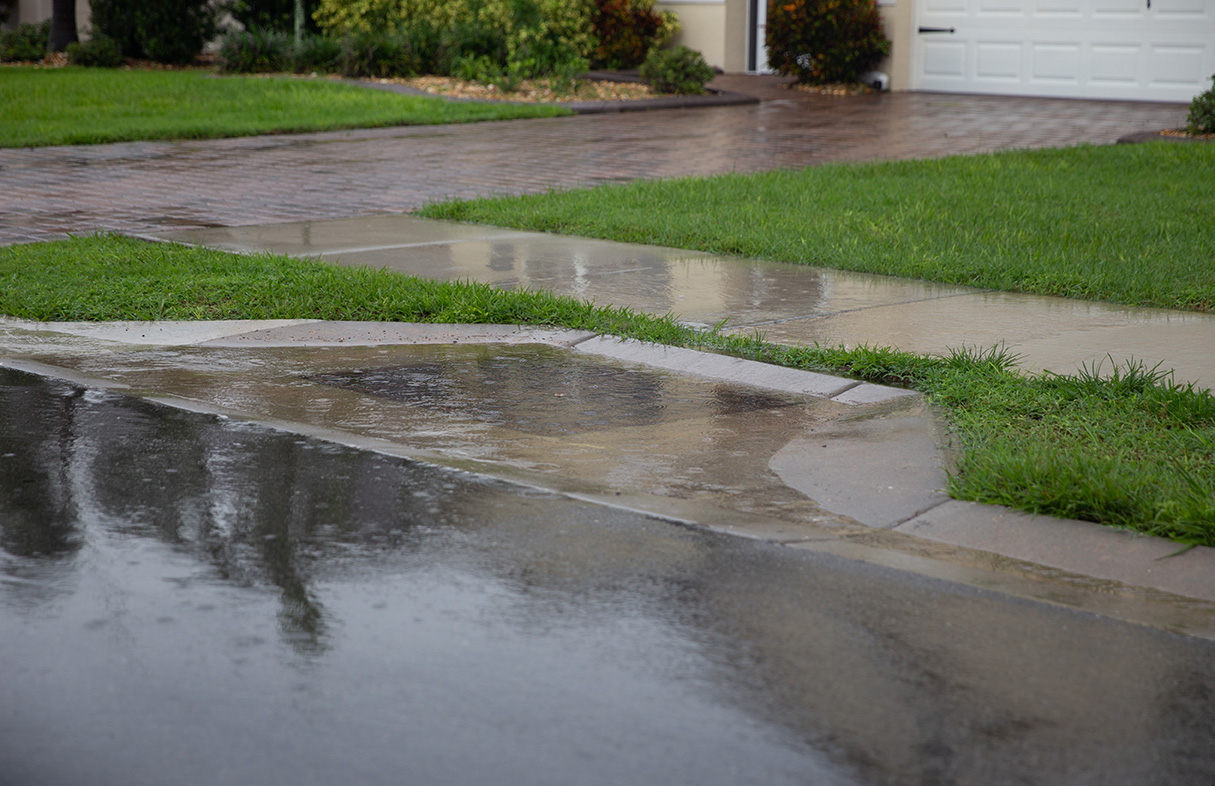
Sitting in traffic due to flooding? One senior design team is here to help.
Mechanical engineering seniors Cole Yacono, Ariel Oster, Danny Crossan,
Sunny Zhuo, and Gio Ceriani have worked on Impedebris, an attachment to
existing storm drains that can help to mitigate drain blockages and roads
flooding.
“Impredebris started out with more than 10 different design ideas that
ultimately ended with the best idea that fits into our scoop: Preventative,
no power source needed, and realistic solution” Zhuo said. “[We hope]
Impedebris will be the initial design to solve the problem and help PennDOT
or other highway regulators reduce traffic and highway damages and lower
costs.”
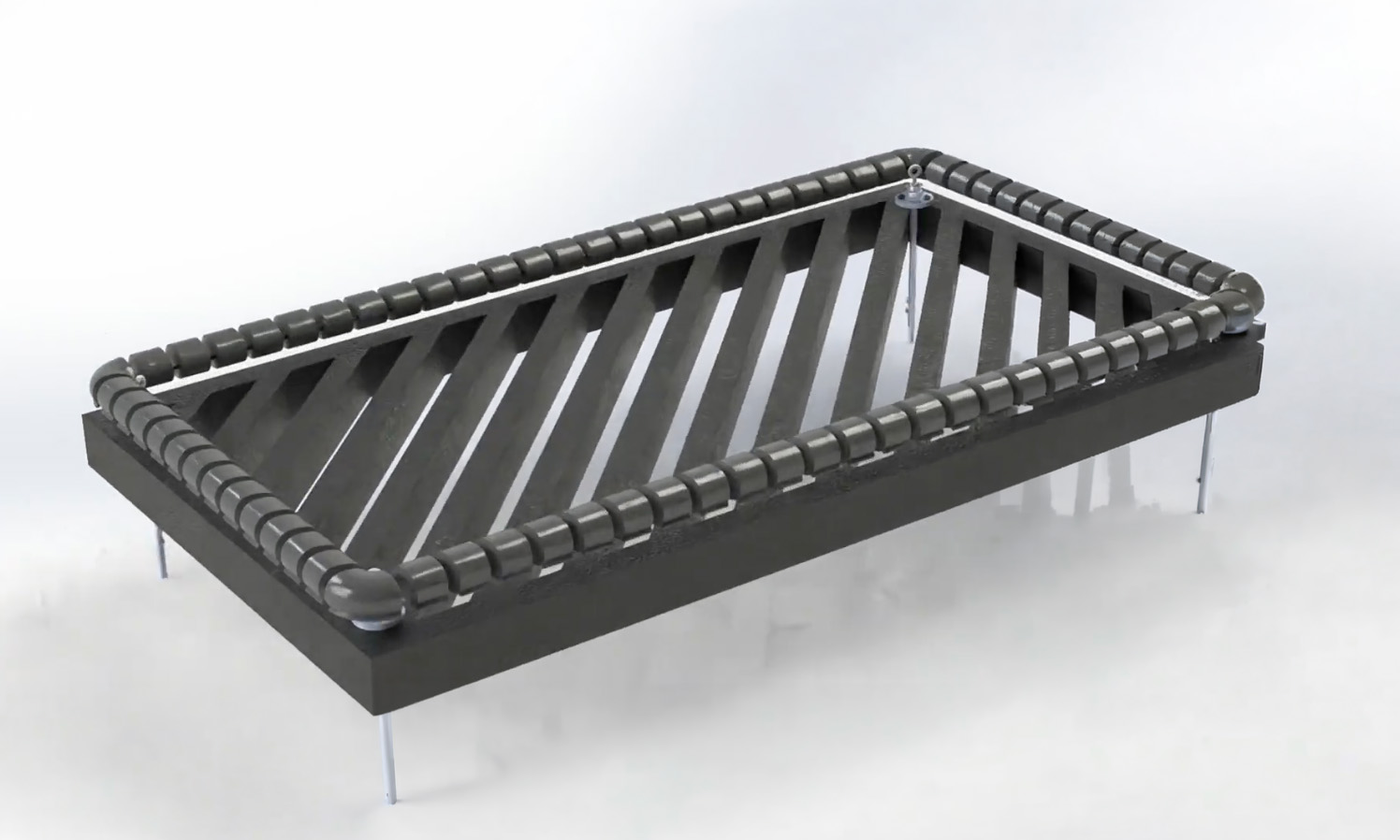
The device itself is deceptively simple. A passive, buoy-like frame with a
mesh wall that rests atop storm drains. As the water level rises so does the
mesh wall, creating a dynamic filtering system. Sticks, leaves and other
debris are caught before they get in the drain without slowing down the flow
of water, giving the department of transportation more time to respond
before a blockage becomes a flood.
Currently, the team conducting flow rate testing with water and debris,
creating a baseline to test the prototype they’re finishing up. Ideally, the
prototype won’t impede the flow of water while filtering out debris.
For this team, the project was a glimpse into life after graduation: working
on multiple things at once, adapting to changes and roadblocks, and
functioning as a team. “[It] simulates a real-world work environment,” Zhuo
said. “Everyone on the team is striving for one goal in a project while they
also have different projects, classes, that we are all juggling along with.”
The team especially emphasized the strength found in collaboration.
“Everyone has their strengths and weaknesses,” Zhuo said. Knowing how to
collaborate with each other can maximize the strength of a team to bring a
stronger solution to the table.”
After planning out their project as a team, they split the work up. Ceriani,
Crossan, and Oster were in charge of prototyping 3D printing casts for the
silicone buoyant elements, ordering supplies, and machining rail anchors.
Zhuo and Yacono designed and built the testing setup and 3D printing
fixtures, assembled the flume, and conducted tests for frow rate benchmarks.
They’ll then test Impedebris as a group to make sure it’s as effective as
intended. So far, Impedebris is providing the group with hands-on experience
to launch their careers.
“Engineering projects are going to be my bread and butter,” Yacono said. “I
look at this as another practice swing, helping me refine my form in
preparation for challenges to come. Above all, this has shown me that
experiential learning is by far the most effective vehicle to learn
something new.”
“Every step brings new challenges that are visible and invisible,” Crossan
said. “For me, it’s important to maintain an open and positive mindset for
in the real-world adapting to new engineering teams is part of the
engineering work culture.”
“I personally feel very accomplished when the real world can be quantified
and related to theory,” Ceriani said. “In the real world, analyzing
experimental data and relating it to engineering theory is a critical skill
for my career.”
As the team moves toward final testing, Impedebris represents more than just
a senior design project. It’s a practical, scalable idea with the potential
to make everyday infrastructure more resilient and to keep drivers moving
when it matters most.