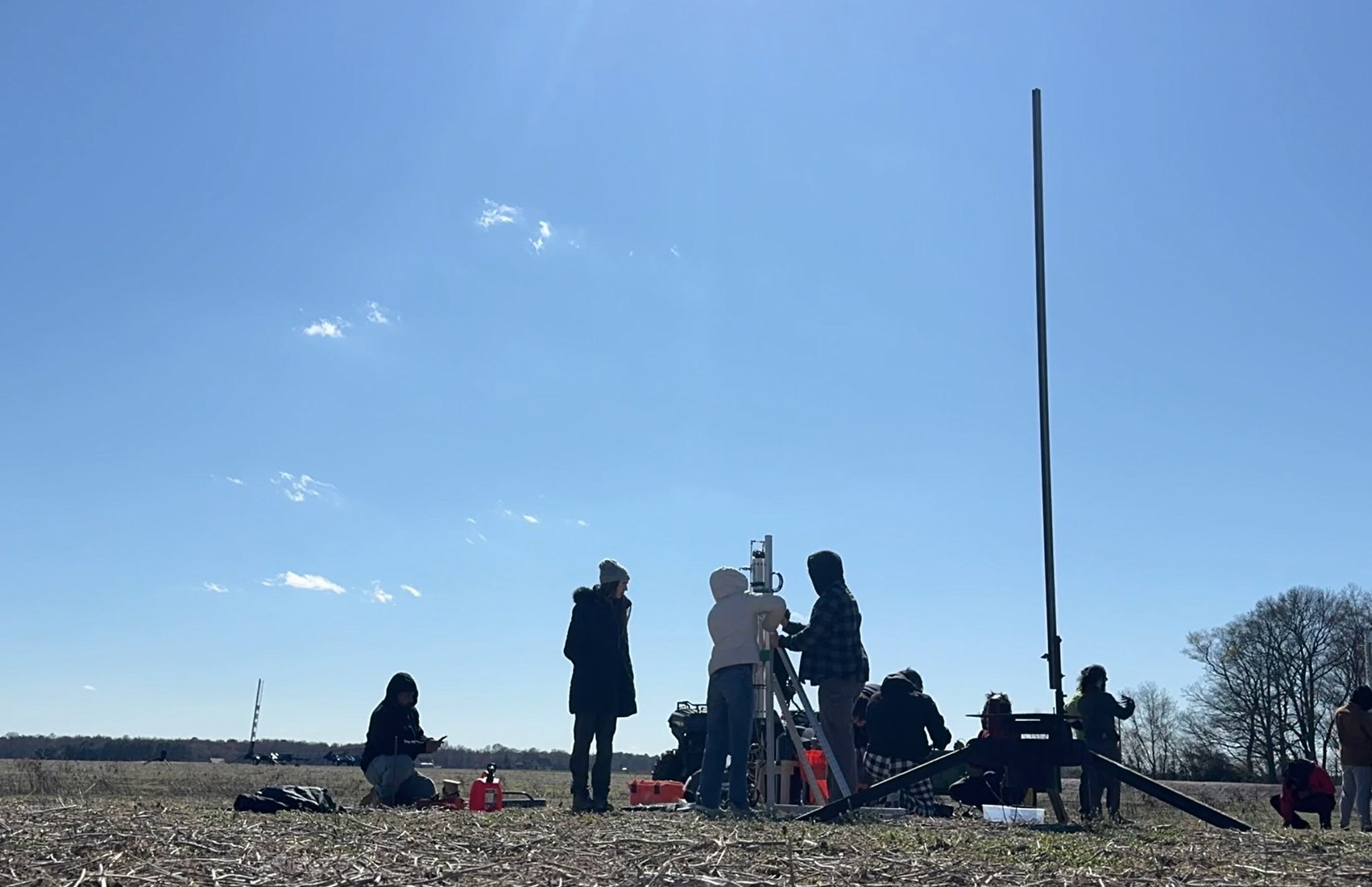
After months of tireless work, long nights, and meticulous preparation,
the Drexel Rocket Team has successfully completed a static fire test of
their debut liquid rocket engine, Ambition-1. While balancing the
excitement of intercollegiate camaraderie with last minute electrical
corrections, the team navigated this momentous ground-based engine test
through effective teamwork and confident leadership.
The triumph of their static fire test at the Maryland Delaware Rocketry
Association (MDRA) launch site is just the beginning for the Drexel
Rocket Team, which has put in place an eight-year strategic plan aimed
at cementing themselves as leaders in advanced collegiate rocketry –
carried in part by achievements in the development of liquid engines, a
departure from the solid rocket engines typical of their peers.
Dylan Joseph, Mechanical Engineering junior and President of the Drexel
Rocket Team, has big plans for the organization, both in leading the
team as a Drexel student, but also in setting the groundwork for their
ambitious long-term aspirations. His goals include getting as close as
possible to the rocketry industry standard, maintaining financial
stability, and eventually going for the lauded “space shot” – launching
a vehicle 100 kilometers up.
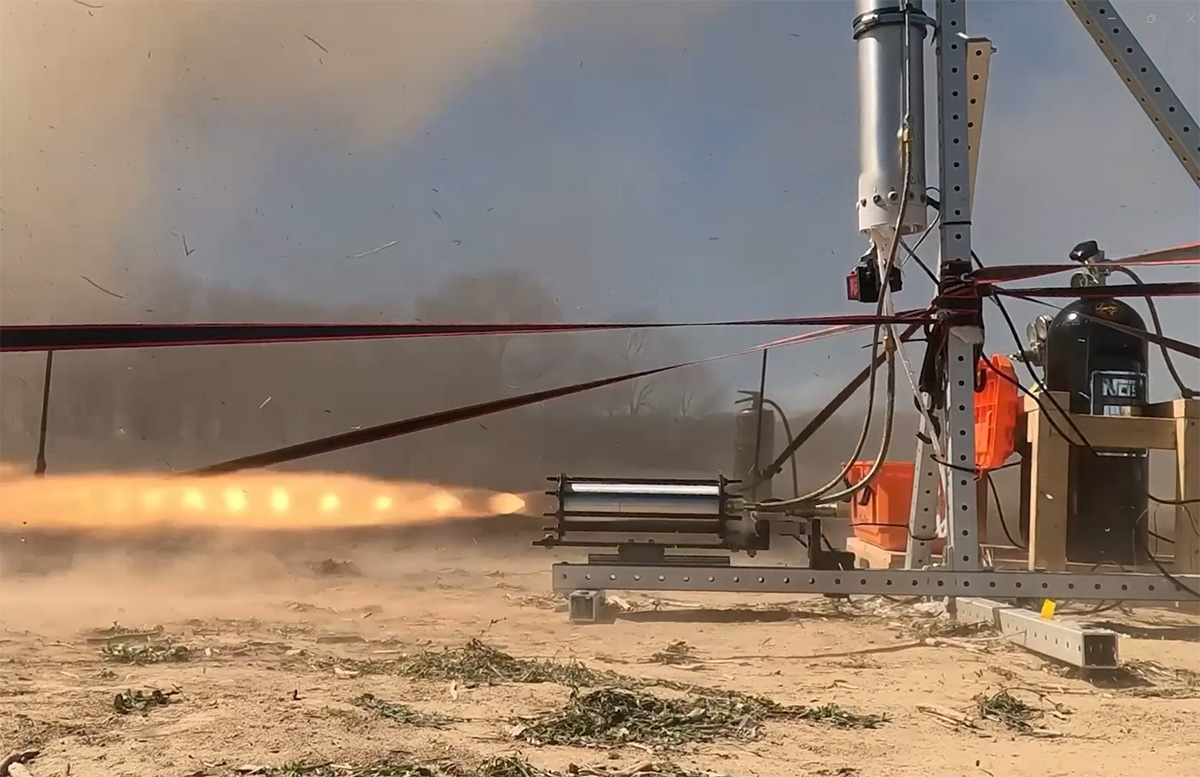
The origins of Ambition-1 predate the Drexel Rocket Team, with an
earlier iteration of the engine developed during the 2024-25 academic
year as part of a Senior Design project, under the guidance of Drexel
MEM Alum Joel Krakower (BS/MS ME ’23). With the support of the
Department of Mechanical Engineering and Mechanics, development of the
liquid engine could expand beyond the boundaries of coursework, guided
by student leaders like Dylan, who came to Drexel as a transfer student
with a background in collegiate rocketry.
A unique culture has bubbled up around collegiate rocketry and the
on-the-ground atmosphere at test sites like MDRA. Dylan notes the
motivating factor of an intercollegiate “space race” and the building of
a social media presence in generating buzz in the rocketry scene. With
the goal of becoming the most advanced collegiate rocketry operation,
staying tapped into the achievements of leading teams in the community
is crucial, and helps to build excitement and competitiveness while
retaining the spirit of innovation and camaraderie.
The success of the static fire would not have been possible without the
collaborative efforts of Drexel Rocket Team leads and members, including
Quincey Daniel (Lead Electrical), William Richards (Lead Propulsion
Engineer), Dhruv Patel (Operations Lead), Sophia Vesci (Mechanical &
Propulsion Engineer), Anup Pilla (Sr. Software/GNC Engineer), Harnoor
Singh (Mechanical Engineer) and, of course, Dylan Joseph (Rocket Team
president and Chief Engineer).