In many older American cities, a single heavy rainstorm is enough to
overwhelm sewers that carry stormwater and wastewater through the same
pipes, sending untreated sewage into streets and waterways. Climate change
is intensifying that problem, and the cost of replacing or expanding
underground infrastructure often puts comprehensive solutions out of reach
for the communities that need them most. A new Drexel University study
tested whether simple, household-scale measures could take meaningful
pressure off those systems.
Led by
Amanda Carneiro Marques, PhD
, assistant professor of civil, architectural and environmental engineering
(CAEE) at Drexel's College of Engineering, the study focused on Cramer Hill,
a residential neighborhood in Camden, New Jersey, that sits within a coastal
hazard zone and is prone to frequent flooding and combined sewer overflows.
The work appears in Urban Climate and was conducted with co-authors
including
Franco Montalto, PhD
and
Fernanda Cruz Rios, PhD
, professor and assistant professor of CAEE, respectively; research
scientist Ahmad Haseeb Payab; doctoral researcher Meghna Rajbhandari; and
recent graduate Katelyn Singh.
The team used a calibrated hydraulic model to simulate 16 combinations of
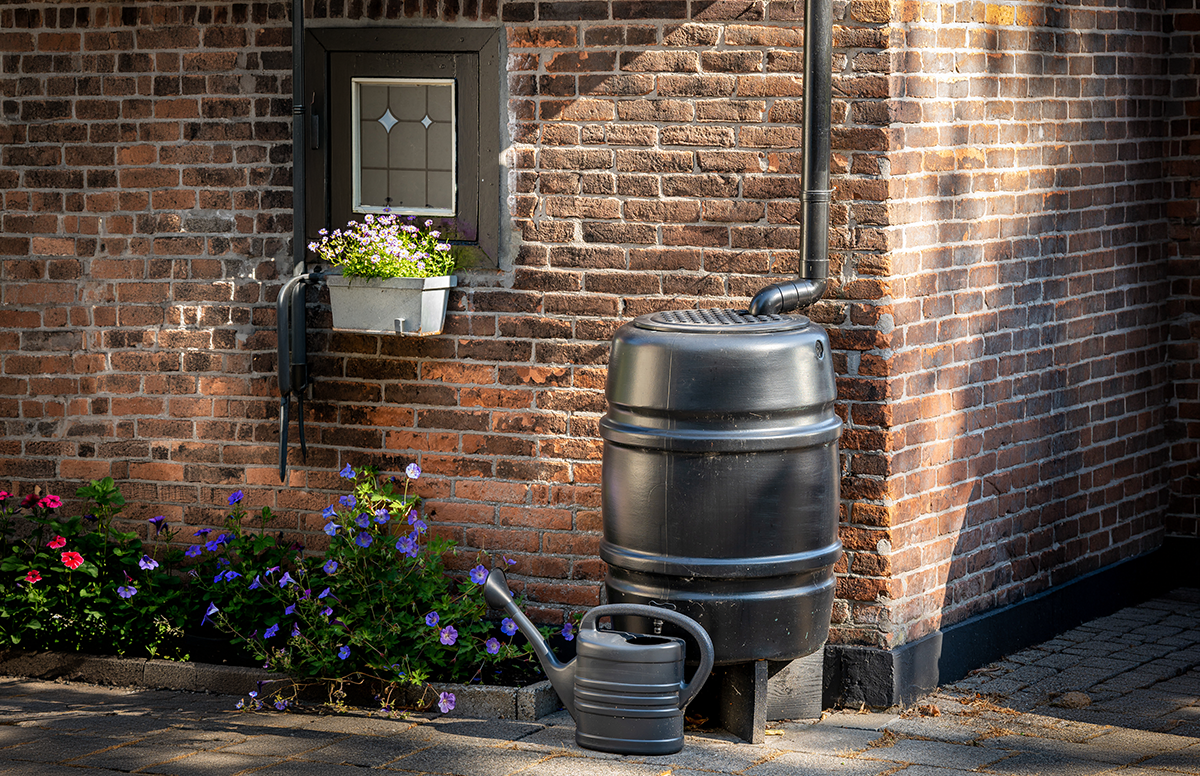
three decentralized interventions: rainwater harvesting through barrels and
cisterns, sink-to-toilet greywater reuse, and water-efficient fixtures. Each
combination was evaluated for its effect on annual sewer overflow volumes
and surface flooding. The same strategies were then tested under projected
climate conditions, including precipitation increases of 10, 20 and 30% and
sea level rise scenarios up to 1.8 meters.
"These strategies work by reducing the volume of water that enters the sewer
system in the first place," Marques said. "Efficient fixtures and greywater
reuse lower the base sanitary flow the system carries on dry days, while
rainwater harvesting captures stormwater at the source before it reaches the
pipes. When you combine them, those reductions accumulate."
Under current conditions, the most comprehensive combination cut both sewer
overflow discharge and surface flooding by 11% relative to the baseline.
Under the most severe climate scenario tested, those reductions held at 11
to 13%, suggesting the strategies retain their value even as conditions
worsen.
The simulations also revealed an important asymmetry between flooding and
overflow under climate stress. Precipitation intensification tends to drive
higher overflow volumes, but sea level rise at a certain threshold
suppresses overflows by submerging the outfalls through which sewage exits
the system. Water that cannot discharge backs up instead, sharply increasing
surface flooding. Under the worst climate projection tested, baseline flood
volume nearly doubled.
A sensitivity analysis found that household participation was the strongest
predictor of how much benefit the strategies delivered. Results improved
substantially with higher adoption and eroded when fewer households took
part. Assumptions about indoor water use behavior had comparatively little
effect on outcomes.
"The participation result tells us that individual decisions genuinely move
the needle," Cruz Rios said. "When residents install a rain barrel or upgrade
their fixtures, they are contributing to a measurable reduction in overflow
and flooding for their neighborhood. That is worth knowing, because it means
there is a real return on taking part."
For Cruz Rios, the findings also carry a policy implication that goes beyond the
engineering. "Camden residents are already facing significant economic
pressures, and they cannot be expected to absorb the cost of fixture
retrofits or large cisterns on their own," she said. "What this study shows
is that those investments deliver real, measurable benefits for the whole
neighborhood. That is exactly the kind of evidence that should inform public
programs and utility-led initiatives aimed at bringing these upgrades to
low-income communities."