The Language of Health Care: How Drexel Students Are Preparing for the Global Practice of Medicine
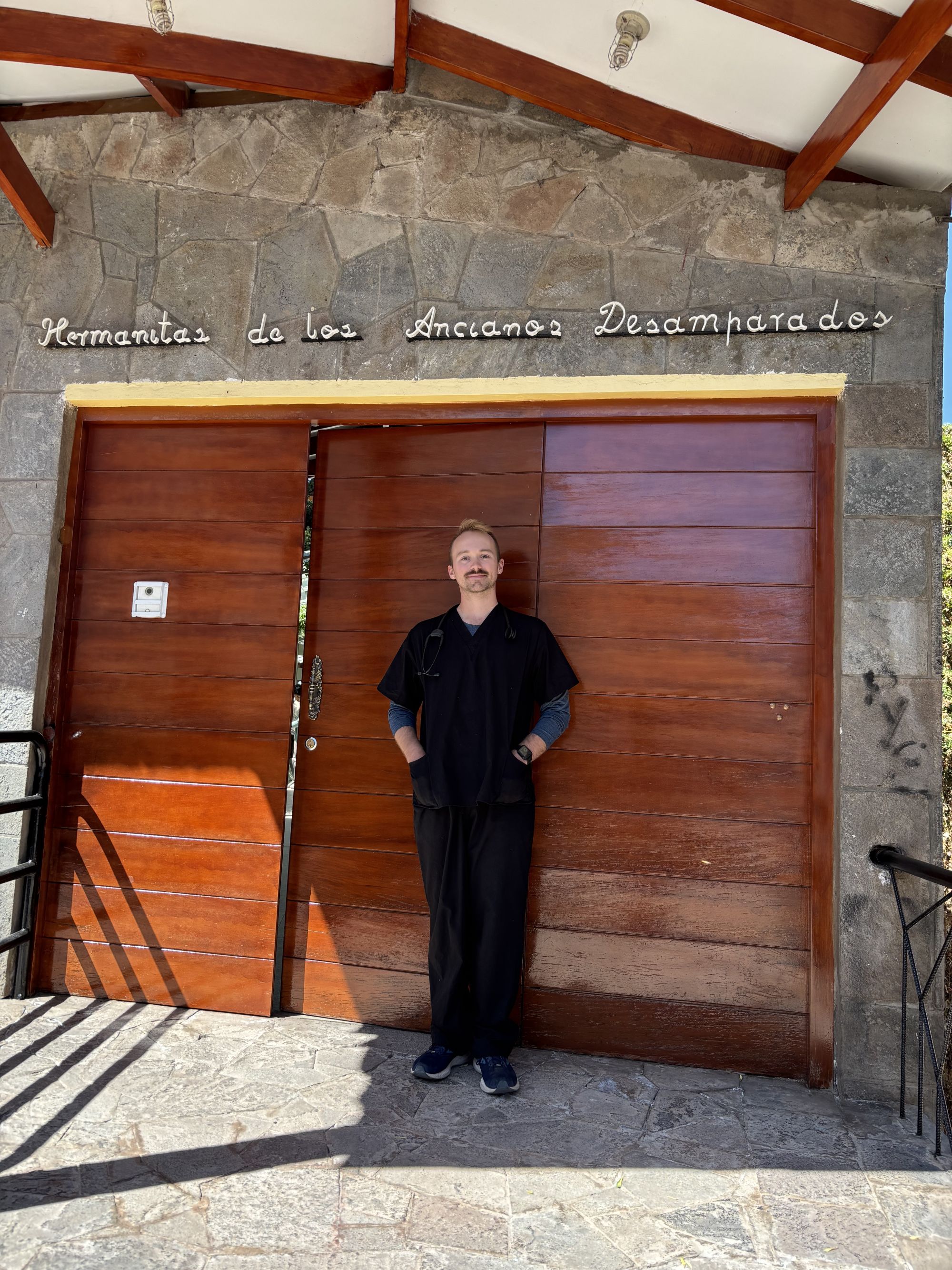
Nicholas Lehman, MD ’28, at El Centro Gerontológico
La Recoleta in Cusco, Peru
Last summer, second-year medical student Richa
Sharma was working in the labor and delivery ward of
a health care center in Spain when she witnessed a birth
that was fast becoming a crisis situation. Labor was slowed
down by shoulder dystocia — meaning the baby’s
shoulder had lodged in the mother’s pelvis, and they had
five minutes to determine whether the mother would need
an emergency c-section.
“For a moment, I didn’t know what I was seeing, whether
it was going to be a stillbirth,” Sharma says. “The baby
came out blue and the team whisked the baby away to
the NICU. It was a very scary moment, but what made it
worse is that the mother didn’t speak Spanish, as she was
from Germany, and her English was limited as well.”
Ironically, Sharma, who had completed Drexel’s Spanish
for Medical Professionals elective the previous spring, was
in Spain to practice her medical Spanish. While her
second language wasn’t helpful to this mother, the
experience only confirmed for Sharma how meaningful
and useful the class had been. With more language skills,
providers can be that much more effective in reaching
patients.
“Thankfully, the baby and the mother were stable, but I
could see how important it was to put the patient at ease,
and the role communication plays in that process.”
More Than Words
Part of the Global Health Education program, Spanish for
Medical Professionals is an elective for medical students
who want to improve their language proficiency,
understand the cultural nuances of interacting with
Spanish-speaking patients, and improve health care
communication in general with diverse patient populations.
The yearlong elective, taught by Carlos Gonzalez-
Ferrin, focuses on medical vocabulary, dialogue modeling
and note-taking skills, with a goal of improving students’
listening comprehension and pronunciation. The class is
designed for intermediate-low level Spanish speakers at
any stage in their medical education, and it meets once
a week.
“The requirement is that the students come in with
conversational language skills, so the medical Spanish
builds upon their knowledge base,” says Nielufar
Varjavand, MD, professor of medicine and director of
global health education at the College of Medicine.
“Medical students have to learn how to practice medicine
not just here but in the whole world. Spanish is the second
most common language spoken in the United States, and
it is valuable for our students to communicate well with
patients, wherever they are.”
While many disease names — especially proper
nouns — are the same across languages, the words for
symptoms and treatments can vary widely. That’s where
the vocabulary lists are particularly helpful.
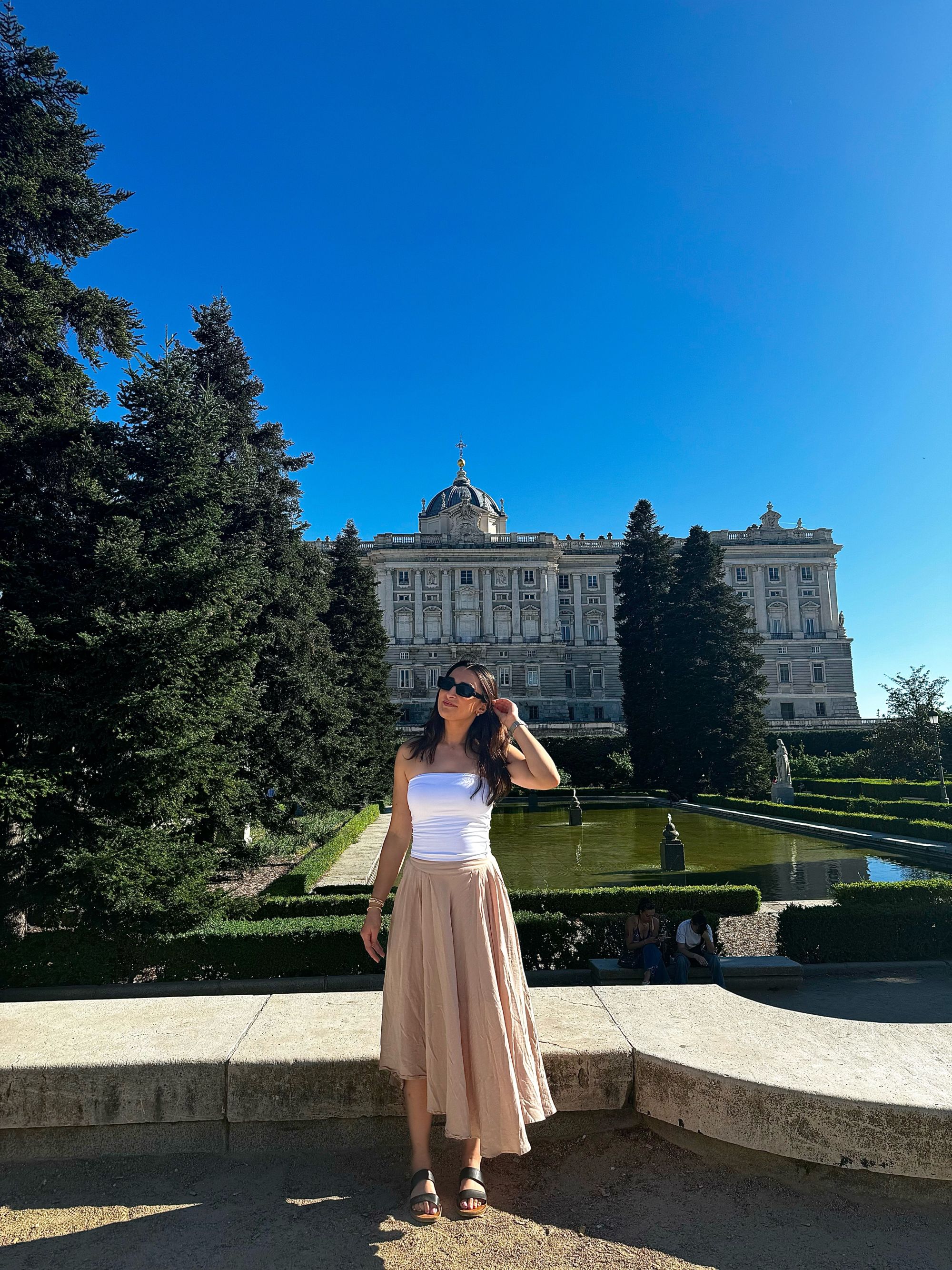
Richa Sharma, MD ’28, during her visit to Spain
“Descriptors like ‘wheezing’ or ‘swelling’ won’t come
up in conversational Spanish classes. But when a patient
comes to you and tells you the story of what they’re
going through and what they’re having trouble with, it’s
incredibly helpful to know those words to understand
what a patient is saying,” Sharma says.
In the class, students also read medical articles, research
medical interventions and watch Spanish language videos.
They note differences in health conditions and health
promotion efforts across different areas of the world, so
they come away with a deeper understanding of health
care systems, as well as differences in health care culture
among Spanish-speaking regions.
As a first-year student, Nicholas Lehman, MD ’28, eagerly
enrolled in the Medical Spanish class. Lehman majored
in Spanish in college, but due to COVID lockdowns, he
missed out on opportunities to travel and study abroad.
Continuing his study at Drexel not only allowed him to
deepen his existing knowledge but it gave him a new
practical application for it.
“As an undergraduate, I studied history and literature,”
Lehman says. “This class helped me expand my knowledge
of everyday Spanish for the medical setting. Every week
we would conduct role-playing scenarios where we take
on the role of the doctor or the patient and run a mock
evaluation. It’s things like knowing when to use the formal
usted, subtle vocabulary differences and sentence
structure, that can show a patient that you respect their
culture and are here to help.”
Putting Learning Into Practice
Upon completion of the course, students are encouraged
to get involved with Spanish-speaking community health
programs at St. Christopher’s Hospital for Children and
Puentas de Salud, to enroll in global health experiences in
the summer after their first year or as a fourth-year elective
in Spanish-speaking countries, or to join the student group
Mesa de Español to continue practicing their newly
acquired skills.
Like Sharma, Lehman opted for a summer immersion
program. At the end of his first year, Lehman traveled
to Cusco, Peru, for six weeks with the Máximo Nivel
program, where he was placed in a clinic called El Centro
Gerontológico La Recoleta, which focuses on geriatric
care. He also continued his study of Spanish with
additional classes there.
“I was responsible for physiotherapy and rehabilitation
services, and assisting with patients’ activities of daily
living. This experience was especially interesting because
many of my patients only spoke Quechua, so I was able
to learn a bit of that language as well,” he says.
Fluent in Compassion
Something else happens when students learn how to
provide health care in more than one language — it breaks
down silence and builds emotional connections.
“Students report that after they have taken this course,
not only do they become better Spanish speakers but they
come away with more empathy for individuals who lack
proficiency in English,” Varjavand says.
Sharma saw firsthand how making an effort to directly
communicate with a patient in their language went a long
way toward building trust. It also allowed her to better
understand the patient’s experience of feeling scared
and alone.
“Even knowing that someone is just trying to communicate
with you in your language makes a world of a difference,”
she says. “In many situations there will be an interpreter or
another person who’s fluent in a provider setting. But as the
doctor, having a little bit of language competency to talk
to your patients and look them in the eyes is a way of
saying I understand you and I care about what you are
going through.”
In the case of the mother in Spain, the provider spoke
some English and they were able to convey that it had
been an emergency situation, the baby would need to
go to the NICU, but they would both be stable, and the
mother could see her child shortly. It was enough to put
her at ease, Sharma said, but there’s no such thing as too
effective communication.
“It was very much an eye-opening experience and
definitely made me want to pursue speaking Spanish even
more, so that I could always communicate with patients
in tough situations and help them understand what’s
going on.”
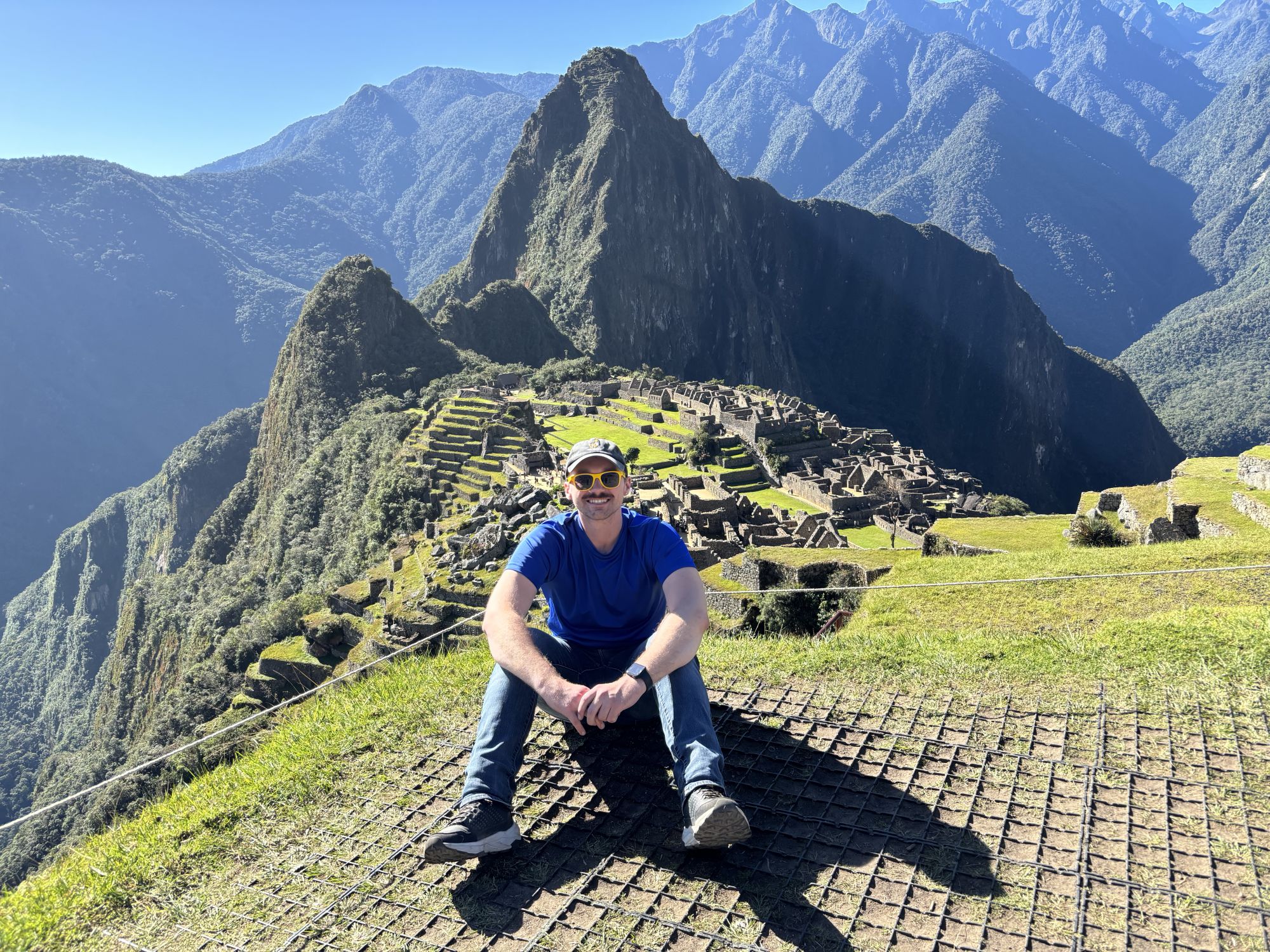
Lehman during a hike to Machu Picchu
Bridging the Communication Gap
For Lehman, who hopes to go into emergency medicine
and ideally practice in an urban setting, having the skills
to communicate with patients quickly and correctly will
be a major asset.
“We can and do use translators all the
time in these settings, but being able to speak
Spanish makes patients feel more comfortable.
In an emergency setting it will save time and
allow me to act more quickly.”
Sharma is considering a career in pediatrics,
women’s health or community medicine, and
she is especially interested in health equity.
Originally from Texas, she anticipates that
she may complete her training in the
Northeast and return to her home state to
eventually practice medicine and/or conduct
research, and the medical Spanish will be
especially useful amid the significant
Spanish-speaking population there.
Regardless of where she and Lehman
ultimately land, having the additional
language skill on their resume will be a
bonus, and having a stronger connection
to their patients will only benefit their care.
“When we teach medicine, we are
teaching communication,” Varjavand says.
“It’s not just for the people on our block, in
our city or even in our community. We are
citizens of the world; we should help
everyone.”