Outreach Programs at Drexel University College of Medicine’s Anatomy Laboratory
March 9, 2026
For more than 20 years, the anatomy lab at Drexel University College of Medicine has engaged in outreach to local high schools, colleges, and universities. The program began as a grassroots effort in the Department of Neurobiology & Anatomy after an AP biology teacher requested an opportunity for her class to study human anatomy in the lab. With support from Drexel MD students and faculty, word spread that these unique learning opportunities were available at the anatomy lab. Since then, the program has expanded to accommodate dozens of schools across the region.
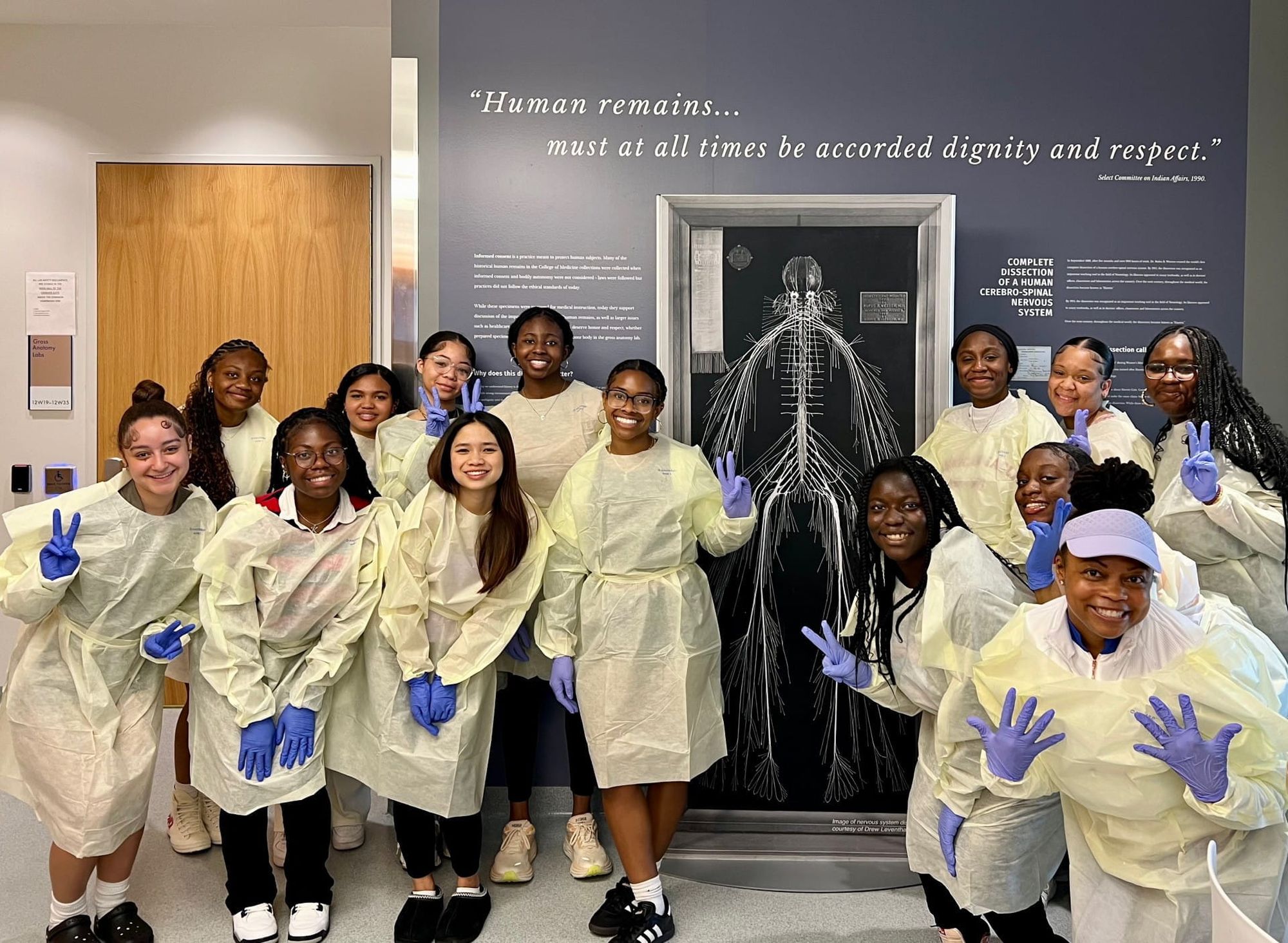
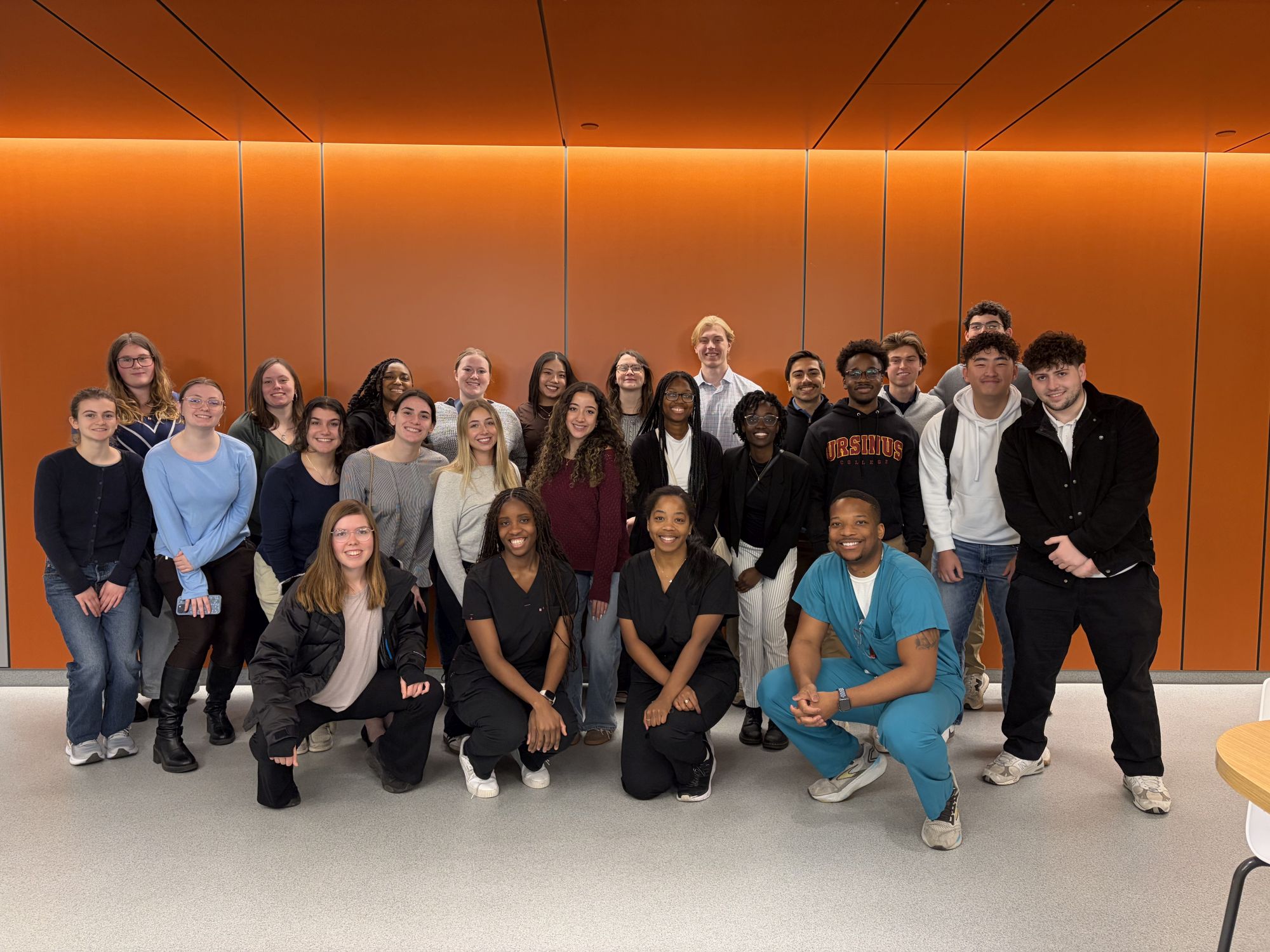
Once the outreach model was established, student groups and other departments within the College began coordinating their own visits to the anatomy lab based on the needs of the communities they served. These visits include a program for Ursinus College students, organized and staffed by the Drexel Minority Association of Pre-Med Students (MAPS) group to introduce pre-med undergraduate students to medical school. In addition to the schools served by the Department of Neurobiology & Anatomy program, the anatomy lab frequently partners with the Office of Community Experience to host outreach groups. Many schools have returned year after year, with teachers planning their curriculum around the visits.
“Our approach to outreach is modular so that we can tailor each visit to the needs of the visitors and their teachers,” said Theresa Connors, MS, instructor and administrator of research and education in the Department of Neurobiology & Anatomy, who serves as the anatomy lab’s outreach coordinator. This modular format always includes time in the gross anatomy labs and may also include panel discussions with faculty and students, Drexel Legacy Center workshop highlighting the history of medical education in historically underrepresented groups, a presentation on graduate programs and pathways to research careers, and much more.
Each visit begins with an introduction to the process of body donation, emphasizing that every donor made a thoughtful decision to donate their body for medical education. “We point out that the students are helping fulfill each donor’s wish to make meaningful contributions to medical education, even after death,” said Connors. “Respect for the donors is paramount, and no photography is allowed in the gross lab. We also ask visitors to use anatomical terms when discussing their experience in the lab.”
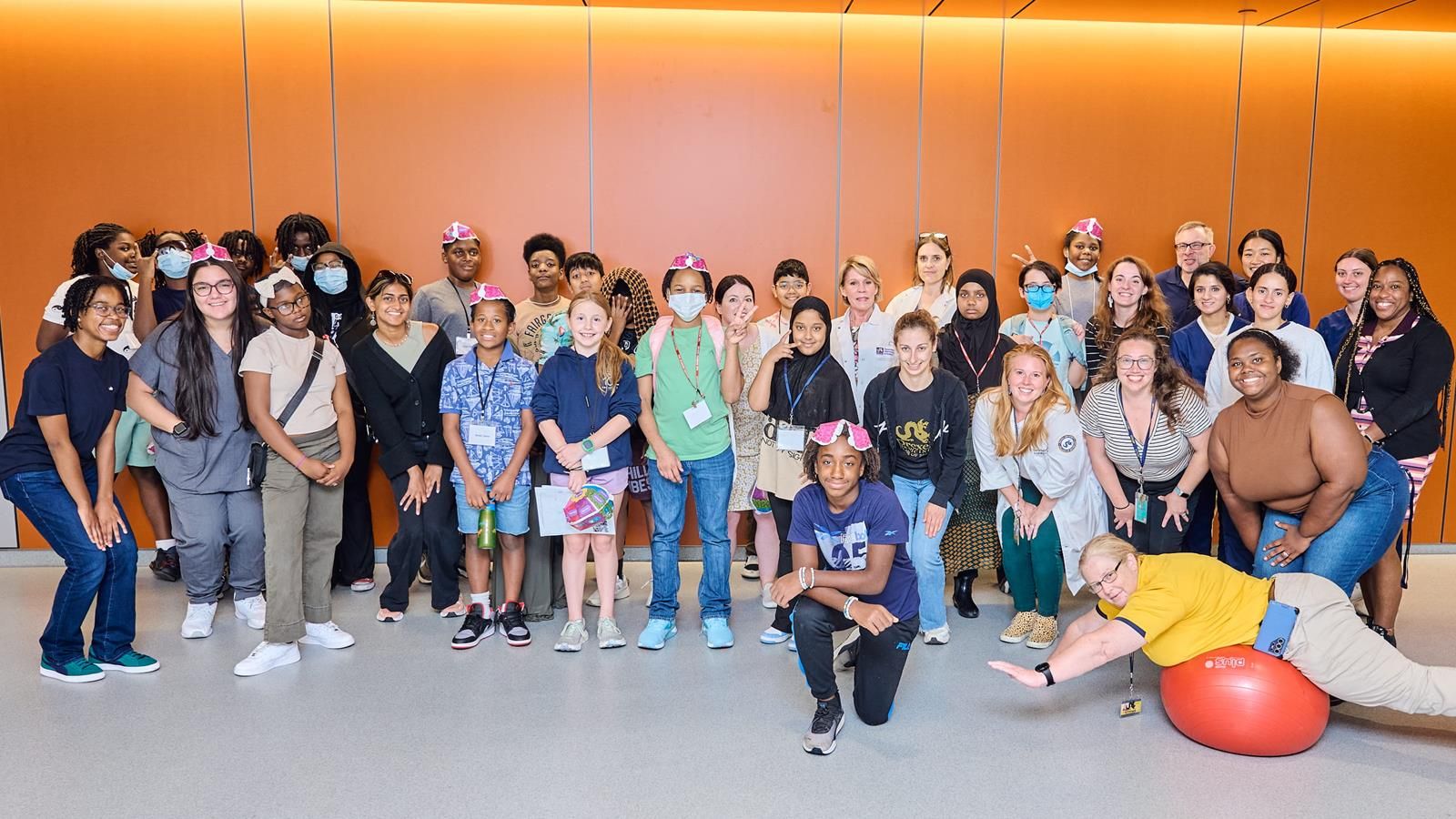
Volunteers — including faculty, professional staff and medical and graduate students — make these visits possible. “Student volunteers serve as role models for the young visitors, sharing knowledge and enthusiasm in their chosen fields,” said Connors. “We often say that we aren’t sure who has more fun at these visits — the visitors or the presenters!”
Drexel student volunteers also have the opportunity to present during outreach visits, helping them develop teaching skills and reinforce their knowledge of the anatomical sciences. These presentations are interactive and often leave a lasting impression on visitors. “Many of the visitors quickly become hands-on participants, asking insightful questions and making great comments and observations,” said Connors. “Letters of thanks that the students send after their visit will sometimes say that they were thinking about a career in the health care field, and their visit to Drexel solidified their aspirations.”
Beyond serving as an invaluable learning experience, these outreach visits also function as a recruitment tool. “Over the years, teachers have reported that their students applied to Drexel based on their visit to the anatomy lab,” said Connors. “Some visitors have even gone on to work in the lab over the summer.”
As the anatomy lab continues to evolve, its outreach program remains a cornerstone of Drexel’s commitment to community engagement and hands-on medical education. The move to the Health Sciences Building in University City has opened new doors, expanding access for local schools and providing the resources needed to offer more immersive learning experiences. With faculty, student and professional staff volunteers, the outreach program is poised to inspire the next generation of health care professionals for years to come.