200 Years of Drexel University Founder Anthony J. Drexel
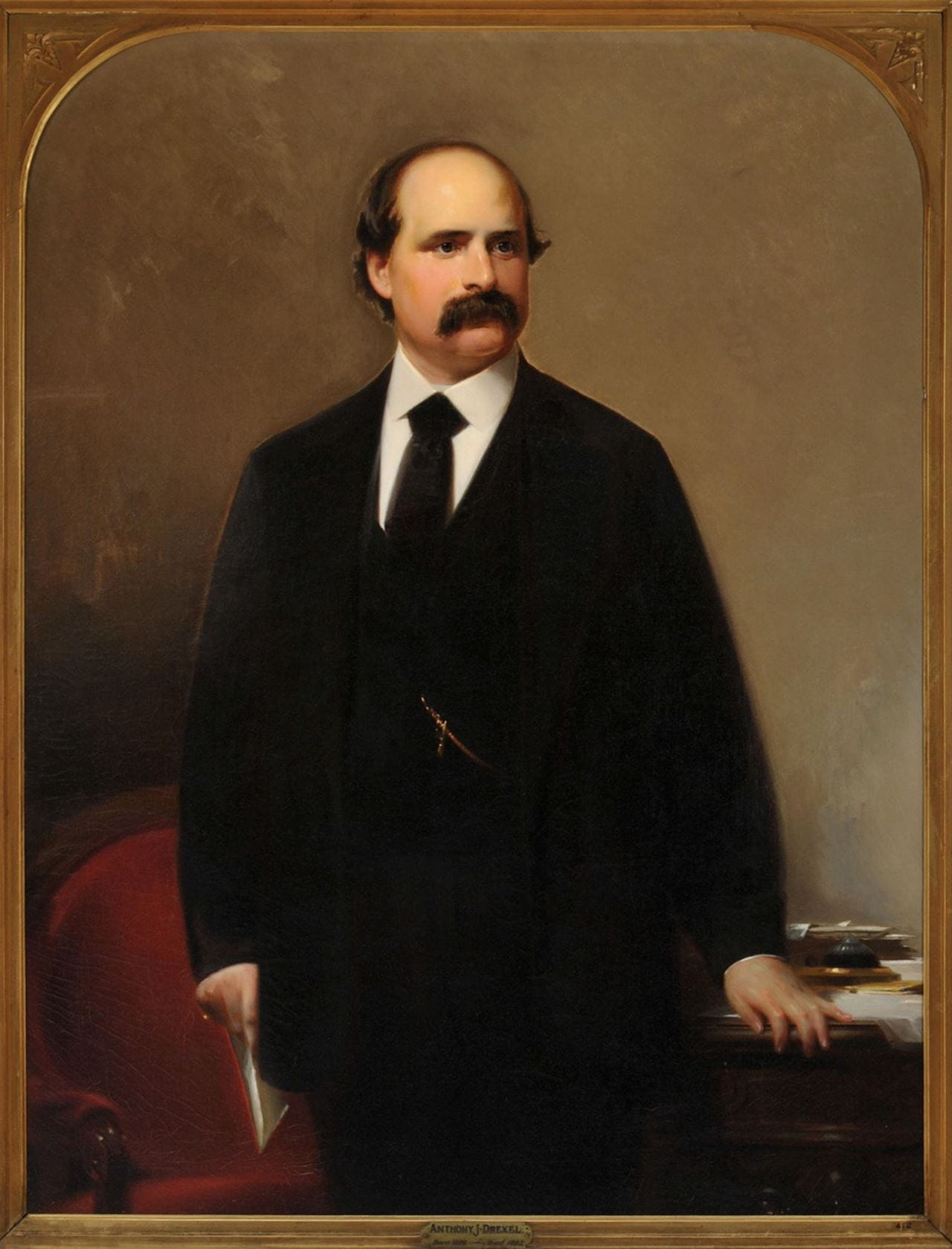
A portrait of Anthony J. Drexel, circa 1890, by Josef Bergenthal. Photo courtesy The Drexel Founding Collection.
Have you ever wondered where the “Drexel” in “Drexel University” comes from? Or who founded Drexel University?
The answer to both questions: Anthony Joseph Drexel, who was born 200 years ago on Sept. 13, 1826.
For his big birthday this year, the University hosted a big bash on Sept. 16 from 12–2 p.m. at the Paul Peck Alumni Center with free birthday treats, Drexel swag, games and interactive activities. It's an annual tradition that's part of Welcome Week, which introduces new Dragons to current students, faculty and professional staff, including those from Alumni Relations and the Drexel Fund. This tradition dates to 2015 (Anthony’s 189th), though the University originally celebrated Anthony’s birthday with a Founder’s Day during its first few decad
There’s a lot to celebrate with Anthony. One of the most prominent Philadelphians of his time, he was a visionary leader, a successful banker, a family man, a neighborhood developer, a philanthropist, a patron of the arts, a publicity-shy man with famous friends and (last but not least) the founder of the Drexel Institute of Art, Science and Industry (today’s Drexel University). He rose from humble beginnings but never forgot where he came from, keeping his family and his city closely intwined with his life and career
But who was Anthony J. Drexel, and what was his life like? Read on to find out more about the Drexel behind the University.
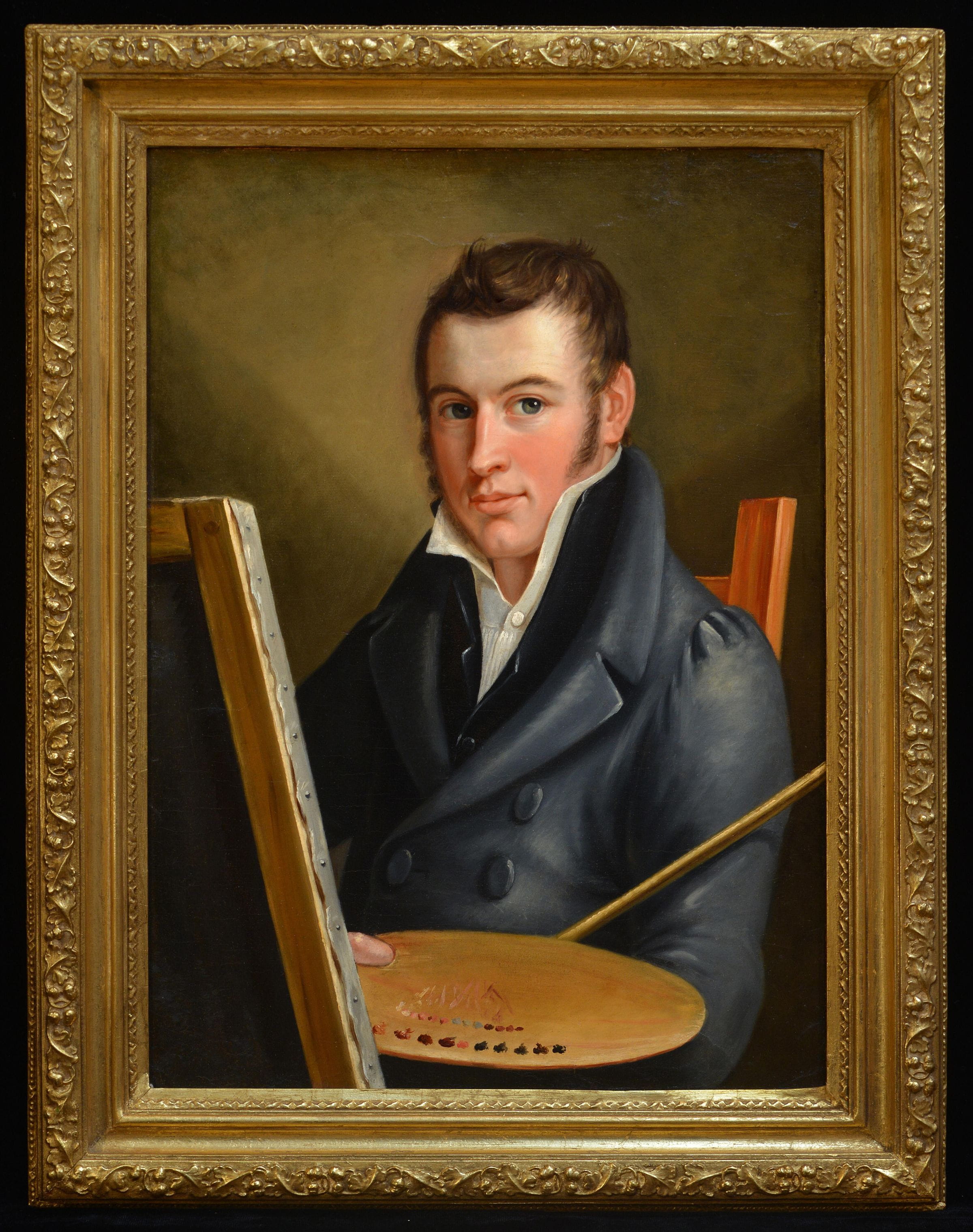
A self-portrait of Francis Martin Drexel circa 1817, the year he immigrated to America from Austria. Photo courtesy The Drexel Founding Collection; photographed by Kelly & Massa.
Family Background and Early Beginnings
Anthony was the second son and third child born to Francis Martin Drexel and Catharine Hookey Drexel in Philadelphia, and he was raised (with six brothers and sisters) at Sixth and Chestnut streets, where he later built one of his businesses.
Anthony’s father immigrated to America after escaping Naploeon’s invasion of his native Austria and his mother was born into a Pennsylvania Dutch family: Her grand-uncle was Pennsylvania’s first governor of German descent, and her father was a co-founder of the Holy Trinity Church, the first church in America for an ethnic population (German-speaking Catholics). As such, Anthony was raised fluent in English and German, as well as French.
The arts were another fundamental part of Anthony’s life from the very beginning. When he was born, his father Francis was on a four-year journey in South America as a portrait artist (he painted revolutionaries like Simón Bolivar). Upon his return, Francis continued painting, reportedly paying for his children’s education with portraits of the headmistresses’ daughters.
In 1838, Francis switched careers and opened a currency brokerage house, Drexel & Company, in Philadelphia. Two years later, when Anthony was 13 and his older brother, Francis “Frank” Anthony Drexel, was 15, they began working at their father’s business. All three men would remain at the family company for the rest of their lives.
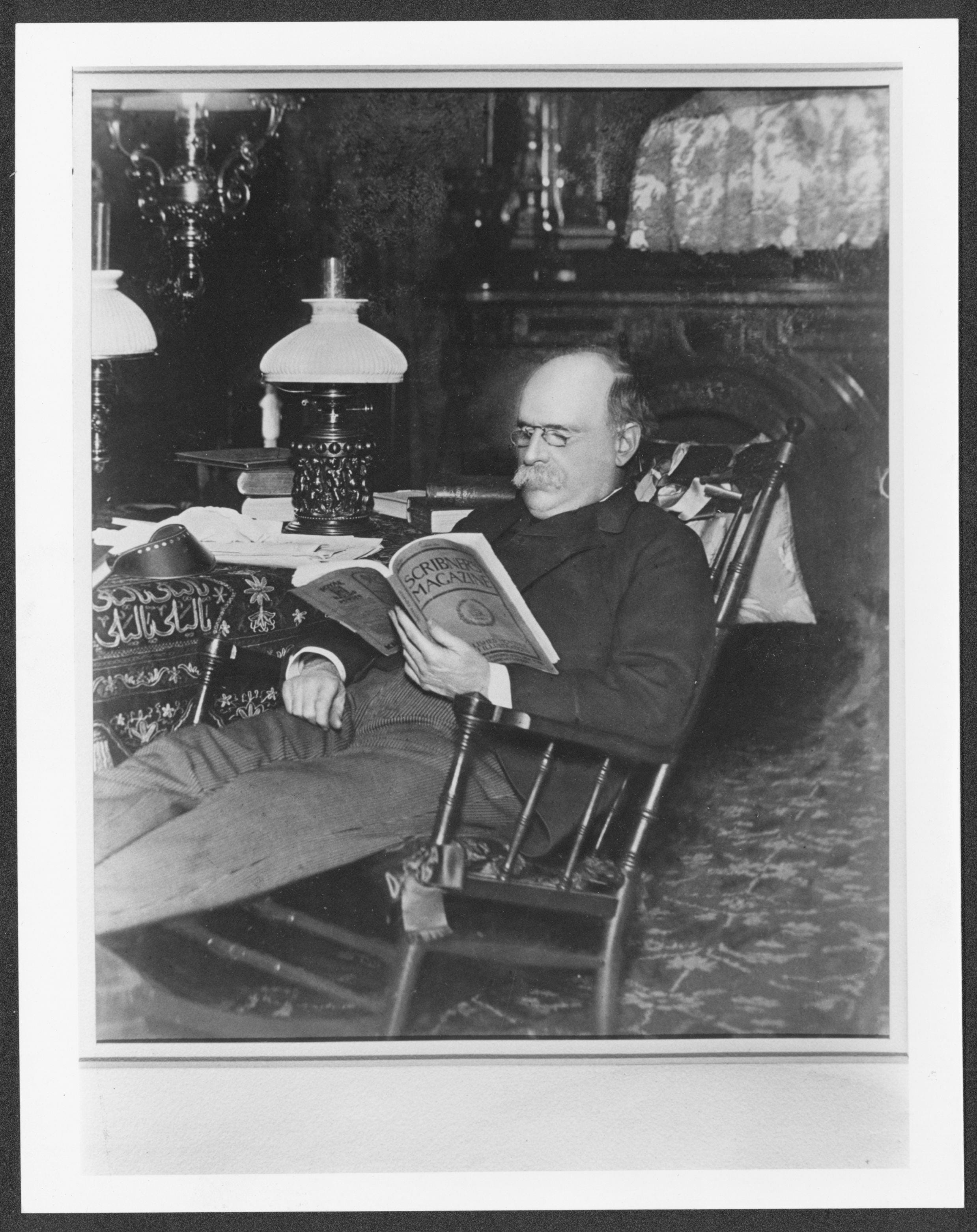
One of the few photographs of Anthony J. Drexel shows him reading an issue of Scribner’s Magazine, an American magazine. This undated photo is in the public domain and was digitized by Drexel University Archives. Photo courtesy the Drexel University Archives, Drexel University.
Drexel & Co.
Anthony and Frank started as clerks and became partners seven years later in 1847. By then, the business had grown into a private bank known as Drexel & Co., and while its headquarters remained in the heart of Philadelphia’s financial district on Third and Chestnut streets, its reach was expanding across the country. That year, Drexel & Co. helped the U.S. government finance the Mexican American War by selling $49.2 million in Treasury bonds — a new practice for wartime fundraising, and one that Drexel & Co. would replicate in the future, including with the Union Army during the Civil War.
As the three Drexels settled into their roles, Anthony became the head of the company overseeing all matters of business, clients and partnerships. Francis Martin, with his love of adventure and travel, opened Drexel branches in Chicago (a key “frontier” city) in the early 1840s; San Francisco in 1851 (after the start of the Gold Rush); and New York City in 1855 (as Wall Street grew into America’s financial epicenter). At the Philadelphia headquarters, Frank managed the day-to-day aspects as the office manager. After Francis Martin died in 1863, the two sons became equal partners — with younger brother Joseph Wilhelm as a junior partner — and Anthony oversaw the company’s expansion, including a Paris office in 1867.
Drexel & Co. had become a partner of a London bank in 1854, which put Anthony in touch with Junius Morgan, an American expat who would later work with the Drexels to loan the French government $250 million francs during the Franco-Prussian War. Junius then asked Anthony to become a mentor to his son, John Pierpont “J.P.” Morgan, who became a junior partner to the elder Drexel brothers and manager of the New York City-based Drexel, Morgan & Co. in 1871. It was through that 22-year partnership, and with Anthony’s counsel, that Morgan became the most prominent Gilded Age financial tycoon, with the reserved and private Anthony wielding his power behind the scenes.
Through Anthony’s leadership, Drexel & Co. established itself in the private sector as the bank of choice for major companies transforming America, and American industries, in the mid- and late-19th century. It sold bonds, financed loans and provided other financial services to governments and prestigious clients, including Thomas Edison and various steel and railroad companies.
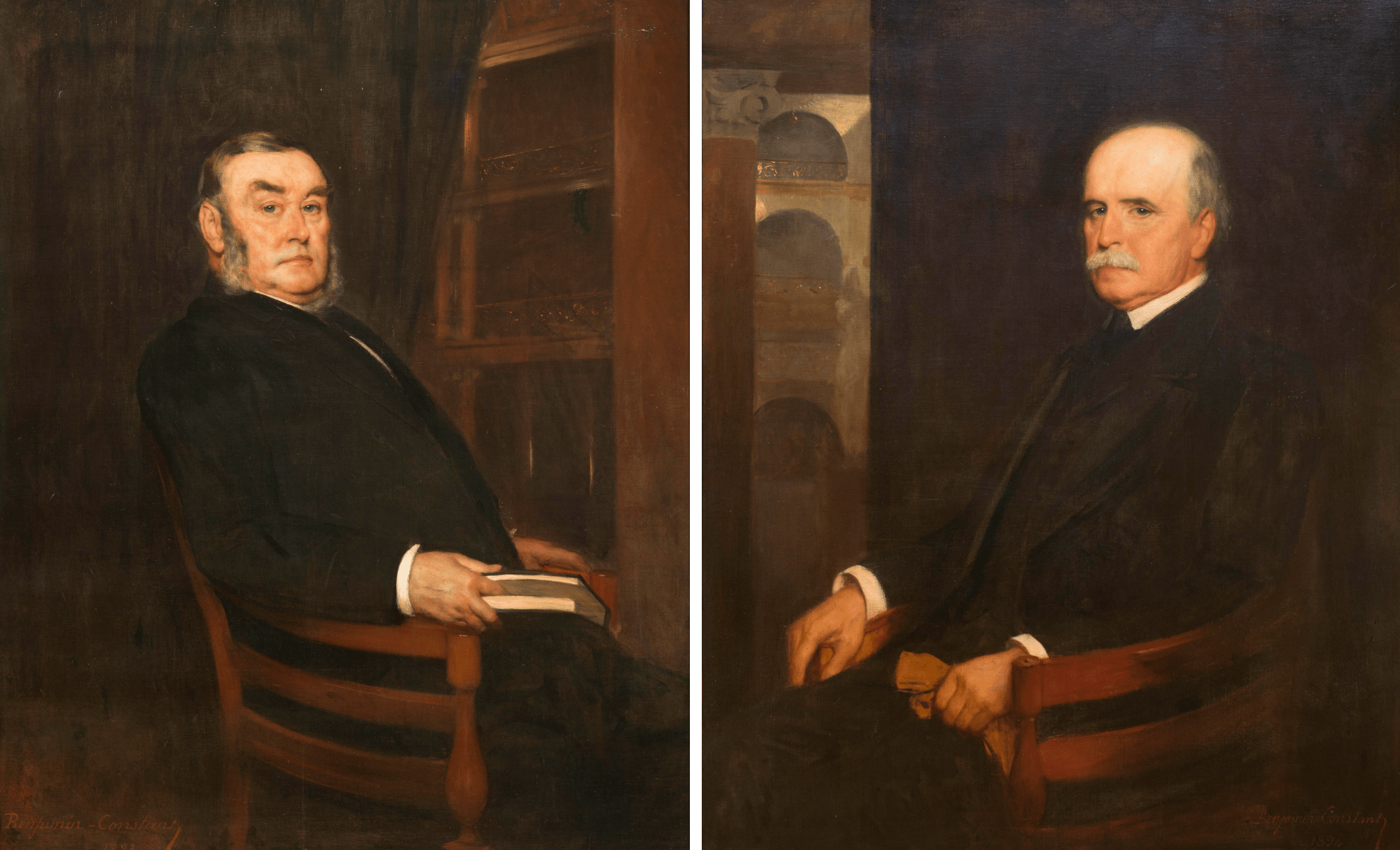
George W. Childs, left, and Anthony J. Drexel, right, posed for individual portraits painted by painted by famed French artist Benjamin Constant. The University’s Board of Trustees had asked the reserved Anthony to sit for the portrait, but he only agreed if the University did not pay for it, Childs had to sit for his own painting, and Anthony’s portrait would not be displayed until after his death. Photos of the 1893 paintings courtesy The Drexel Founding Collection; photographed by Kelly & Massa.
Philanthropy and Partnerships
Besides Drexel & Co., Anthony co-owned the Philadelphia Public Ledger, one of the country’s largest daily newspapers. He was the silent partner of George W. Childs, a prominent publisher who ran the newspaper. They purchased the publication in 1864, turning it into an esteemed publication that chronicled the changing American society from the Civil War to the Gilded Age.
Childs was one of the most important people in Anthony’s personal and professional life. They walked to and from their respective Old City offices at Fifth and Sixth and Chestnut streets (Anthony lived at 39th and Walnut streets, and Childs at 22nd and Walnut streets); vacationed together in Long Branch, New Jersey; engaged in notable philanthropic endeavors; and co-owned the Public Ledger for four decades. Anthony even named his youngest son George W. Childs Drexel, who inherited the Public Ledger (Childs died a year after Anthony, with contemporary accounts stating he never recovered from Anthony’s death).
Anthony and Childs’ most prominent shared philanthropic endeavor stemmed from their Public Ledger ownership. In 1886, they donated a no-strings-attached gift of $10,000 (worth about $355,000 today) to the International Typographical Union, the trade union for newspaper typographers and printers; the organization used that to fundraise for and, in 1891, open the Childs-Drexel Home for Union Printers in Colorado. For decades, the retired and convalescing lived there and received medical treatment. (The Union shut it down in the 1980s, and the historic space is currently being revitalized.)
The two men were involved in many other professional, personal and philanthropic endeavors, and Anthony also give privately and prolifically to local organizations, including churches, hospitals and schools like the University of Pennsylvania. His most public act of both philanthropy and civic engagement was his 21-year presidency leading the Fairmount Park Art Association, the country’s first private and nonprofit civic organization to promote public art (today’s Association for Public Art). While he did not create art like his father, Anthony was a prolific art admirer and collector — more on that later!
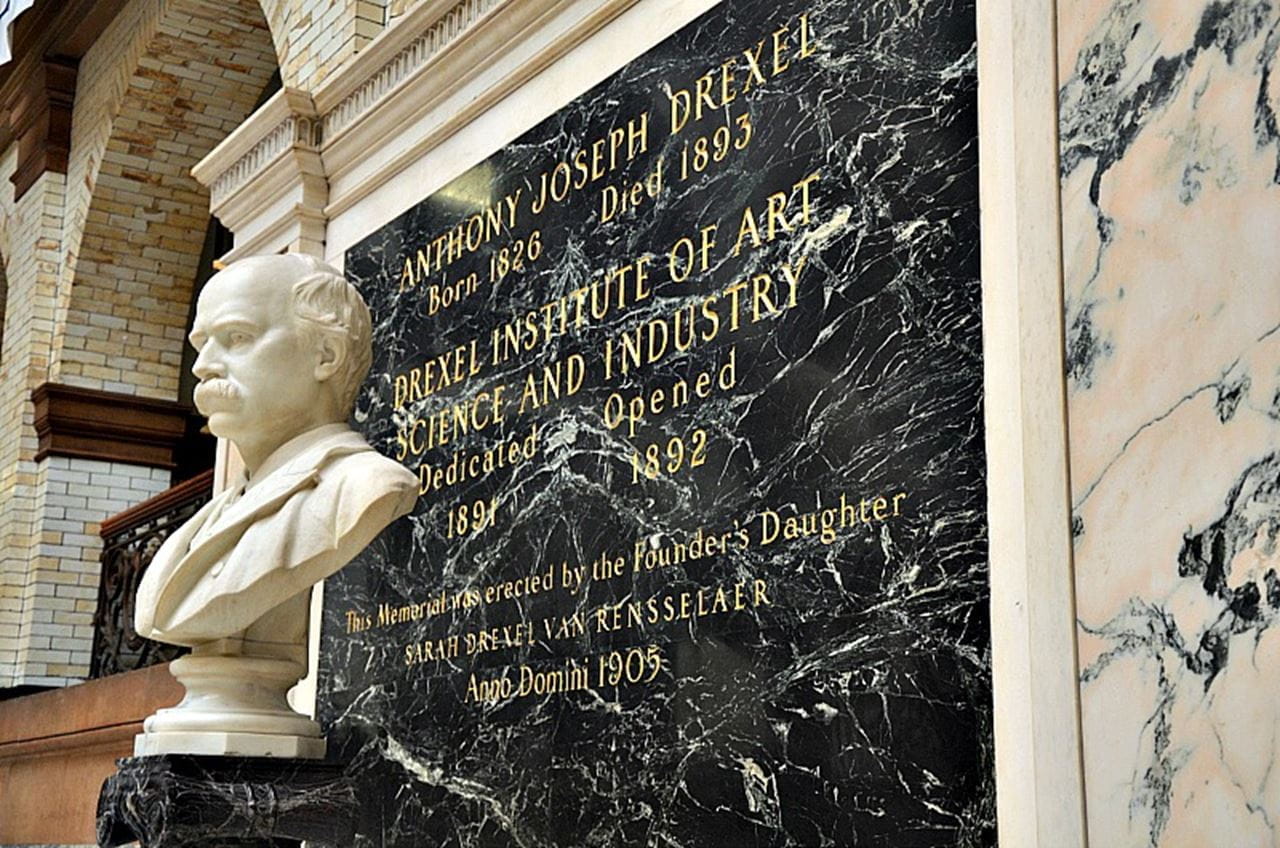
A bust of Anthony J. Drexel is displayed in the Great Court of the University's Main Building. The art was paid for by his daughter, Sarah “Sallie” Drexel Van Rensselaer, who also provided funds to open today’s Van Rensselaer Hall. The sculpture was made in 1903 by Moses Jacob Ezekiel, who also completed the statue of Anthony outside of Gerri C. LeBow Hall on the University City Campus.
Drexel Institute of Art, Science and Industry
In the 1880s, Anthony began funding vocational education efforts — perhaps inspired by his own lack of formal education and an experiential education learned at the family business. Other Drexels, like his newly orphaned nieces, Frank’s daughters, had begun using their wealth to open and fund Catholic and industrial schools at this time.
He and Childs funded trade classes for working women taught by the New Century Guild (today’s Gender Justice Fund) established by feminist reformer Eliza Sproat Turner, and that experience might have inspired him to seriously consider opening an all-women’s industrial college at a time when most industrial schools were for men. In 1888, he purchased land to open his future institute in Wayne, the Main Line suburb he had been developing with Childs, but he realized a technical school could better support future workers in an urban environment (and, perhaps, away from the nearby and newly opened all-women Bryn Mawr College).
Instead, he opened the Drexel Institute of Art, Science and Industry, a vocational educational institute training students in the trades of the contemporary professional landscape (it became Drexel University in 1970). Located near a major transportation hub (today’s William H. Gray III 30th Street Station) and offering night classes for students who worked during the day, the institution was also open to everyone regardless of religion, race, class or gender. The University first had departments for art, science, mechanic arts, domestic economy, business, physical training and education, as well as a department of lectures and evening classes, a library and reading room and a museum.
Anthony planned for the University’s opening like he did with other important decisions of his life: practically, and with the partnership of his friends, family and longtime collaborators.
- He spent $1 million (about $36.7 million in 2026) for the construction of today’s Main Building (which originally housed all of Drexel), and chose his regular architect, Joseph M. Wilson, to design it, as he had for the Drexel & Co. bank in Old City (which was the tallest building in Philadelphia at the time). He also committed $2 million for endowment and operating expenses and bequeathed another $1 million after his death.
- He spent $1 million to create a museum that would both be open to the public and available to students and faculty as a teaching tool. He sent Drexel’s first president, former Philadelphia School District Superintendent James A. MacAlister, on a trip to Europe to acquire art and other items; he had funded a similar trip for Wilson. Lastly, Anthony he also asked his friends, including Childs and brother-in-law John D. Lankenau, to donate or bequeath their own collections. That museum is now today’s Drexel Founding Collection, which still holds the art and objects from Anthony, Lankenau, Childs, and other art made and donated by the Drexel family.
- Teachers from the New Century Guild were hired to teach millinery, dressmaking and glass cutting, among other classes.
- Many generations of Drexel family members, especially his children, were heavily involved as members of the University’s Board of Trustees and Advisory Board of Women, and gave prolifically to the institution (daughter Sarah “Sallie” Drexel Van Rensselaer, for example, provided funds to open today’s Van Rensselaer Hall).
Anthony frequently stopped by Main Building on his walks to Old City, first to check on the construction and then, after the opening, to meet with MacAllister and see the students and faculty going about their day. In an updated quote, Anthony said, “I know the world is going to change, and therefore, the university must change with it” … and he was right. The institution has changed a lot during its 135 years — in name, size, locations, focuses, programs and so much more — but it’s grown from the strong foundation that Anthony provided. In fact, Drexel University has outlived Anthony’s other businesses and buildings.
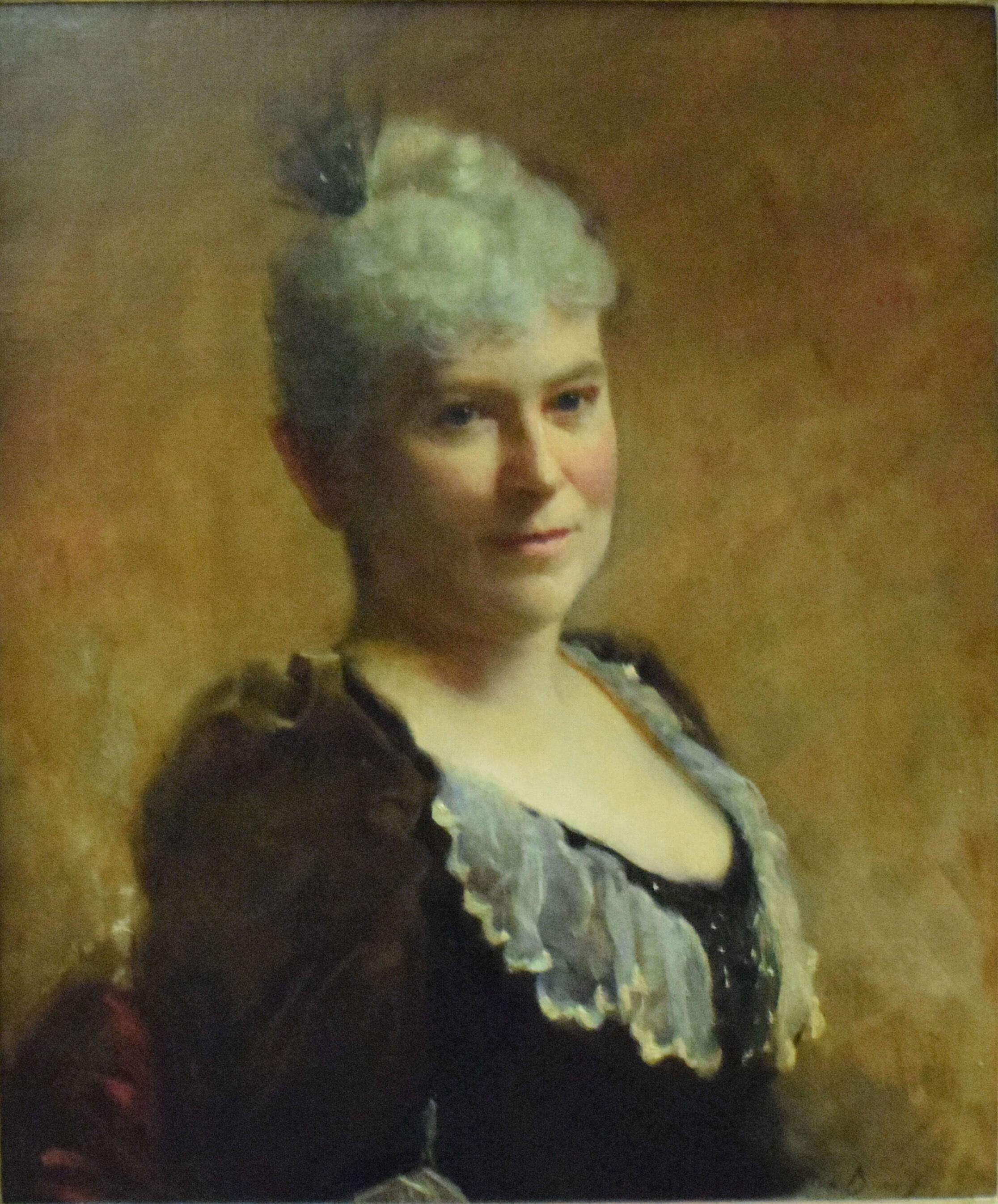
An 1891 portrait of Ellen Rozet Drexel by Cecilia Beaux. Photo courtesy The Drexel Founding Collection.
Family Life and Legacy
Anthony did not actually attend the Drexel Institute’s opening on Dec. 17, 1891; he was mourning his wife Ellen, who had died just three weeks earlier. They had been married for 41 years and had nine children together, in addition to raising their nieces and grandsons upon familial deaths. They were early and prolific residents of the newly created West Philadelphia neighborhood, where they and their children lived for decades.
Anthony died on June 30, 1893, less than two years after Ellen (and the opening of the University). A memorial service was held in Main Building, and he was laid to rest in West Philadelphia’s Woodland Cemetery, along with other members of his family in the Drexel mausoleum and family plot.
Just one generation after Anthony’s father immigrated to America, the Drexel family name held serious social cache and familial wealth, though no generation was as prolific or successful as Anthony’s time. Most notably, his niece, Frank’s daughter Saint Katharine Drexel, is now the second U.S.-born saint citizen; she became a nun around the time Anthony began planning for an institute, and she used her inheritance to fund Catholic churches and schools for Black and Native American communities. Other members of the Drexel family became diplomats, including one to eight countries; befriended and married into royalty and prestigious families; entered the military, volunteered and worked as a spy during the World Wars; became philanthropists, wrote books, and for his grandson, had a Disney movie made about him (an adaptation from a book written by his own daughter). However, no Drexels continued with the Drexel & Co. business, which was split after Anthony’s death; J.P. Morgan took over the New York branch, growing it into what is now one of the world’s largest banks: JPMorganChase.
Back in Austria, the Drexel family continued to grow in Francis Martin’s hometown of Dornbirn, where they have lived since at least the 1500s. Francis Martin is thought to have visited at least once; it’s unknown if Anthony ever did. Since 2009, more than 100 University faculty, professional staff, students, alumni and even Drexel family members have visited Dornbirn thanks to an informal collaboration with the town started by Eric Zillmer, PsyD, Carl R. Pacifico Professor of Neuropsychology in the College of Arts and Sciences. He befriended one Drexel family member who grew up knowing about the famous American branch of his family, and Drexel University: Heinz Drexel, MD, whose ancestor was a brother of Francis Martin’s great-grandfather. In addition to his decades of experience as a professor, clinician, researcher and CEO of the Vorarlberg Institute for Vascular Investigation and Treatment (VIVIT) in Austria, which he founded in 1996 and partly retired from this year, Heinz received an honorary degree from Drexel in 2007 and, for more than a decade, spent time in Philadelphia working as an adjunct professor in the University’s College of Medicine — as “Dr. Drexel.”
Many other Drexel family members have also upheld Anthony’s values related to family and education through maintaining close connections to the University and the various branches of the family tree — just as Anthony would have preferred.