A Venn Diagram of Blue and Gold: ‘The Gilded Age’ and Drexel University


In the final episode of the first season of “The Gilded Age,” Christine Baranski, left, playing Agnes Van Rhijn, appeared at the same ball as Anthony J. Drexel and his wife Ellen. This image comes from a scene at the ball; next to her are Cynthia Nixon, center, and Louisa Jacobson, who play Agnes’ sister and niece, respectively. Photograph by Alison Cohen Rosa/HBO.
If you’ve watched the HBO television series “The Gilded Age,” then you’ve probably already seen the references, homages and even depictions of the family and friends of Drexel University’s founder, Anthony J. Drexel (1826–1893). But did you know that one of the show’s stars has a personal connection to the Drexel family that began decades before the show even aired?
The award-winning actress Christine Baranski plays one of the lead characters; you might recognize her from her roles in two “Mamma Mia!” films as well as her work on television shows like “The Big Bang Theory,” “The Good Wife” and “The Good Fight.” What you might not recognize is that her late husband, the actor Matthew Cowles (1944–2014), was the great-grandnephew of Anthony. (Their two daughters are the great-great grandnieces of the founder.)
Anthony was an esteemed financier and philanthropist who lived during the real-life “Gilded Age” of the 1870s to 1890s. The name, which came from a Mark Twain novel, reflects the industrialization, economic growth and financial benefits in a changing postwar society. Anthony was directly involved in and benefited from the technological and financial changes of the era; he spent over 50 years working at and later leading the Drexel & Co. family banking business started by his father, who had left his native Austria to work as a painter, and then banker, in Philadelphia. By the time Anthony founded the then-Drexel Institute of Art, Science and Industry in 1891, Drexel & Co. was one of the most successful and prestigious firms in the country, and Anthony — and his family — had become prominent and wealthy members of society.
While Anthony briefly appears in the “Gilded Age” show set in New York City (more below), he lived his whole life in Philadelphia; it was his youngest brother, Joseph William Drexel (1833–1888), who navigated New York City’s social scene depicted in the series. Joseph’s daughter Elizabeth “Bessie” Wharton Drexel Lehr (1868–1944) and son-in-law Henry “Harry” Lehr (1869–1929) have also been referenced on the show, and it’s Joseph, Bessie and Harry that Baranski’s late husband Cowles was directly related to: Joseph was his great-grandfather, and Bessie and Harry his great-aunt and great-uncle.
“I happened to meet Julian [Fellowes, the creator, writer and executive producer of “The Gilded Age” and “Downton Abbey”] at an HBO afterparty and had the temerity to introduce myself and tell him about my late husband’s family. I said if he ever did the Gilded Age, I’d be interested,” Baranski shared in a Boston.com interview this past August.
For three seasons, she has portrayed the fictional Agnes Van Rhijn, a sophisticated and well-regarded matriarch. The show, which takes place in the early1880s, follows both fictional characters as well as depictions of real-life people. Members of the Drexel family — and their friends, peers and business partners — seem to fall into both categories.
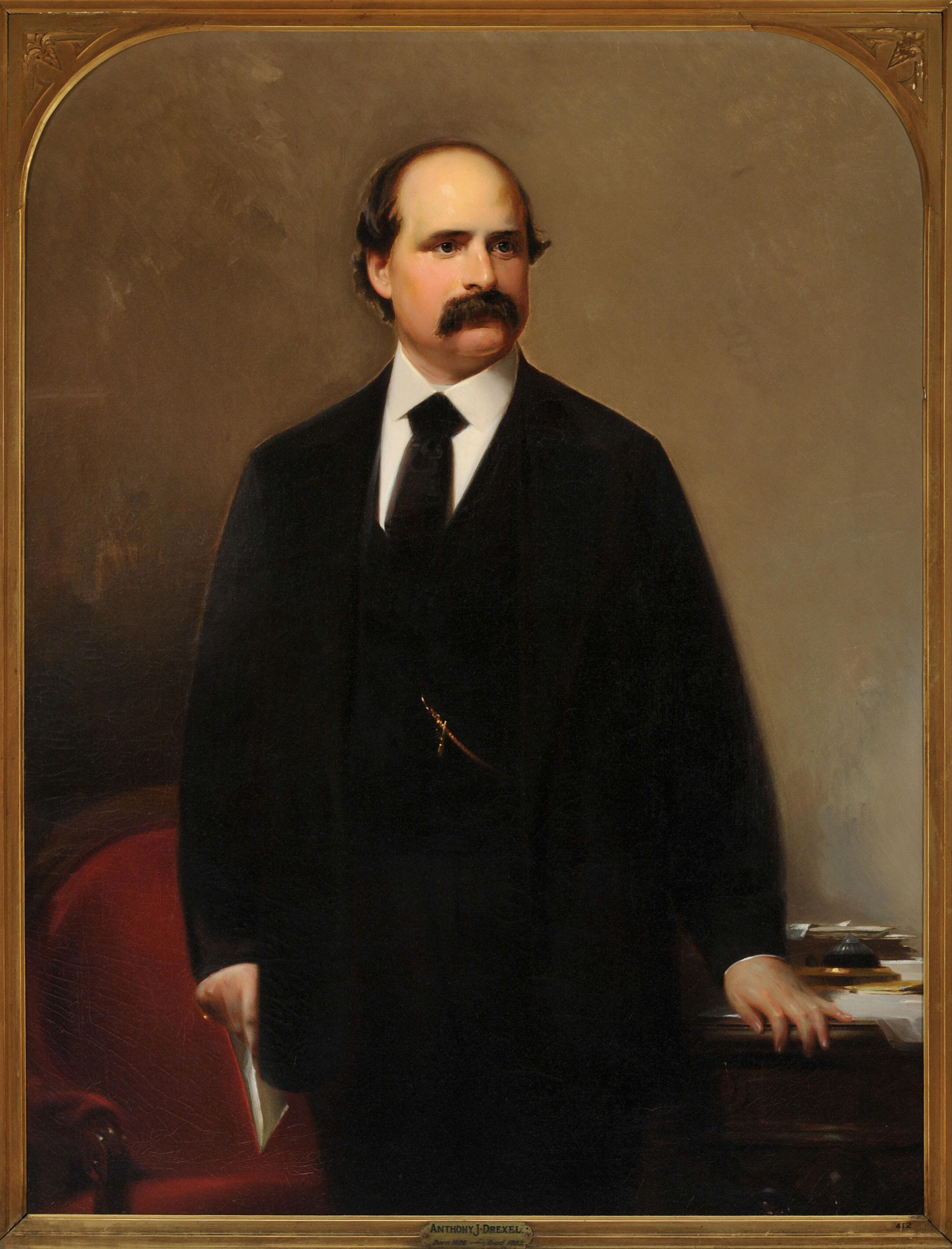
This portrait of Anthony J. Drexel was painted by Josef Bergenthal circa 1890 and is displayed in the University’s Main Building. Image courtesy the Drexel Founding Collection.
Anthony J. Drexel’s Cameo Appearance
The first season of “The Gilded Age” most prominently features the Drexels in dialogue as well as actual depictions. Anthony is shown alongside his wife Ellen Rozet Drexel (1832–1891) in one scene, and their daughter, Sarah “Sallie” Rozet Drexel (1860–1929), appears in another. (Her character — spelled “Sally” in the show — is the only one whose actor received an IMDB credit.)
Those Drexels lived in Philadelphia, but Anthony was no stranger to New York, thanks to the Wall Street location of the Drexel banking firm, Drexel, Morgan & Co. That location was managed by his mentee John Pierpont “J.P.” Morgan from its opening in 1871 until Anthony’s death in 1894, when it became J.P. Morgan & Co. (today’s JPMorgan Chase). Morgan became a Gilded Age tycoon in his own right; his character appears in season three, ostensibly while running Drexel, Morgan & Co. Joseph, the youngest Drexel brother, resided in New York City and worked as a junior partner under Morgan until he retired in 1876 for a life of philanthropy, civic engagement and art.
Only the Philadelphia Drexels are mentioned by name in the show, but the family is part of the respectable “old money” crowd aligned with the Astor family matriarch Caroline Webster Schermerhorn Astor (the “Mrs. Astor”). Bertha Russell, a made-up character played by Carrie Coon and married to a “new money” railroad tycoon, forces her way into New York society with a lavish ball that Astor and her peers initially refuse to attend.
Sally Drexel had previously been seen, but not identified, as a friend of Russell’s daughter Gladys (played by Tessa Farmiga) practicing a dance for the ball. In season one’s penultimate episode, when Bertha tells Gladys that Mrs. Astor’s daughter could not come if Mrs. Astor wouldn’t attend, Gladys asks, “What about the others? … Sally Drexel, the boys? Are they all to be turned away if their parents won’t come?”
The parents begrudgingly attend the Russell’s ball, which takes place in the season finale. “Mr. and Mrs. Anthony Drexel” are announced and shown entering the Russell’s mansion, arm-in-arm. Anthony is dressed in a tuxedo — and he does have his iconic mustache — and Ellen wears a gown, white gloves and tiara.
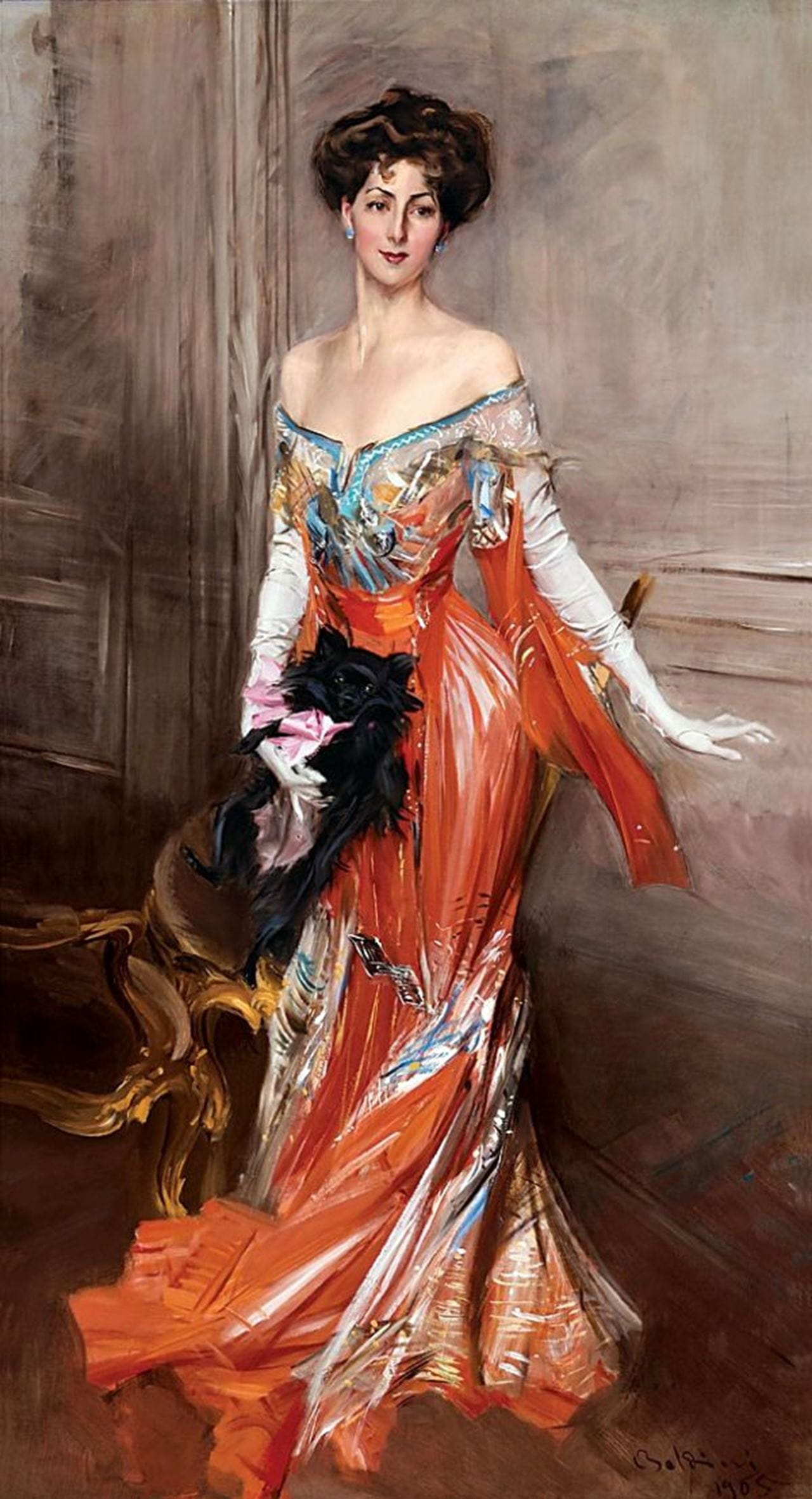
This portrait of Elizabeth “Bessie” Wharton Drexel Lehr was painted in 1905 by Giovanni Boldini, an esteemed society painter. It served as direct inspiration for a painting of Bertha Russell in the show and can be seen in the real-life mansion in Newport, Rhode Island, used to shoot scenes for Bertha’s Newport home in the show. This work of art is in the public domain.
Real and Fictional Ties to the Drexels
In the show, Christine Baranski’s Agnes and her son, Oscar Van Rhijn (played by Blake Ritson), also appear at the ball at the behest of Mrs. Astor. Oscar’s storyline shares certain similarities to the actress’ husband’s grand-uncle, Harry Lehr.
Oscar, like Harry, was a closeted gay man in a time and place when homosexuality was still a crime. Both men were interested in maintaining their lifestyle and social standing by marrying a rich, suitable woman. Oscar seems to have found a congenial marriage of convenience by the end of the third season. In real life, Harry did find a wealthy wife — Bessie Drexel — but it was not a happy marriage.
Rising to prominence from a humble background, Harry became a confidante of upper crust doyennes like Mrs. Astor and Mamie Fish (also depicted in the show); he proposed to Bessie only after they approved of her. It wasn’t until their wedding night in 1901 that he revealed he only married her for her money, he would never love her and he would only be polite in public. They were married for 28 years.
Bessie revealed those and other shocking details about their marriage in “King Lehr and the Gilded Age,” a tell-all book she published in 1935 after her husband — and many other Gilded Age peers — had died. It was lauded by publications like The New York Times, Time magazine and The Atlantic for its openness and anecdotes about a bygone era.
“Her book is a wonderful chronicle of life in the Gilded Age. I’ve read so many books about the Gilded Age and they often quote Elizabeth Drexel Lehr as a good source,” Baranski said in that aforementioned Boston.com interview.
Bessie later published “Turn of the World,” which covered her life and American society up until the start of World War I. A year before its publication in 1937, she married Lord Decies, John Graham Hope Horsley de la Poer Beresford, known as The 5th Baron Decies (1866–1944); she became Elizabeth de la Poer Beresford, or Lady Decies. They divorced in 1942 and she died two years later.
A reference to Bessie can also be seen in the show: her 1905 portrait by Giovanni Boldini, a fashionable society painter, is similar to a portrait in the show depicting Bertha Russell, the social striver played by Carrie Coon. Bessie's portrait can be found in a mansion known as “The Elms” in Newport, Rhode Island, where scenes of Russell’s Newport “cottage” are shot for the show.
“Among the thousands of visitors to The Elms Ballroom who have been struck by the Giovanni Boldini portrait of Elizabeth Drexel Lehr… one was Julian Fellowes, creator and writer of the HBO series ‘The Gilded Age.’ On seeing it, he immediately knew that Bertha Russell … had to have her own Boldini-style portrait to hang in her New York mansion,” reads an Instagram post from the Preservation Society of Newport County’s Newport Mansions showing Bertha and Bessie’s paintin
At an event at The Elms hosted by Newport Mansions in August, Baranski shared that she had given the “King Lehr and the Gilded Age” book to Fellowes. She also noted that she has restored and cleaned some of Cowles’ antique family portraits to hang in her own home.
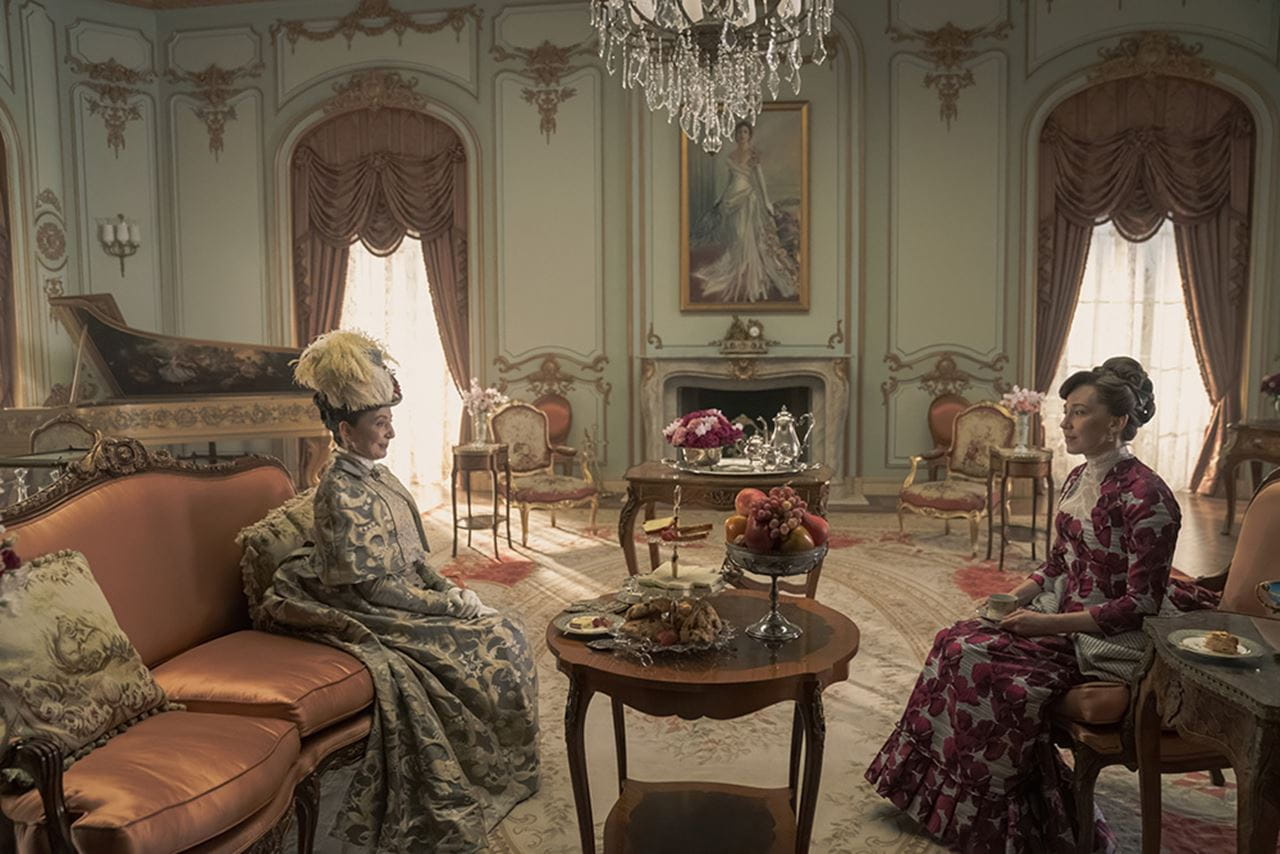
Carrie Coon, right, plays Bertha Russell, the nouveau riche character whose portrait, hanging in the background, was inspired by a painting of Anthony’s niece and Joseph’s daughter Bessie. Donna Murphy, left, plays Mrs. Astor, the grande dame of Gilded Age society both in the show and in real life; the real Mrs. Astor was a family friend of Bessie. Photograph by Barbara Nitke/HBO.
Other Drexel Mentions
During that same season one finale with the University founder, one character shares that she saw another’s love interest at the Academy of Music “in the Drexels’ box.”
In season two, that reference comes into play as the show covers the so-called, real-life “opera wars” that occurred when the “new money” set, like Bertha Russell, patronized the new Metropolitan Opera House after the “old money” crowd, like Mrs. Astor, excluded them from the Academy of Music. Curiously, Joseph Drexel helped build and open the Metropolitan Opera House and later served as its director; the avid music lover was also president of the New York Philharmonic Society and donated thousands of instruments and books to the Metropolitan Museum of Art’s musical instrument collection and the New York Public Library’s Music & Recorded Sound Division.
The second season’s second episode also places the Drexel family in fashionable Newport. Oscar, the son of Baranski’s character, has a conversation with a young woman that mentions the family. However, with so many respectable Drexels with ties to Newport, it isn’t obvious who is being talked about.
Maud Beaton: “I’ve heard of your mother. Mrs. Drexel spoke about her the other day. All good, I hasten to add.”
Oscar van Rhijn: “I love the Drexels. Are you staying with them when you are in Newport?”
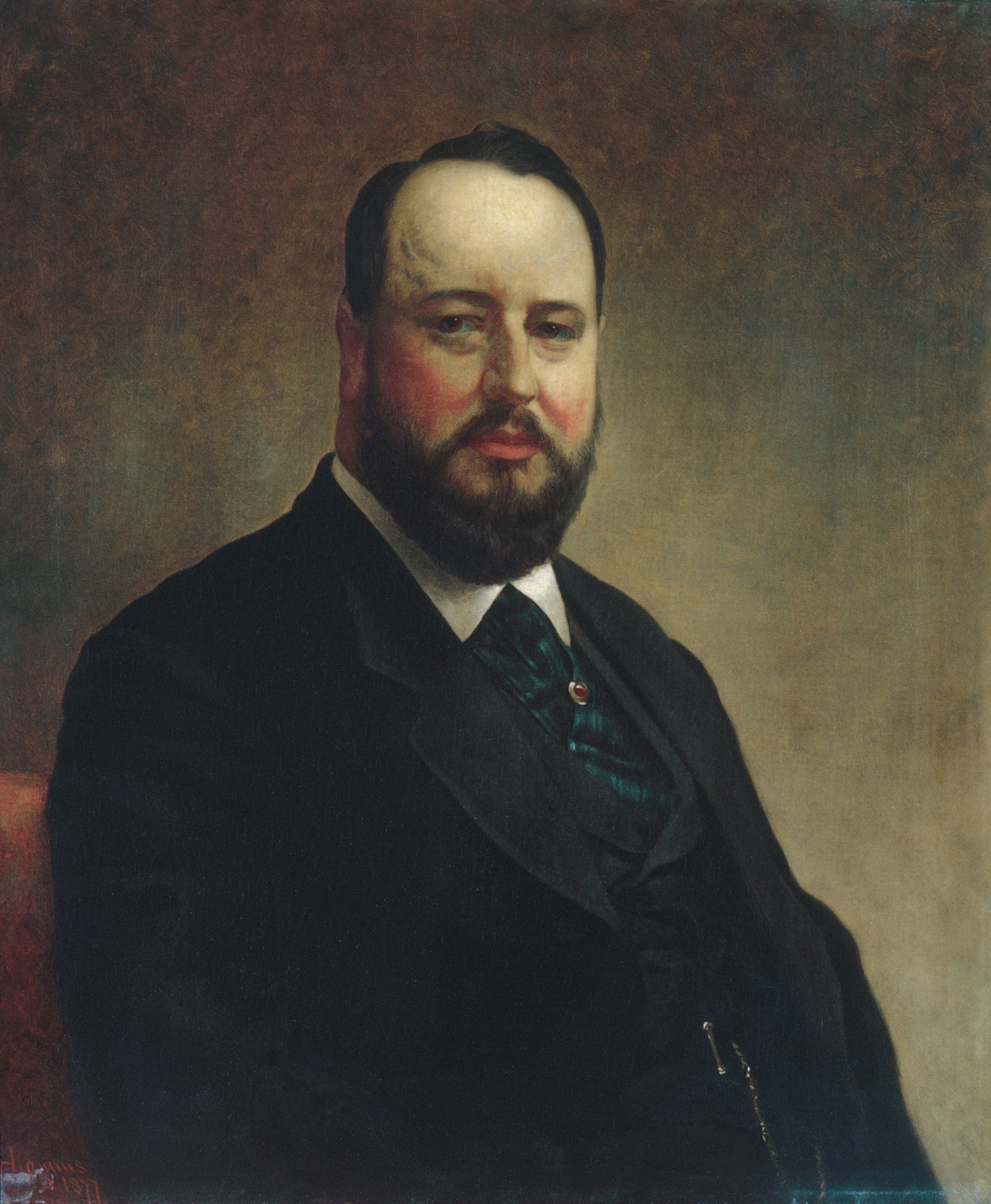
Jacob Hart Lazarus painted this portrait of Joseph W. Drexel in 1877. It was gifted to the Metropolitan Museum of Art by Joseph’s wife, Lucy Wharton Drexel, in 1896. It is not on display but part of its collection and made available in the public domain. Image courtesy The Metropolitan Museum of Art.
While the Drexel home is never shown or identified, you can still see notable Newport mansions with ties to the Drexel family. These include “Fairholme,” a Tudor Revival once owned by the family of Anthony’s eldest son, John Rozet Drexel, and “Champ Soleil,” which was built by Bessie’s sister, Lucy Drexel Dahlgren, in 1929 to resemble a 17th century French chateau. (The former last sold in 2016 for $16.1 million and the latter is currently on the market for $22 million.)
More Drexel Mentions to Come?
So far, every season of “the Gilded Age” has contained references to the Drexel family, though some were more overt than others.
In July, HBO renewed “The Gilded Age” for a fourth season. While a premiere date has not been set, the show was included in HBO’s recent “Coming in 2026” video announcement.
Stay tuned to see if even more Drexel references will be found in the next season!