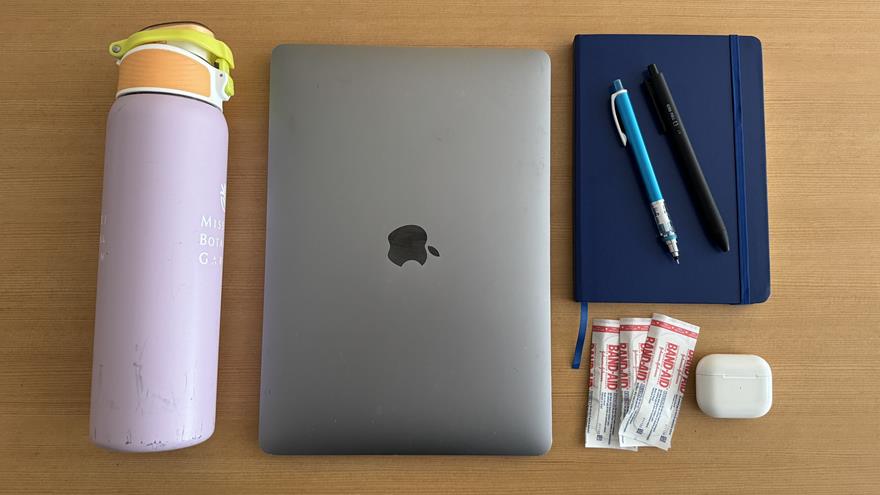
- What’s In My Backpack? Essential Items for a Long Day on Campus
- Drexel University, Academy of Natural Sciences and Philanthropic Community Collaborate to Assess Possible Future for the Academy of Natural Sciences
- Before You Go: Thanksgiving Safety Reminders
- Drexel University's Recent Academic Activity: Sponsored Opportunities and New Partnerships From Summer 2026

To: City Council of the City of Philadelphia
From: Drexel President Antonio Merlo
Date: November 16, 2026
Re: Resolution 260737 – The Academy of Natural Sciences of Drexel University
Good morning, Chairman Thomas, Vice Chairwoman Landau, members of the Committee on Legislative Oversight, and other Council members who have taken the time to be here today.
My name is Antonio Merlo. Since July 1, 2025, I have had the honor of serving as the 16th President of Drexel University, one of the great institutions of higher education in the City of Philadelphia, and one of seven R1 universities in the Commonwealth of Pennsylvania. Drexel is one of Philadelphia’s top employers, a national leader in experiential education, an engine of socio-economic mobility, and a powerful economic and civic anchor for the city and the region.
I am grateful for this opportunity to provide this Committee and everyone supporting the Academy of Natural Sciences with a full, fact-based account of how we got here and some realistic options for a path forward.
First, I would like to explain my absence from last month’s hearing. At that time, Drexel was hosting an on campus visit from the Middle States Commission on Higher Education.
I had to remain on campus for the entire day to address the accreditation team’s questions and concerns. Without their accreditation, there can be no Drexel.
Mr. Chairman, I meant no disrespect to this Committee or to Philadelphians, and I regret if my absence suggested otherwise.
I also regret the manner in which the public museum’s closing was announced.
It is now clear that this process would have benefited from including City Council members, foundations, and other civic leaders much sooner into the conversation over our efforts to address the Academy’s dire financial condition. I am optimistic that we still have time to rebuild trust and come together as partners to solve the Academy’s longstanding financial and operational challenges.
To that end, I am here to present Drexel’s position and to set the record straight. The public discussion surrounding the Academy of Natural Sciences has been clouded by confusion and speculation.
Drexel’s Board and I remain fully committed to preserving the Academy's world-class archives and collections in Philadelphia, ensuring they remain accessible to researchers, educators, and the public. We are equally committed to finding a sustainable path forward that will deliver a vibrant, meaningful museum experience for generations to come.
Simply put, Drexel wants to “Save the Academy,” too, and we were almost there just two months ago.
The leadership of Drexel and the Academy signed an agreement that would have secured a financially sustainable future for the Academy of Natural Sciences — in Philadelphia.
Drexel was all in on the deal.
So was the Mayor.
So was the Governor.
The Academy’s Board has not approved the final agreement, for reasons that only its leadership can explain.
Here is the full story:
When I was appointed President, Drexel’s Board asked me to put Drexel on sound financial footing so we can best serve our students. With fewer prospective students, costly disruptions in federal research funding, and rising costs, I asked every Drexel school, department, and affiliate, including the Academy, to control costs and live within its means.
In many ways, the 2011 affiliation agreement between Drexel and the Academy has been mutually beneficial. But, as is the case with most affiliations between separate nonprofit organizations with their own governing boards, presidents and fiduciary responsibilities — it’s complicated.
Drexel and Academy scientists have conducted important research and Drexel’s students have enjoyed formative co-op experiences, with some even choosing to dedicate their careers to the natural sciences.
Since affiliation, Drexel provided the Academy with nearly $49 million in cash support and another $46 million in in-kind services, including the full range of back-office services and systems. Unfortunately, the Academy’s operating costs far outpaced its revenue, while deferred maintenance costs, which were already substantial at the time of the agreement, continued to soar. Its historic Parkway building requires tens of millions of dollars to address deferred maintenance, infrastructure improvements and gallery refurbishment.
During the same period, Drexel’s Board of Trustees urged the Academy’s leaders to bring the Academy’s spending in line with its revenues — to no avail.
By the time I became Drexel’s president, it had become clear that, given the University’s financial constraints and the Academy’s failure to address its financial and operational challenges, the existing affiliation was no longer tenable.
Because of the structure of that agreement — which created a governance model with two separate boards, each with its own fiduciary responsibilities — Drexel has never had unilateral authority over the Academy’s independent operations, fundraising activities, general administration, or the Parkway building. The public museum was never ours to run, keep open, or close.
Right after my arrival in July 2025, a task force of trustees from both institutions was formed to develop a comprehensive plan for the future of the Academy, including finalizing the design and operational framework for each area of the Academy’s portfolio, identifying key milestones, resource requirements, and responsibilities, and establishing a clear implementation timeline with defined accountability to guide execution and ensure progress.
That September, I attended an Academy Board retreat, where it became painfully clear that Drexel and the Academy had very different and increasingly incompatible visions for the future of the Academy.
At that meeting, the Academy Board and executive leadership presented the closure of the public museum as unpreventable and inevitable. They also proposed a plan to relocate the Academy’s entire collection of specimens either to Cleveland or Abu Dhabi.
I have submitted to this committee the strategic plan presentation in which the Academy’s Board chair and executive leadership presented those proposals.
In response, I made it clear this was unacceptable and Drexel wanted no part of any plan to remove the Academy’s treasures from the City of Philadelphia. I told them they would need to disaffiliate from Drexel to move forward with that.
I also suggested an alternative that would protect and preserve the collections and keep them intact and in place in Philadelphia. I told them that if the collections needed a new home, Drexel could provide one, while more closely integrating the education and research mission of the Academy with that of the university.
Under my proposal, Drexel would preserve the Academy’s identity and legacy as a public-facing institution through public programming and staging of public exhibits either on campus or with a partner museum.
It has been suggested that this intervention stymied planning the Academy had undertaken, but I must emphasize: All options the Academy’s leaders presented to me involved closing the public museum and dispersing collections.
If our offer indeed stopped the Board’s plans to move the Academy from Philadelphia, then I am relieved that it did.
In response to the Academy’s plans, Drexel made a formal offer to house the collections, in order to keep them in Philadelphia — and reiterated, that if the strategic plan the Academy Board wished to pursue was closing and shipping the collections away, they would have to do it without Drexel.
Under our proposal, Drexel would assume the Academy’s assets and liabilities, and the Academy’s Board would become advisory. If the Parkway building were sold, its proceeds would be dedicated entirely to the care and preservation of the collections.
And the Academy’s endowment would continue to fully support the Academy and its continued operations consistent with donor restrictions and Pennsylvania endowment law.
But ultimately, if the Academy still wished to disaffiliate, Drexel pledged that it would continue to provide transitional in-kind support for a reasonable period.
The Academy’s Board responded in writing in December of 2025 that it preferred disaffiliation and would develop a plan. But by March of 2026, there still was no plan.
That is when Governor Shapiro asked Ambassador David L. Cohen to step in on behalf of the Commonwealth to facilitate negotiations toward securing a formal agreement between Drexel and the Academy.
Ambassador Cohen wrote at the time, “The Governor's primary goal in the outcome of these negotiations is that the Academy and its vast resources do not leave the Commonwealth of Pennsylvania.”
Ambassador Cohen’s negotiations led to a proposal that closely resembles the option we proposed last fall, remaining affiliated under a revised governance structure.
The new proposal also called for the closure of the public museum.
On September 1, 2026, the Academy’s chair and I signed a term sheet setting new governance and financial terms for a continued affiliation.
And both institutions then jointly announced the public museum’s closure.
I thought then we could move forward, envisioning a better, financially sustainable future for the Academy. But, the Academy’s trustees walked away from the deal.
The public museum is now closed. The Parkway building needs major repairs that can no longer be postponed. Reopening the museum will require much more money than what has been reported in the media. Tens of millions of dollars are needed to create a sustainable operating model, including undertaking major capital repairs, providing dependable operating support, and supporting a museum program that gives people a reason to visit and come back.
Drexel is ready to do its part, as it did when it affiliated with the Academy, helped preserve St. Christopher’s Hospital for Children, assumed stewardship of the Atwater Kent Collection and when Drexel raised funds and built a new facility for Powel Elementary and the Science Leadership Academy Middle School.
I have been heartened by the public’s passionate, outpouring of love for the Academy. I’m grateful that Drexel, the Governor, the Mayor, and City Council all agree as a starting point that the Academy and all its holdings must remain in Philadelphia.
And I am encouraged that the philanthropic community, with the William Penn Foundation leading the way, has expressed its willingness to lend critical expertise and support.
Now, the question before all of us who care deeply about the Academy is, what are we prepared to do to save and keep the Academy in Philadelphia?
Here’s what Drexel is prepared to do:
First, the 2011 Affiliation agreement remains in effect, and Drexel will honor and enforce its terms in full.
Second, we will continue to pursue all feasible options for keeping the collections here in Philadelphia, safeguarding the Academy’s scientific work, and putting the institution on secure and sustainable financial footing.
And third, Drexel will join a public process led by the William Penn Foundation and supported by the Connelly, Hamilton, Knight and Philadelphia Foundations, to conduct a set of feasibility studies for keeping the Academy in the city. And we welcome conversations with any institution that wishes to support a sustainable future for the Academy in Philadelphia.
There are many examples of partners working together to reimagine and rejuvenate aging arts and cultural institutions. Yale’s Peabody Museum — with its own beloved dinosaurs — closed for four years for renovations before reopening its doors to the public. Donors funded the work and strengthened program endowments.
My Drexel colleagues and I treasure the Academy as an irreplaceable public good, and we have acted honorably to keep it right here in Philadelphia.
With that, I welcome your questions.