At Drexel Kline, conversations about the criminal justice system take place inside a correctional facility.
Through the Inside-Out Prison Exchange Program, law students and incarcerated participants, known in the program as inside students, meet weekly as peers in a seminar centered on dialogue, not hierarchy. There are no laptops or phones. Just sustained discussion, shaped by active listening, firsthand experience and a format designed to keep everyone on equal footing.
Originally developed at Temple University, the program is now used at colleges and universities across the country, but only at a few law schools. At Drexel Kline, the course is offered in collaboration with the Philadelphia Department of Prisons.
 Richard H. Frankel
Professor Richard H. Frankel, associate dean of experiential learning, teaches the course, and his approach is deliberate. “We’re very much about trying to create a dynamic of equality,” he said. “Inside and outside students meet together week after week, and that helps relationships develop over time.” Frankel said those conversations can also challenge assumptions both groups bring into the room, including how law students and inside students perceive one another.
That dynamic doesn’t come naturally at first. Early sessions can feel uncertain as students adjust to the setting and navigate conversations with people whose backgrounds and experiences may differ significantly from their own.
Madeline Hamilton, JD ’26, described being highly conscious of when to speak and when to step back during discussions. “I often found myself holding back, not out of uncertainty, but out of a desire to listen more intentionally,” she said. “I didn’t want to approach discussions the same way I might in a traditional law school classroom.”
Over time, that shifted. As trust developed, so did a clearer sense of how to contribute. “I learned that contributing didn’t mean having the ‘right’ answer,” Hamilton said. “It meant engaging honestly and being open to having my perspective challenged.”
Frankel sees that progression each semester. Students often begin with hesitation, unsure how their words will be received by an unfamiliar audience in an unfamiliar setting. By the end, participation becomes more natural, grounded in familiarity and mutual respect. “You see a hesitancy to talk,” he said, “and a greater willingness to share by the end of the semester.”
How the Setting Shapes the Work
 Madeline Hamilton
Each session follows the facility’s protocols, which guide how students prepare, enter and move through the space. Phones, wallets and other personal items stay behind. Students are escorted, supervised and subject to the facility’s rules from the moment they arrive. Those constraints become part of the experience, requiring students to adapt to an environment where movement, communication and even basic routines are tightly controlled.
“You have to be escorted in. You have to be supervised. You have to follow all of the rules,” Frankel said. “You can’t bring your devices. It’s paper and pen.”
What begins as an adjustment becomes central to how students engage. Over time, the discussions become more candid, as students grow more comfortable with questioning assumptions and responding to perspectives shaped by lived experience. Ideas that might feel abstract in a traditional classroom take on a different weight inside the facility.
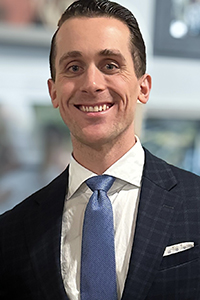
For Ian M. Martin, JD ’26, that environment made the course more demanding than expected. “I knew going into the course that it would require participation,” he said. “What stood out was how intense some of the conversations were, especially as abstract ideas took on real-world context.”
Discussions about topics like sentencing, accountability and reentry carry a different weight when informed by firsthand accounts from people living within the system. Frankel described moments when those experiences reshape how students understand incarceration and its day-to-day realities. “And you realize you hadn’t thought about it that way,” he said.
Understanding in Practice
 Ian M. Martin
For Martin, one such moment came in a conversation about reentry. Before the course, he understood incarceration as isolating and reentry as difficult. That understanding changed after hearing from an inside student who described entering prison as a teenager and being released more than a decade later.
“He said, ‘The age you enter prison is the age you leave,’” Martin recalled. The student described struggling with basic tasks, ranging from finding housing to handling everyday responsibilities, after years without those experiences. “That shifted how I thought about responsibility,” Martin said. “I hadn’t considered the emotional hurdles that come from that level of isolation.”
Hamilton described a similar shift, especially in how she now approaches legal analysis. “I pay closer attention to what may be missing from the record,” she said. “The lived experiences, the context, the long-term consequences that aren’t always captured in judicial opinions.”
For Hamilton, who plans to pursue a career as a prosecutor, the course has reshaped her thinking about discretion. “It made me more aware that the role isn’t just about enforcing the law,” she said, “but about exercising judgment in a way that is thoughtful and grounded in an understanding of the people behind each case.”
Frankel sees that connection as central to the program’s purpose. The course doesn’t offer simple conclusions about punishment or policy. Instead, it leads students to question assumptions about sentencing, fairness and the criminal justice system's goals.
“It makes people think about the severity and length of consequences,” he said, and whether those consequences align with broader aims such as accountability or rehabilitation.
What Endures After the Course
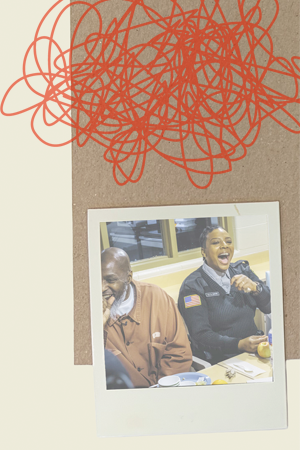 Some of the most lasting aspects of the course come from how it’s structured. At the end of each session, the group disperses, returning to different circumstances.
“That contrast was something I thought about after every session,” Hamilton said. “It made it difficult to treat the experience as purely academic.”
Frankel described that moment as one that stays with students. “We can go home and decompress,” he said. “The people you’ve just been talking with don’t have that same ability to step away.”
That awareness stays with students as they think about the responsibilities they may eventually hold within the legal system.
It also reinforces one of the program’s underlying aims: to create a space where participants feel heard. “Some inside students begin the course skeptical,” Frankel said, concerned they will be judged or misunderstood. “By the end, there’s a sense of being heard and understood by people who are going to be members of the legal profession.”
That sense of being heard is mutual. Students leave with a more grounded understanding of the system they are preparing to enter, shaped by doctrine and sustained engagement with the people most affected by it.
For Frankel, that is what stands out about the experience. “I don’t think there are many situations that allow for this kind of dialogue in legal education,” he said. “It goes a long way toward increasing understanding in a way you don’t get otherwise.”
At Drexel Kline, that dialogue is part of how students learn to think, listen and make decisions in a profession where those choices carry real consequences.