Architectural Studies Curriculum
The Bachelor of Science in Architectural Studies offers a four‑year full-time, pre-professional degree in architecture. The core curriculum emphasizes how architecture interacts with social and physical contexts, leading to the Senior Capstone Research Project. Students can tailor their studies through interdisciplinary electives, co‑op experiences, and optional accelerated BS/MS pathways. Graduates go on to advanced degrees or careers in design, planning, construction, and sustainability, using their architectural education to make positive impact in the discipline.
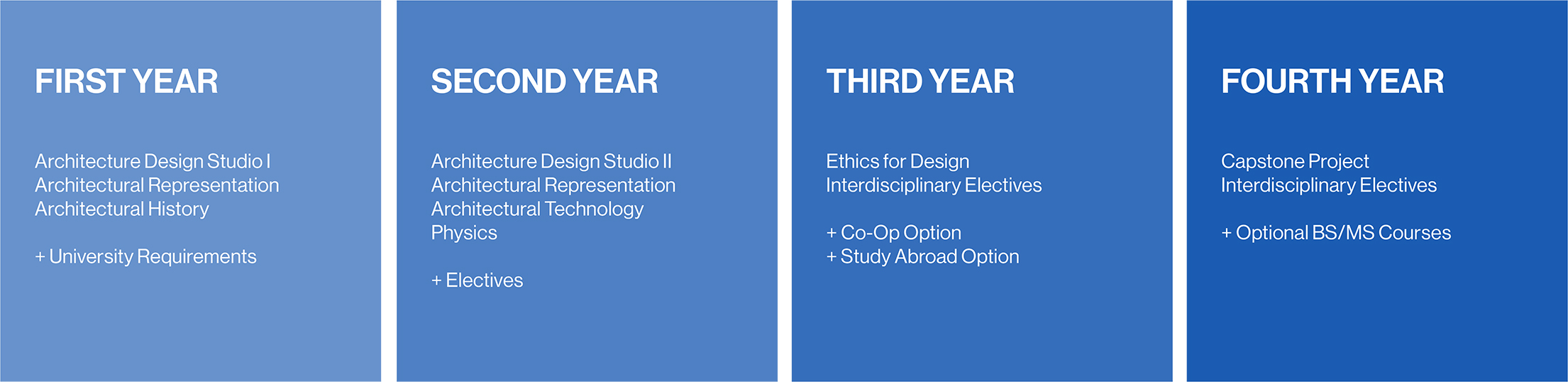
First and Second Year: Design Foundations
The first‑year design studio builds a foundation in spatial thinking, scale, representation, and making, giving students space to develop their creative interests while exploring the field of architecture. Second‑year studios build on these skills, emphasizing how context shapes design decisions. Philadelphia and the neighborhood surrounding Drexel serve as a living laboratory for this work. A key example is the rowhouse design project, which gives students direct engagement with local communities and a clearer understanding of how their design proposals relate to real environments and the people who inhabit them.
Third Year: Interdisciplinary and Experiential Opportunities
The Architectural Studies curriculum makes space for a selection of Interdisciplinary Pathway Electives. Students can select courses within a related set of disciplines such as Product Design, Interior Design, Construction Management, Art History, and others to match their future career trajectories. These interdisciplinary courses allow students to earn a minor and develop a specialization in these areas.
Fourth Year: Capstone Research for Impact
Architectural Studies Senior Capstone students investigate a topic of personal interest while considering the potential impact of their research. The Capstone Project is structured as a two‑course sequence. Capstone I builds on students’ foundations in research and writing practices and introduces inquiry methods and tools that deepen their engagement with a chosen subject. In Capstone II, students identify a problem or issue, gather and analyze relevant literature, and synthesize their findings into a refined research question and proposed project. Students present their final work to faculty and professionals prior to graduation, demonstrating their ability to frame architectural research questions with clarity, rigor, and imagination.
Architectural Studies Plan of Study
The following sample plan of study is illustrative of the current course sequence for Architectural Studies majors. Individual course sequences may vary based on transfer status, change of major or AP credits. Each student’s course sequence will also depend on interdisciplinary interests, minors, study abroad, or co-op. Learn how you can take control of your education by customizing your Architectural Studies curriculum to match your future goals.
Drexel Catalogue: Plan of Study
Current students should refer to their individualized DegreeWorks account and consult with their Academic Advisor to ensure they meet all degree requirements in a timely manner.
Architectural Studies Academic Advising