10 Drexel Traditions for a Presidential Inauguration
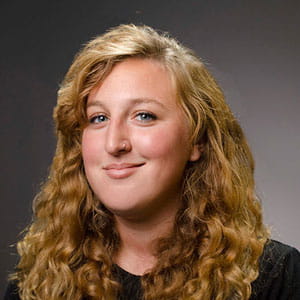

On April 16, Antonio Merlo, PhD, will be formally inaugurated as Drexel University’s 16th president, continuing a tradition of forward-thinking leadership at the 134-year-old institution.
The official investiture ceremony is just one of many celebratory inauguration events that will be held that week. Many of those events include Drexel customs that have welcomed new presidents for decades — but those traditions might not be easy to see or recognize under all the blue and gold.
Here’s what to look out for during Merlo’s inauguration ceremony and related events.
1. The President is Inaugurated After Starting
Merlo began his tenure at Drexel in July 2025 and will be inaugurated 10 months later. It’s common for Drexel presidents, as well as presidents at other colleges and universities, to spend months at the institution before the formal inauguration.
This can be traced back to the University’s 1891 founding as the then-Drexel Institute of Art, Science and Industry. James MacAlister, the namesake of MacAlister Hall — became president of Drexel before it even opened. He did not have an inauguration ceremony, but presided over the dedication of the institute and accepted the deeds of trust for Main Building (which originally housed all of Drexel) as well as the endowment created by the founder, Philadelphia philanthropist and financier Anthony J. Drexel.
2. The Ceremony is Held on Campus
Merlo’s April 16 investiture ceremony will be held in the Daskalakis Athletic Center at 33rd and Market streets. That’s been the site of presidential inaugurations of years past, more or less: the Drexel’s Recreation Center in the ‘10s, Physical Education and Athletic Center in the ‘90s and Physical Education Center in the ‘80s.
Before that, William W. Hagerty, PhD (the namesake of W. W. Hagerty Library), was inaugurated at Philadelphia’s Academy of Music in 1963.
3. Pre- and Post-Ceremony Events
Immediately after the ceremony, there will be a community-wide reception outdoors on Lancaster Walk. A fireside chat with Andrew Hamilton, PhD, chemist and immediate past president of New York University, will be held the day before. And the day after, a DU Civic Engagement Day will be held at Drexel’s Dornsife Center for Neighborhood Partnerships, where Dragons can pack resource bags for food insecurity and STEM education, enjoy food and live music and more.
During the week, there will be a mix of events for students, faculty, professional staff and alumni, from the annual Drexel Giving Day to artistic and academic exhibitions and lectures.
A president’s inauguration has historically been the highlight of a multitude of activities for the Drexel community. For example, when Constantine Papadakis, PhD, (the namesake of the Papadakis Integrated Sciences Building, or PISB) was inaugurated in 1996, it was part of a “Blue and Gold Days: Come Home to Drexel” weekend for alumni reunions. Faculty, staff, students and alumni could attend a black-tie gala, a late-night dance party, a University-wide picnic and/or “alumni university,” so graduated Dragons could hear from Drexel experts about everything from taxes to electronic résumés.
4. An Inaugural Address Lays Out the Vision
The inaugural speeches of the more recent Drexel presidents contain many similarities while expanding on the individual president’s goals. Speeches from the ‘40s, ‘60s, ‘80s, ‘90s and 2010s all reference Drexel’s founder and his vision to create an institution that would help students prepare for their careers in a changing society, no matter their gender, race, religion or socioeconomic background. That legacy has guided the institution for decades as it expanded with a steadfast connection to Philadelphia, growing network of external partners, academic and research advances and a commitment to providing personal and professional opportunities to students.
These presidential speeches also reflect the time in which they were given. For example, James Creese (namesake of the Creese Student Center), who was inaugurated as the president of the then-Drexel Institute of Technology in December 1945, spoke about opportunities in the aftermath of World War II. In his speech, he highlighted how Drexel could welcome returning veterans while preparing the next generation of military members and skilled professionals to rebuild a post-war society.
5. Academic Dress for an Academic Event
The use of academic dress in a college or university president’s investiture ceremony (and/or an institution’s convocation or commencement, like at Drexel) is standard. Academic dress has historically denoted the wearer’s alma mater and degree through the length, size, color and attachments for a formal cap, gown and hood. At Drexel, the stage party (those seated behind the podium), Drexel faculty and delegates from other institutions will be attired in academic dress. Drexel’s president wears a doctoral gown, hood and cap in blue with gold. The president’s gown has four arm bars (rather than the three traditionally on doctoral gowns) to signify the office.
6. Not Blue, Just Gold: The ‘Chain of Office’
An ornate medallion has been customized for each Drexel leader to wear with their academic dress. Known as the “Chain of Office,” the accessory usually featured aspects of Drexel’s official seal: a triangle, an open book and two torchers to symbolize knowledge and learning and/or the words “art,” “science” and “industry” after the institution’s original name and continuing ideals. Around the circumference of the medallion, additional words like “1891” for its founding, “Drexel University” and/or “president” have been included in past iterations.
7. University Mace and a Grand Marshal
A more recent development for a Drexel presidential investiture ceremony has been the inclusion of a large ceremonial mace, or ornamental staff. It’s used by academic institutions to symbolize the power of the president, which harkens back to the object’s origins in ancient Rome. The gold-plated Drexel mace is similarly embossed with the University’s seal — and, of course, a dragon.
At Drexel, the mace has been held by the grand marshal leading the procession. In the last presidential inauguration and again in this one, the grand marshal has been the chair of the Faculty Senate. This year, that’s Kevin Owens, PhD, an associate professor in the Department of Chemistry in the College of Arts and Sciences; he will also give remarks at the ceremony.
8. Student Representation
Undergraduate and graduate students have been part of the presidential investiture proceedings for decades.
Some, like this year, represented their classes and spoke on stage. Kayode Oluwasegun, mathematics PhD candidate ’26 and president of the Graduate Student Association, will give greetings on behalf of the graduate student body. Sanjna Srinivasan, BS/MS biomedical engineering ’27 and student body president of the Undergraduate Student Government Association, will do the same for undergraduates.
Students have also performed music at the event through their participation in University performing arts groups and have often been directed by a faculty professor. This year, the Dragons in the University Chorus will perform under the direction of Daniel Spratlan, DMA, director of the University Chorus and Chamber Singers.
The Drexel University ROTC Color Guard will also lead the order of the academic procession on stage, as they have in the past.
9. Honored Academic Speakers and Guests
As with Convocation at the beginning of the academic year and Commencement at the end, these University-wide formal events also feature an external speaker or speakers, often from academia. This year, Daniel Diermeier, PhD, chancellor of Vanderbilt University, is the honored speaker.
Peter Liacouras ’53, an alumnus who became president of Temple University from 1982–2000, spoke at three Drexel presidential inaugurations in the 1980s and 1990s.
From Drexel, a representative of the University’s Board of Trustees has formally welcomed the new president during the ceremony. The provost — the highest-ranking academic officer at the University — also shared greetings at the event. This year, Denis O’Brien, MBA ’87, vice chair of the Board of Trustees and immediate past interim president (more on him below), and Executive Vice President and Nina Henderson Provost Paul E. Jensen, PhD, will speak at Merlo’s investiture ceremony.
This year and in years past, colleges and universities have sent delegates to represent their institutions at the Drexel ceremony.
10. Philadelphia Mayor Provides a Welcome
In the past decades, Philadelphia’s mayor has been a part of the ceremony for the new president. This year, The Honorable Cherelle Parker is slated to give greetings at the April 16 event.
The mayor’s remarks have historically been used to formally welcome a new Philadelphia leader. The University has always been a Philadelphia institution: the founder, Anthony J. Drexel, was a lifelong Philadelphian who was born in Old City, where he led his family’s successful international banking firm, and he lived in West Philadelphia for four decades after the neighborhood was created in the mid-19th century.
Only four of Drexel’s presidents had worked in Philadelphia before starting at Drexel, including its newest:
- MacAlister, the first president, had previously been the first superintendent of the Philadelphia public school district.
- Hollis Godfrey, the second president, was inaugurated in 1914, a few years after he was first hired by Drexel to survey its facility.
- John Fry, Drexel’s most immediate past president, had been executive vice president and chief operating officer at the University of Pennsylvania from 1995–2002, though he came to Drexel after presiding over Franklin & Marshall College from 2002–2010.
- Though Merlo came to Drexel from New York University, where he had been the Anne and Joel Ehrenkranz Dean of the Faculty of Arts and Science, he previously spent 14 years at the University of Pennsylvania as the Lawrence R. Klein Professor of Economics. During that time, he also served as chair of Penn’s Economics Department, director of the Penn Institute for Economic Research and head coach of the men’s water polo team.
All of Drexel’s interim presidents, who led for a one-year period, were alumni who had continued to work in Philadelphia and be involved with their alma mater:
- Harold M. Myers ’38, HD ’83, who also worked at Drexel for five decades, retired as senior vice president of University Relations in 1982. The namesake of the former Myers Hall, he received “Life Trustee” status on Drexel’s Board of Trustees in 1984 and served as Drexel’s interim president in 1987.
- C. R. 'Chuck' Pennoni ’63, ’66, HD ’92, namesake of the Pennoni Honors College, served in both 1994 and 2009 and served as chairman of Drexel’s Board of Trustees from 1997–2003. He founded Pennoni Associates Inc., an engineering and design consulting firm, in 1966, and it’s still headquartered in Philadelphia.
- Denis O’Brien, MBA ’87, who served in 2024, had been on Drexel’s Board of Trustees for 20 years prior and is now vice chairman. He had been senior executive vice president and CEO of Exelon Utilities and previously served as the president and CEO of PECO Energy. He will provide the greeting from the Board of Trustees at Merlo’s investiture ceremony.