Turn Happy Places and Memories into a Happy New Year


Eric Zillmer, PsyD, is the Carl R. Pacifico Professor of Neuropsychology in Drexel University’s College of Arts and Sciences. He is also the director of the Happiness Lab at Drexel University and teaches a course on happiness, an evidence-based specialty of positive psychology.
Have you made your New Year’s resolutions for 2026 yet?
I know it can be difficult, often riddled with hidden traps and disappointment. But help is on the way. It requires a mental shift from being results-oriented — that is, focusing on outcomes — to being more process-driven and motivated by the experience.
Most often, New Year’s resolutions are too ambitious and vague, and beyond one’s control. Failure rates among New Year’s resolutions range from 50–90%, even within the first few months. There are ways to improve your percentages, but often New Year’s resolutions rely too much on results, a cognitive error in psychology called all-or-nothing thinking where one tends to see situations as only perfect or a failure.
As a sport psychologist, I understand that if elite athletes want to perform at their best, they need to be more process-focused during competition to concentrate on the present moment. Honestly, the worst thing you can do is worry about the outcome, like winning or losing, while you're competing. The same holds true for the game of life.
It is essential to stay in the moment. The happiest countries in the world and the regions where people live the longest do precisely that. They show little regret about their past or concern for their future. They live mainly in the present, stay optimistic and believe that everything will sort itself out.
The main idea of self-improvement and starting fresh on Jan. 1 connects with people worldwide, but the way they respond can differ.
A good way to move forward positively is to avoid becoming overly fixated on outcomes. Instead, focus on being more playful, present, adaptable, creative and grateful, and manage your expectations for a lifestyle change in 2026.
The longer I have been a professor, the more I have become interested in students’ perspectives on the world. I already know what I know, but Drexel students offer a fresh outlook. I love engaging them in hands-on experiences in class and then having them reflect on what they know within the context of real-world applications. Creativity, divergent thinking and learning happen for both students and me.
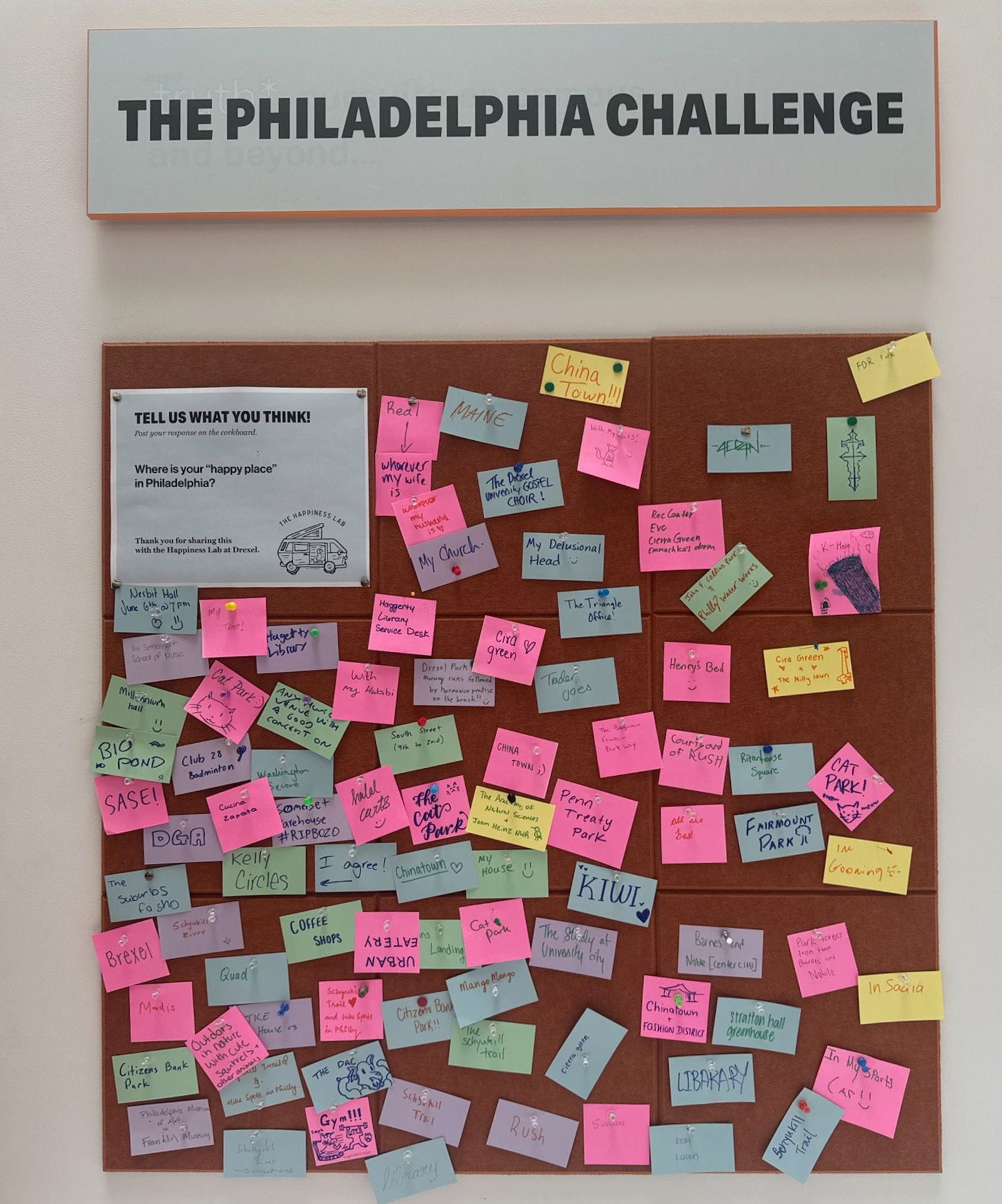
Let me take you through three simple questions I asked Drexel students to help you understand some lifestyle changes you might consider adopting in 2026. This information was also collected from hundreds of Dragons through class surveys and a W.W. Hagerty engagement board in The Philadelphia Challenge exhibition.

Scan this QR code for a Google Map showing Drexel students’ 28 happiest places at Drexel and in Philadelphia.
For 2026, Find a Happy Place That is Uniquely Yours!
The first question that the Happiness Lab asked students was:
1. What is your Happy Place in Philadelphia?
A “happy place” is where you feel safe, inspired and connected; food and drink may be included. Often, happy places are nearby and outdoors, and basically, you can hang out there on your own terms.
There is no right or wrong answer to that question, of course, and Drexel students responded with many different locations. The most frequent responses were close to Drexel’s University City Campus: Drexel Park, Lancaster Walk, Cira Green and Cat Park. Encouraging our students to engage in discovery also helped me reimagine my own perceptions of Drexel and locations I have passed through hundreds of times without taking the time to notice.
The students' suggestions forced me to take a break, sit in their happy places for 15 minutes and be present. I started noticing how our students relax, study, socialize or just be. It's completely fine to do nothing; in fact, it's often preferable. Actually doing nothing is doing something because you are present, content and feel more connected — happy!
Start exploring and discover your happy places. Happiness is closer than you think.
Create and Share Happy Memories in 2026!
The next question we asked Drexel students was:
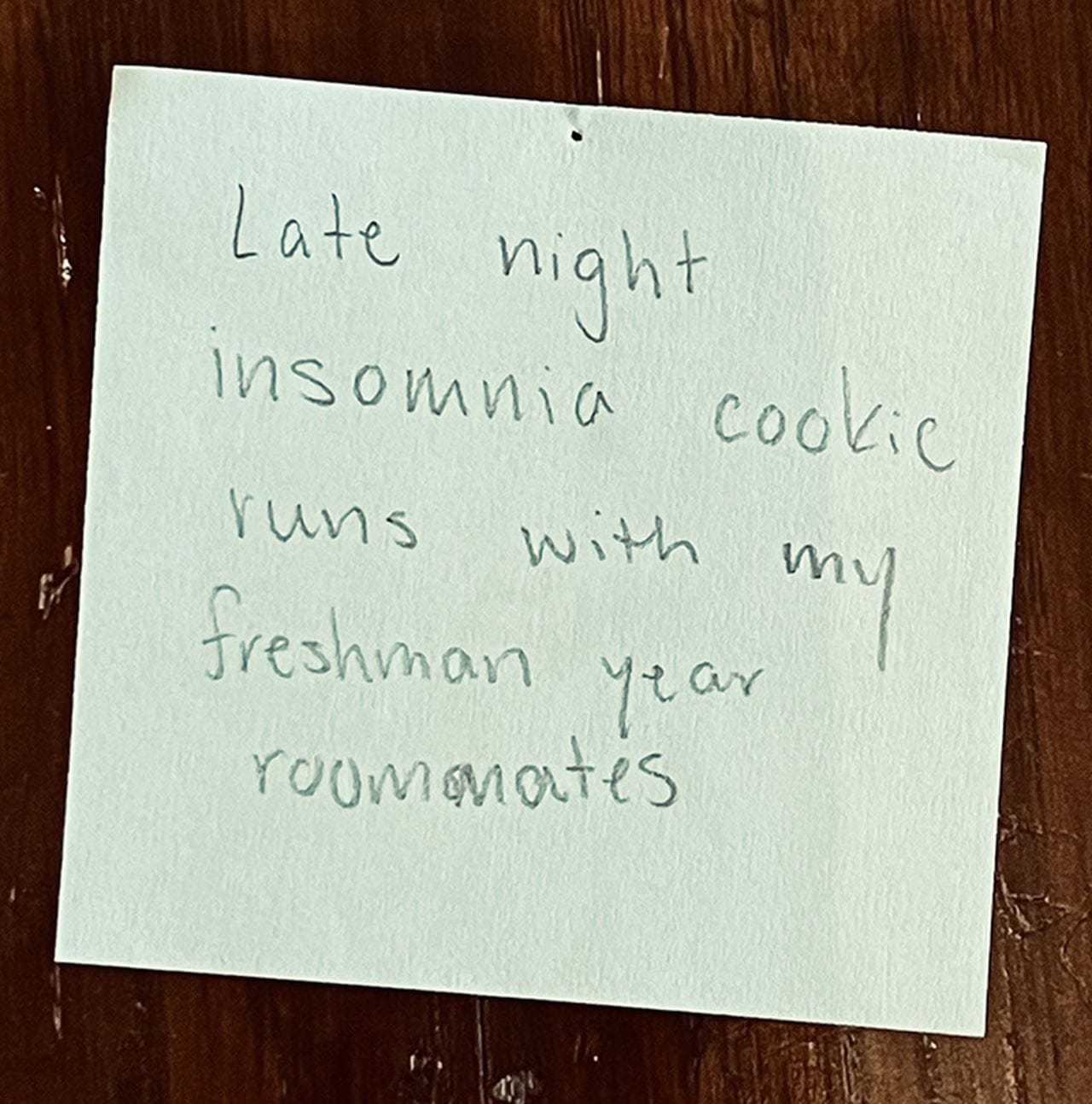
2. What is your Favorite Memory at Drexel University?
Remembering positive memories is a technique one can take ownership of to boost one’s mood and feel happier.
Science shows us that emotions boost the formation of memories. Memories are not perfect images; they are dynamic and can change each time we recall them. Intentionally remembering positive memories strengthens future retrieval.
Focusing on positive memories can build resiliency and increase overall well-being. It often helps to acknowledge these memories by taking a picture, journaling or sharing them with others.
Recalling a positive memory is a powerful way to interrupt and reset negative emotions. Sharing joyful memories with others can instantly brighten up your day and make you happier.
Again, our Drexel students showed us the way. Some of their responses included:
- Living with my best friend and getting a cat.
- Hoops!
- Meeting my roommate.
- Welcome Week.
- Performing at Mandell [Theater].
- Engineers without Borders.
- My very first exhibit.
Studies show that positive reminiscing predicts a person’s perceived ability to enjoy life. Positive memories, including nostalgia, can boost self-esteem, increase positive emotions and serve as a barrier against negative thoughts and stress. These findings highlight the restorative and protective function of self-generated positive emotions through memory recall in the face of stress.
Make 2026 Your Hygge Year!
The third and final question we asked Drexel students was:
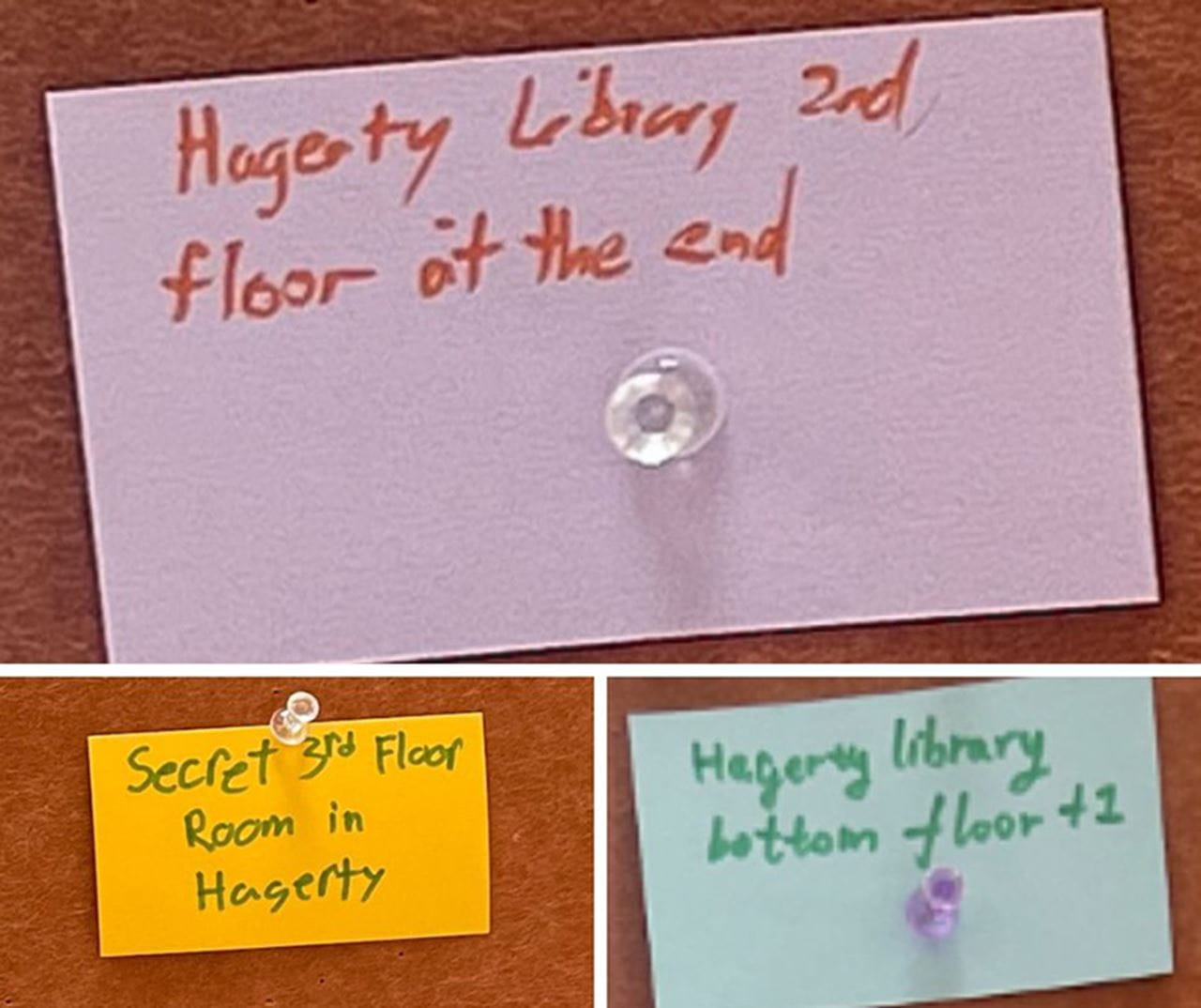
3. Where is your Favorite Study Spot at Drexel?
For Drexel students, the W.W. Hagerty Library was the overwhelming first choice, reinforcing how important it is to activate a library as a social space for students.
Our personal study spots tend to be cozy and private. One can study effectively and with a purpose only when relaxed, stress-free and focused. Everyone should have a favorite study spot where they feel comfortable. You do not have to study, but you can read, answer your e-mails, have a cup of coffee, listen to music or do nothing. But it has to be intentional!

Most countries that report high levels of happiness are more content than overtly happy. Scandinavians have perfected a corner of their home as their “hygge” headquarters.
To find and cultivate your own hygge spot at home, include accessories like candles, throw blankets, cozy lighting, books, music and pillows. Make it feel inviting. The goal is to create a warm, welcoming atmosphere perfect for spending quality time alone or with friends and loved ones.
Key happiness principles involve shifting your focus to the present, appreciating small, manageable things and practicing gratitude.
Acknowledgment: I want to thank Amanda Moore (psychology ’25), program director of the Happiness Lab, for her support with this project. I also want to thank Stacy Stanislaw, director of communications at Drexel University Libraries; Melissa Clemmer, executive director at the Lenfest Center for Cultural Partnerships at Drexel University; and Lynn Clouser Waddell, the executive director of Drexel University Collections, for their assistance with the W.W. Hagerty Library Engagement Board as part of the Philadelphia Challenge exhibit (Jun. 1–Nov. 31, 2025).