Breaking Through the Ice Ceiling at the Olympics


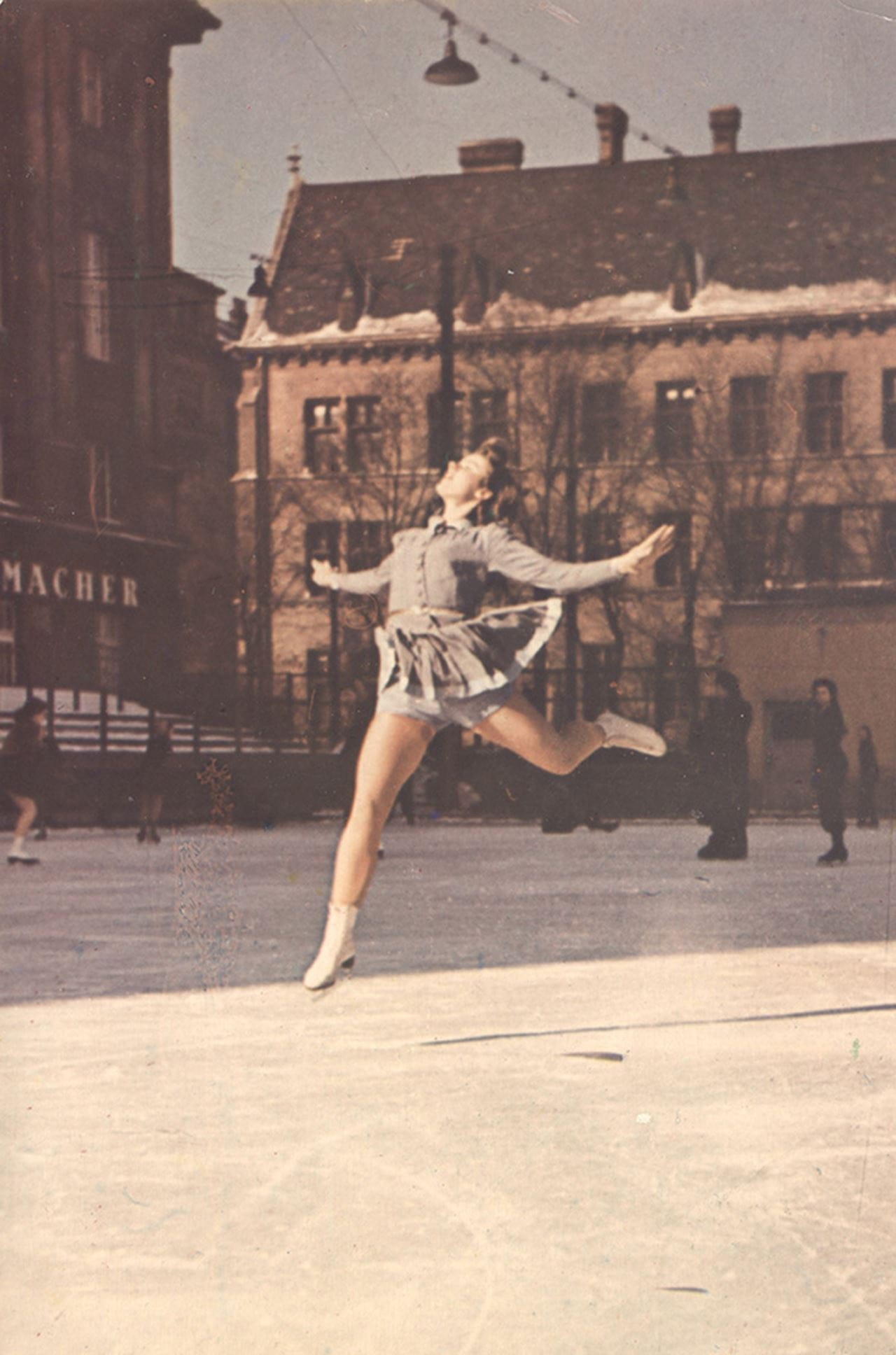
My mother, Madeleine Müller Zillmer (1923–2016), was a champion skater. She was a member of the 1940 Austrian Olympic team for both figure and speed skating, but those Games were never held due to World War II. She was also an Olympic coach and a talented swimmer who later won the U.S. nationals in outdoor swimming (one mile) as a senior. As a trailblazer for women’s rights, she was one of the first women to earn a doctoral degree in physics from the University of Vienna. She was the prototype student-athlete. Photo courtesy Eric Zillmer.
Eric Zillmer, PsyD, is the Pacifico Professor of Neuropsychology in the Department of Psychological and Brain Sciences in the College of Arts and Sciences, and he was Drexel University’s athletic director for 23 years (1988–2021). A former member of the NCAA/USOC Olympic Sports Liaison Committee, Zillmer grew up in an Olympic figure skating family; his mother made the Austrian team for the cancelled 1940 Olympics and his sister competed for West Germany in the 1968 Winter Olympics in Grenoble, France. Currently, Zillmer teaches sport psychology at Drexel and is on the Board of Directors of US Squash.
The 2026 Winter Olympics are a global celebration of what is humanly possible — all on snow and ice. If you do not like the cold, add another log to the fire, get cozy and read on for my personal perspectives on the 2026 Winter Olympic Games.
Cortina d’Ampezzo: Italy’s Olympic Stage
Cortina, where many Olympic events are held (others are staged across the Dolomites of Northern Italy and in Milan), is a charming, fairytale-like Alpine town that also hosted the 1956 Winter Olympics. It is the picture-perfect backdrop for what most imagine the Winter Olympic Games should look like.
I have a personal connection to Cortina, having grown up in the German Alps in nearby Garmisch-Partenkirchen, where I competed internationally in alpine skiing. I raced in Cortina many times. Yes, Cortina’s Olimpia delle Tofane slope, where U.S. downhill skier Lindsey Vonn crashed and injured her leg, is breathtaking and scary to ski. One section of the course is so steep that it is impossible to stand. Like many, I cringed as I watched Vonn fall during her Olympic comeback attempt in the downhill race. But I also knew the pain she was experiencing because my racing career was cut short as a teenager when I fractured my leg twice, once in practice and once, like Vonn, in competition.
Yes, the Olympics are very much about the “thrill of victory and the agony of defeat.” For me, as a sport psychologist and sports scientist, the Olympic Games are an irresistible laboratory for psychology.
A New Era of the Winter Games
Beyond the medal competition, there is a not-so-subtle shift in the culture of the Olympic Games that deserves gold-medal attention.

A replica of the “Winged Victory of Samothrace,” depicting Nike, the Greek goddess of victory, is located in Drexel University’s Main Building. Photo courtesy The Drexel Founding Collection.
This 25th edition is the most inclusive and collaborative Winter Games, which were first held in Chamonix, France, in 1924. The ancient Olympics, held in Olympia, Greece, every four years between 776 B.C. and 393 A.D., were staged exclusively for males. I made a pilgrimage to the birthplace of the Olympics, where I also learned that only male spectators were allowed.
Surprisingly, the Greeks worshiped Nike, the goddess of victory and a female figure, but they did not afford women those opportunities in the game of life.
The modern era of the Summer Olympics began in 1896 in Athens, and, sadly, it again began with only males competing. Amazingly, the revival of the Olympics came just a few years after the University’s founder, financier and philanthropist Anthony Joseph Drexel, (1826–1893) opened the then-Drexel Institute of Art, Science and Industry to both men and women, including women's access to sports.
Today, the 2026 Winter Olympics have a record 47% female participation rate, and one could argue that some of the biggest stars for Team USA are women: Vonn, Mikaela Shiffrin, the U.S. women’s ice hockey team and the trio of American figure skaters, Amber Glenn, Alysa Liu and Isabeau Levito. In fact, Canada’s Olympic team has more women than men. And for the first time, women are racing the same distances in cross-country skiing.
Gender equality in the Olympics has been a long time coming. I know firsthand because I grew up in an Olympic figure skating family. Both my mom and older sister were on Olympic teams, before and during my lifetime.
I was my sister’s “team” manager, carrying her skates and the vinyl records containing her music, and I drew her lot, nervously, to determine her starting order in skating competitions. I was so proud of “Bibi” when I spotted her at the Parade of Nations “live” at the Opening Ceremony of the 1968 Winter Olympics in Grenoble, France.
But I also saw and experienced firsthand the adversity and discrimination that came with being a female athlete and being only one of 18% of women athletes at the Grenoble Olympics. I knew then that if given the chance, I would try to make a difference. And I did. When I was appointed athletic director at Drexel, I was unapologetically committed to gender equality throughout my 23-year tenure, and as a result, U.S. News & World Report has ranked Drexel Athletics No. 1 in gender equity nationwide.
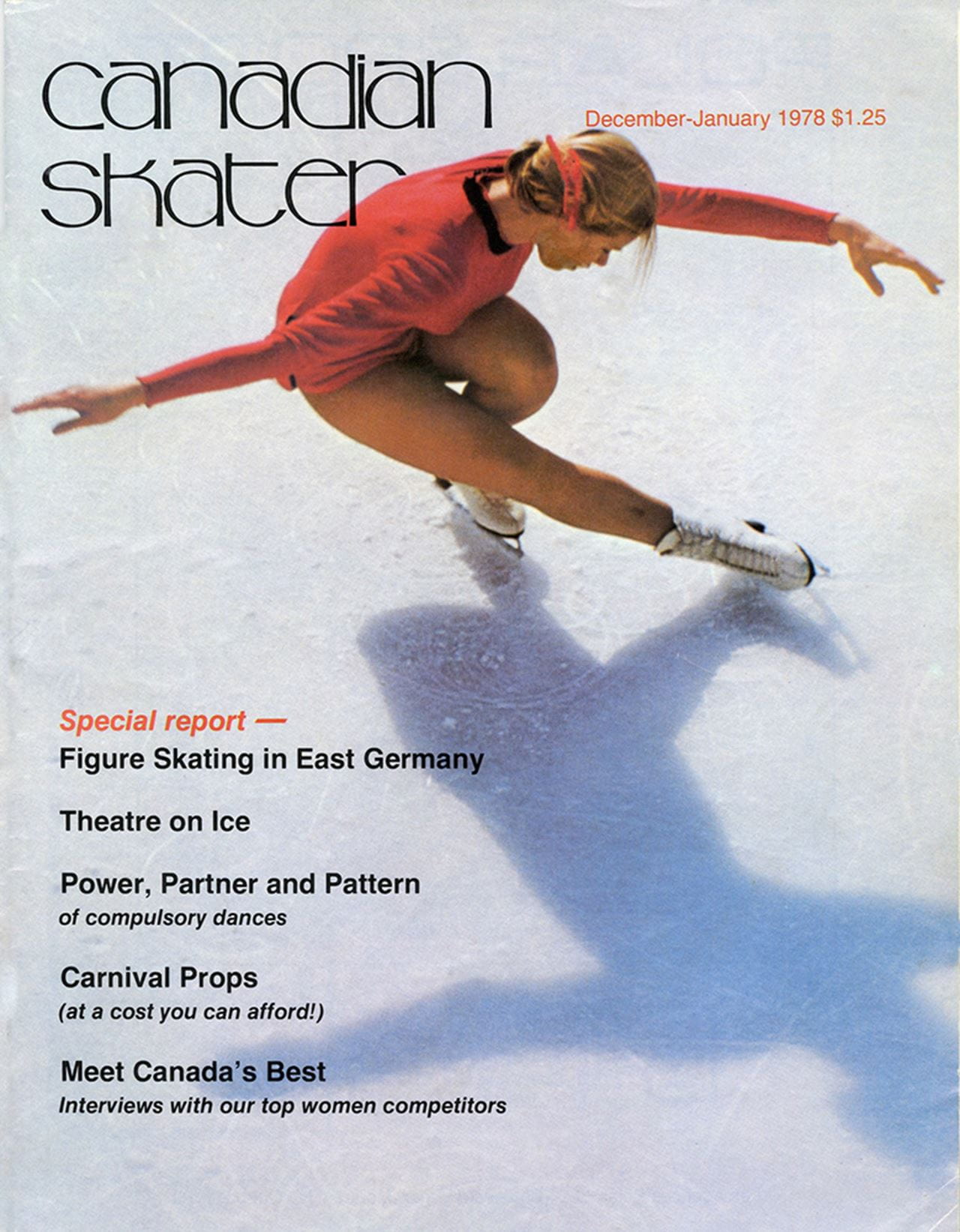
My sister Eileen “Bibi” Zillmer was a three-time German Champion in figure skating and represented West Germany at the 1968 Olympics at age 16. She later placed 9th at the 1969 World Championships. Photo courtesy Eric Zillmer.
The Evolution of Olympic Mixed-Gender Events
Besides a significant uptick in women's participation, something even more incredible is happening in Italy.
Of the 2026 Games’ 116 total events, 12 are “mixed-gender” competitions, meaning men and women compete together. In some cases, such as mixed-gender curling, male and female athletes collaborate. It is so much fun to watch them problem-solve together, just like in real life.
Of course, figure skating has a long history of pair skating, and since the 2014 Sochi Games, there has also been the addition of the figure skating team event where men and women skaters cheer each other on as one team.
A new mixed team entry at the Olympics includes skeleton: You sprint to start, dive headfirst onto a sled (which resembles a cafeteria tray) and race down the new Cortina Sliding Centre, reaching speeds of over 80 mph. It’s easily the best ride of the Olympics.
And then there is the mixed biathlon event, where a team of two women and two men race a 6 kilometer leg consecutively, representing their nation as one team. As if cross-country skiing is not hard enough, these competitors also carry a rifle (yes). Why? Because after a certain distance, the men and women must shoot their rifle at a target. If they miss … you guessed it, there’s an extra punishment lap. It is fascinating to watch.

The Arlen Specter US Squash Center on Drexel's campus is the official, state-of-the-art national training hub for Team USA, serving as the premier training ground for male and female Olympic athletes ahead of the sport’s debut in the 2028 Games. US Squash supports equal prize money and leadership opportunities for women and girls in coaching and competition. Photo courtesy US Squash.
Psychological Impact
Gender equality and mixed-gender events add another dimension to these Games, emphasizing consistent high performance for both male and female team members, greater inclusivity and the promotion of collaborative teamwork.
But the Games symbolize something even bigger psychologically and on a global stage: fairness, human rights, role modeling and belonging.
It is also good for business, with increased visibility through sponsorships, broadcast coverage and viewership.
And it is essential for the future of the Olympics.
It is not surprising, then, that the 2026 Games also feature the first female president of the International Olympic Committee (IOC): Zimbabwean Kirsty Coventry, who is setting the tone at the very top.
Go TEAM USA!