Our Undergraduate Research & Enrichment Programs office has awarded twelve undergraduate research mini-grants to Drexel faculty/student pairs to support their research endeavors in the Winter Term. These $1,000 grants support faculty and student collaboration in undergraduate research, scholarship, and creative work at the University while also helping students practice writing applications for funding opportunities.
We're pleased to share the awardees and their projects:

David Abraham
3D Printing Concrete
David Abraham, computer science & mathematics ’28
Arvin Ebrahimkhanlou, PhD, Assistant Professor of Civil, Architectural and Environmental Engineering
This project explores using CO2 injection for concrete 3D printing.

Maria Afonkina
Injectable Biomaterials for Immune Cell Activation
Maria Afonkina, biological sciences ’28, Honors
Christopher Rodell, PhD, Assistant Professor of Biomedical Engineering, Science, and Health Systems
This project focuses on designing adaptive injectable hydrogels capable of modulating macrophage behavior through mechanical cues and localized release of immunostimulatory drugs. By integrating rheological and cell-based assays, this research will advance understanding of how material properties modulate immune activation and contribute to the development of future immunomodulatory treatments.

Faith Clark
Contribution of Xist and RNF139 to Sex Differences in Inflammatory Response and Pain
Faith Clark, biological sciences ’27, Honors
Seena Ajit, PhD, Professor of Pharmacology and Physiology
RNF139 is a ubiquitin protein ligase that can uniquely interact with X inactivating specific transcript, a long noncoding RNA only expressed in female cells. This project will utilize mice that do not express RNF139 to elucidate the role of RNF139 in inflammatory response and differences in inflammation and pain between males and females.

Ethan Erb
Automated Kilonova Identifier Pipeline
Ethan Erb, computer science ’28
Niharika Sravan, PhD, Assistant Professor of Physics
Our project will have us complete a fully automated process for identifying the second ever kilonova - as well as all the ones to follow. The final result will be implemented by Dr. Sravan and her peers to drastically increase the scope of their search.
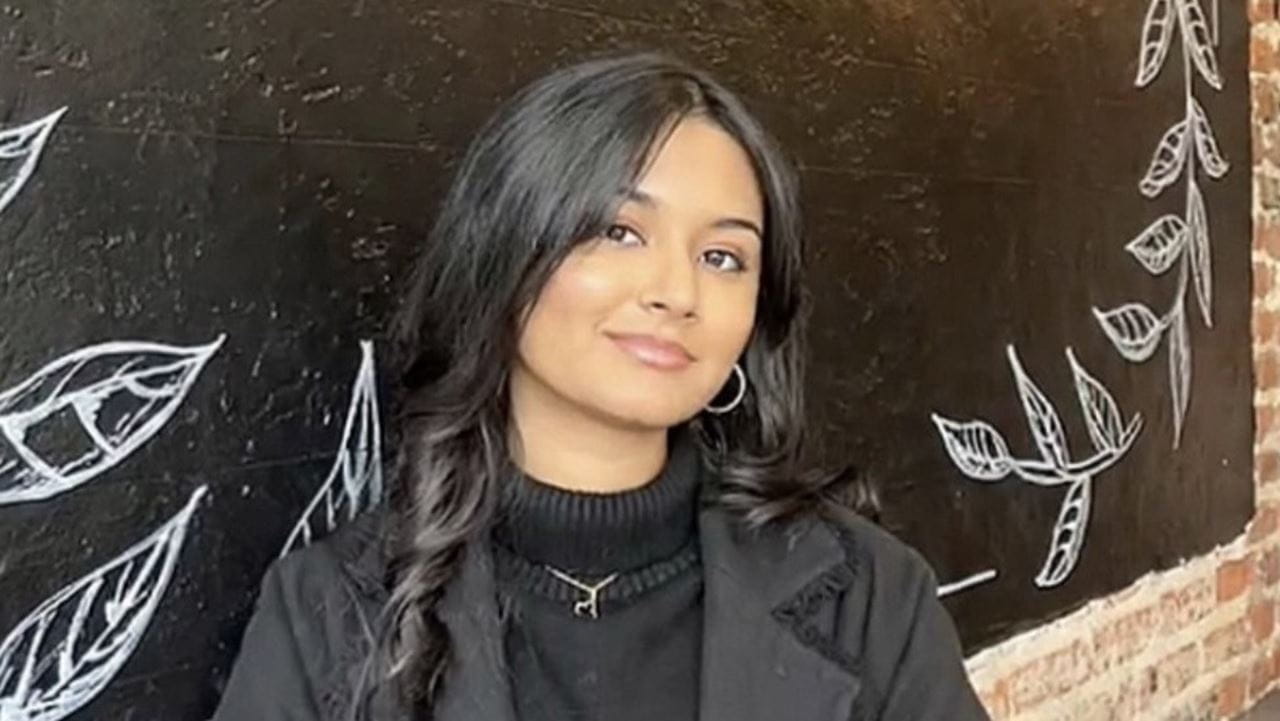
Ruhma Hashmi
AILA: An Intelligent Lecturing Assistant for High-Quality Formative Assessment Generation
Ruhma Hashmi, computer science ’29, Honors
Yuan An, PhD, Associate Professor of Information Science
The AI-Powered Intelligent Lecturing Assistant (AILA) automatically extracts knowledge graphs from lecture materials and uses large language models to generate high-quality multiple-choice questions that instantly adapt in difficulty based on each student’s performance. This project will develop a full deployment-ready platform featuring an interactive student dashboard with personalized progress visualizations and recommendations, alongside an enhanced instructor dashboard for real-time class analytics, enabling truly individualized and data-driven learning in computer science education.

Alejandra Holgate
Quantifying Heat Effects on Reclaimed Brick’s Reusability Using Nondestructive Evaluation
Alejandra Holgate, business and engineering ’29, Honors
Arvin Ebrahimkhanlou, PhD, Assistant Professor of Civil, Architectural and Environmental Engineering
This project will design and build an automated test rig that uses hyperspectral imaging and ultrasonic sensing to evaluate thermally degraded reclaimed bricks. The work aims to advance circular construction by providing evidence-based guidelines for post-fire material reuse.

Earli Ismaili
The Impact of Dynamic Discharge on the Lifetime of Anode-Free Lithium Metal Batteries
Earli Ismaili, electrical & computer engineering ’29, Honors
Wesley Chang, PhD, Assistant Professor of Mechanical Engineering and Mechanics
This project investigates how dynamic discharge protocols accelerate chemo-mechanical degradation in anode-free lithium metal batteries, using in-situ ultrasound monitoring and impedance spectroscopy to track structural and electrochemical changes. By correlating cycling performance with real-time mechanical evolution and post-mortem morphology, the study aims to identify electrolyte-protocol combinations that enable safer, longer-lasting batteries for electric vehicle applications.
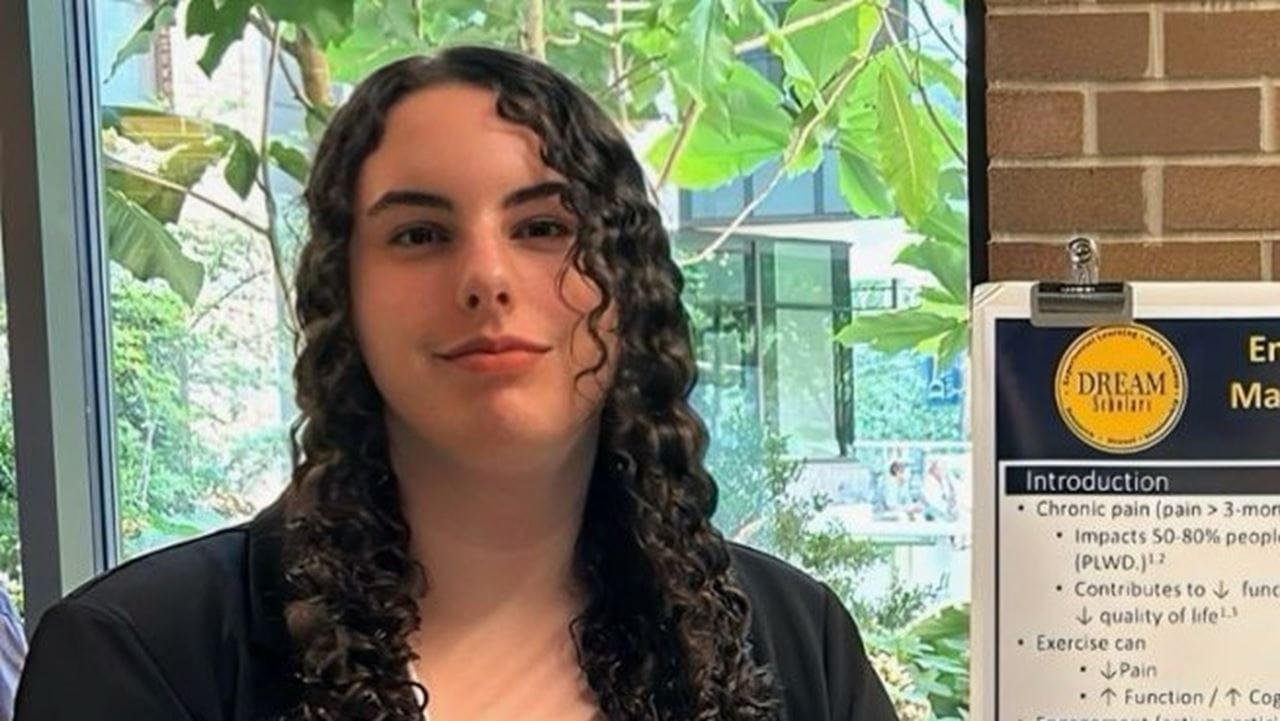
Jenna Lisa
Feasibility of Achieving Target Heart Rate During Exercise in Older Adults With Dementia and Chronic Pain
Jenna Lisa, biological sciences ’28
Annalisa Na, PhD, PT, DPT, Assistant Research Professor of Physical Therapy and Rehabilitation Sciences
This project will determine whether older adults with dementia and chronic pain can achieve at least 80% of their maximum heart rate at the start of a supervised exercise program using the Polar H10 chest-strap sensor. Data collected across the 10-week program will assess whether reaching this intensity level is feasible for this population.

Stuti Mohan
Evaluating Large Language Models for SMT-Based Logical Planning with Natural Language Constraints
Stuti Mohan, computer science ’28, Honors
Li (Harry) Zhang, PhD, Assistant Professor of Computer Science
Large Language Models (LLMs) are increasingly used in AI planning, either to generate executable plans or to formalize problems for solvers. Understanding their limitations is key for safely deploying LLMs in real-world systems where strict adherence to constraints is critical.

Roshan Persaud
Development and Experimental Validation of Conditional Generative Artificial Intelligence for Additively Manufactured Metal Microstructure Characterization
Roshan Persaud, BS/MS mechanical engineering ’27, Honors
Arvin Ebrahimkhanlou, PhD, Assistant Professor of Civil, Architectural and Environmental Engineering
This project will contribute to the overarching goal of designing and validating a generative AI capable of producing realistic images of microstructures with defined properties such as precipitates, grain boundaries, and phase distributions. This grant specifically will enable the student researcher to curate a dataset using the SEM machine, and access the NSF-MRI GPU clusters at Drexel University for AI development.

Divine Thomas
Enhancing the Detection of gp120-Expressing Cells Using Dual-Color Liposomes
Divine Thomas, biomedical engineering ’27, Honors
Peter Deak, PhD, Assistant Professor of Chemical and Biological Engineering
The aim of the project is to develop and test a dual-color fluorescent liposome system that has been engineered to bind gp-120 in order to increase specificity of detecting rare gp-120 expressing HIV-latent cells.

Ebube Wobo
The S.C.O.P.E. Project: Self-talk and Creativity for Optimizing Problem-solving in Education
Ebube Wobo, computing and security technology ’26
Jen Katz-Buonincontro, PhD, MFA, Professor of Education
The S.C.O.P.E. Project investigates how self-talk shapes creative problem solving, confidence, and leadership development among undergraduate women and non-binary students through in-depth interviews. The purpose of this study is to better understand how internal dialogue supports resilience, creativity and authentic leadership in order to strengthen leadership education.