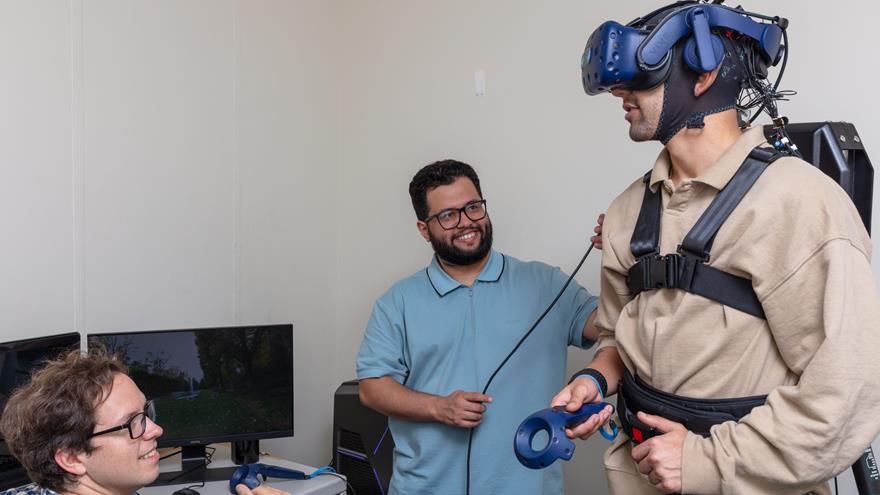
- What Can Virtual Reality Teach Us About Nature’s Restorative Health Benefits?
- How Do Combined Sewer Overflows Affect Water Quality in Philadelphia?
- Drexel Launches ALLIED Hub to Address the Nation’s Literacy Crisis
- New Process for Making MXEnes Via Vapor-Phase Synthesis Could Expand Its Technological Applications

Photo of Katalin Karikó, PhD, courtesy of István Sahin-Tóth
Katalin Karikó, PhD, co-inventor on mRNA-related applications of non-immunogenic, nucleoside-modified RNA for vaccines and therapies, including the FDA-approved COVID-19 mRNA vaccines by BioNTech/Pfizer and Moderna, will address the Drexel University College of Medicine class of 2026 during its commencement on May 14.
The ceremony will be held at the Academy of Music, 240 South Broad St., where 611 degrees will be presented, including 290 medical degrees, as well as PhD and master’s degrees from the college’s Graduate School of Biomedical Sciences and Professional Studies.
For four decades, Karikó’s research has focused on RNA-mediated mechanisms with the ultimate goal of developing in vitro-transcribed mRNA for protein therapy. She investigated RNA-mediated immune activation and co-discovered that nucleoside modifications suppress immunogenicity of RNA, which widened the therapeutic potentials of mRNA.
In 2006, Karikó co-founded RNARx, a company dedicated to development of nucleoside-modified mRNA for therapy, serving as CEO from 2006 to 2013. Her patent, co-invented with Drew Weissman, MD, PhD, was used to create the FDA-approved COVID-19 mRNA vaccines by BioNTech/Pfizer and Moderna. From 2013 to 2022, she served as vice president and then senior vice president of BioNTech SE.
Karikó currently serves as a professor at the University of Szeged, Hungary, where she received her PhD in biochemistry in 1982. She is also an adjunct professor at the Perelman School of Medicine of the University of Pennsylvania, where she worked for 24 years.
Her pioneering achievements have earned Karikó many prestigious awards, including the Japan Prize for outstanding achievements in science and technology, the Louisa Gross Horwitz Prize from Columbia University, the Tang Prize in Biopharmaceutical Science, the Paul Ehrlich and Ludwig Darmstaedter Prize for research in medicine, the Canada Gairdner Award for outstanding discoveries or contributions to medical science, the Breakthrough Prize in Life Sciences, the Lasker-DeBakey Clinical Medical Research Award, and the 2023 Nobel Prize in Physiology or Medicine.
For her vast contributions to the field of biochemistry, Drexel will proudly confer upon Karikó the degree of Doctor of Science, honoris causa.