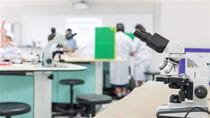
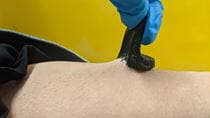
Biosensors have revolutionized home healthcare over the last two decades. Devices like wearable heart rate and blood glucose monitors are giving people with chronic health conditions the information and assurance they need to maintain an active lifestyle. But even the best sensors are limited by their ability to sustain skin contact through the rigors of physical activity. Researchers from Drexel University and Penn State University took on the challenge of improving the hydrogel material used in biosensors. And, in recently published research, they reported a new formula for making the gelatinous substrate that is versatile, durable and adhesive enough to make a stronger connection.
Make sure you’re updated and informed on the upcoming Market Street Bridge closure and August TIAA Webinars as well as general reminders related to urgent facilities issues and Drexel’s employee Wellness Incentive Program.
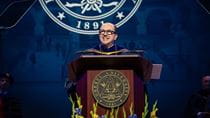
During his first year on campus, the University leader connected with students, faculty and professional staff to bring his team together and start guiding Drexel through transformative changes.
This fall, students from Drexel University will be helping Pennsylvania companies advance sustainable manufacturing and circular economy practices as part of a $3.1 million investment by the Pennsylvania Department of Community and Economic Development The DCED’s Manufacturing PA Innovation Program will support student research on campus and on-site with manufacturers across the state that will provide data to help the companies evaluate new products and processes.
America’s 250th anniversary might have just passed, but the 200th birthday of the University’s founder and the 135th anniversary of Drexel’s founding are both coming up.
Ahead of next month’s transition to Noevolution, Doug Stay, assistant vice provost of research business operations and technology in the Office of Research & Innovation, shared what Drexel researchers can expect in the coming weeks.