Drexel’s Hydration Stations Cut Plastic Waste and Costs

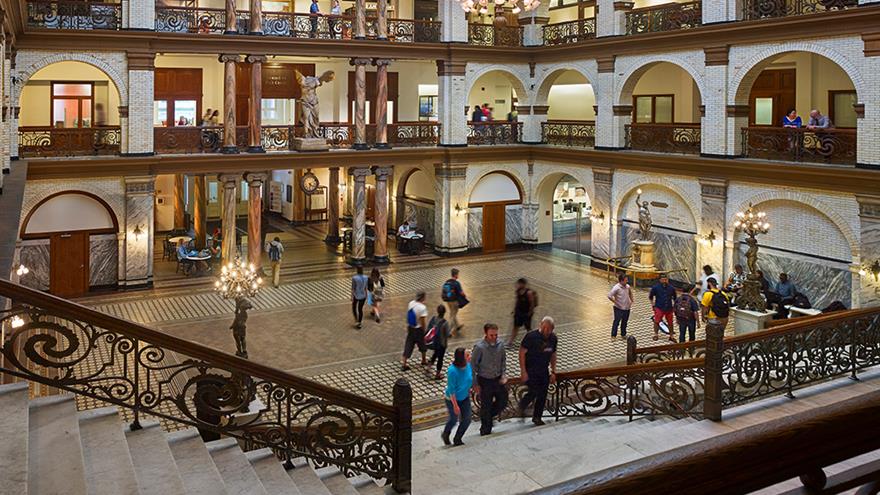

Lakin Casey, left, president of EcoReps, and Lila Woods, EcoRep student, at one of the hydration stations on the University City Campus. Photo credit: Bo Solomon.
During the past year, the Drexel University community on the University City Campus used hydration stations and water fountains for about 3.2 million bottle refills, according to professional staff members in Climate and Sustainability and students in the EcoReps sustainability organization.
With a single-use plastic water bottle costing an estimated $2.50, they estimated that Dragons have collectively saved as much as $8 million — while also reducing the environmental, carbon and community health impacts of the water bottling industry.
The team evaluated a sample set of five campus buildings with 13 water fountains and hydration stations: Nesbitt Hall, Stratton Hall, W. W. Hagerty Library, Drexel University Recreation Center and Main Building. The University City Campus was reviewed, according to Climate and Sustainability Executive Director Bo Solomon, due to the lessening occupancy of the Center City and Queen Lane campuses as those Drexel populations move into the Health Sciences Building.
“These hydrations stations are available and accessible at most on-campus buildings and not only does it help the environment by reducing the use single-use plastic, it also saves you money in the long run to fill up a reusable water bottle rather than continually buying plastic bottles,” said Cameron Faulhaber, BA environmental studies and BA global studies ’27. She is also earning a minor in Spanish and a journalism certificate, and is the vice president of EcoReps, having joined during her first year.
The team totaled the counts and water usage — each hydration station reports how many water bottles were filled up there, for example — to calculate usage and saved cost. Solomon then calculated the estimated figures for all 162 hydration stations and water fountains for monthly and yearly use across campus.
This is the fifth time they have updated the rate of usage records since 2022. So far, the usage has increased 2–5% each time.
The next time you’re thirsty or looking to refill your water bottle on the University City Campus, you can use the DrexelOne app to find a map of hydration stations and water fountains.
Faulhaber said she uses the hydration station at the Hagerty Library the most. For EcoReps president Lakin Casey, BS Custom-Designed Major in conscious design and climate communication ’26 with a minor in Spanish, her most-used hydration stations are on the first and second floors of the Drexel Recreation Center. She fills up her Nalgene water bottle whenever she goes to the gym.
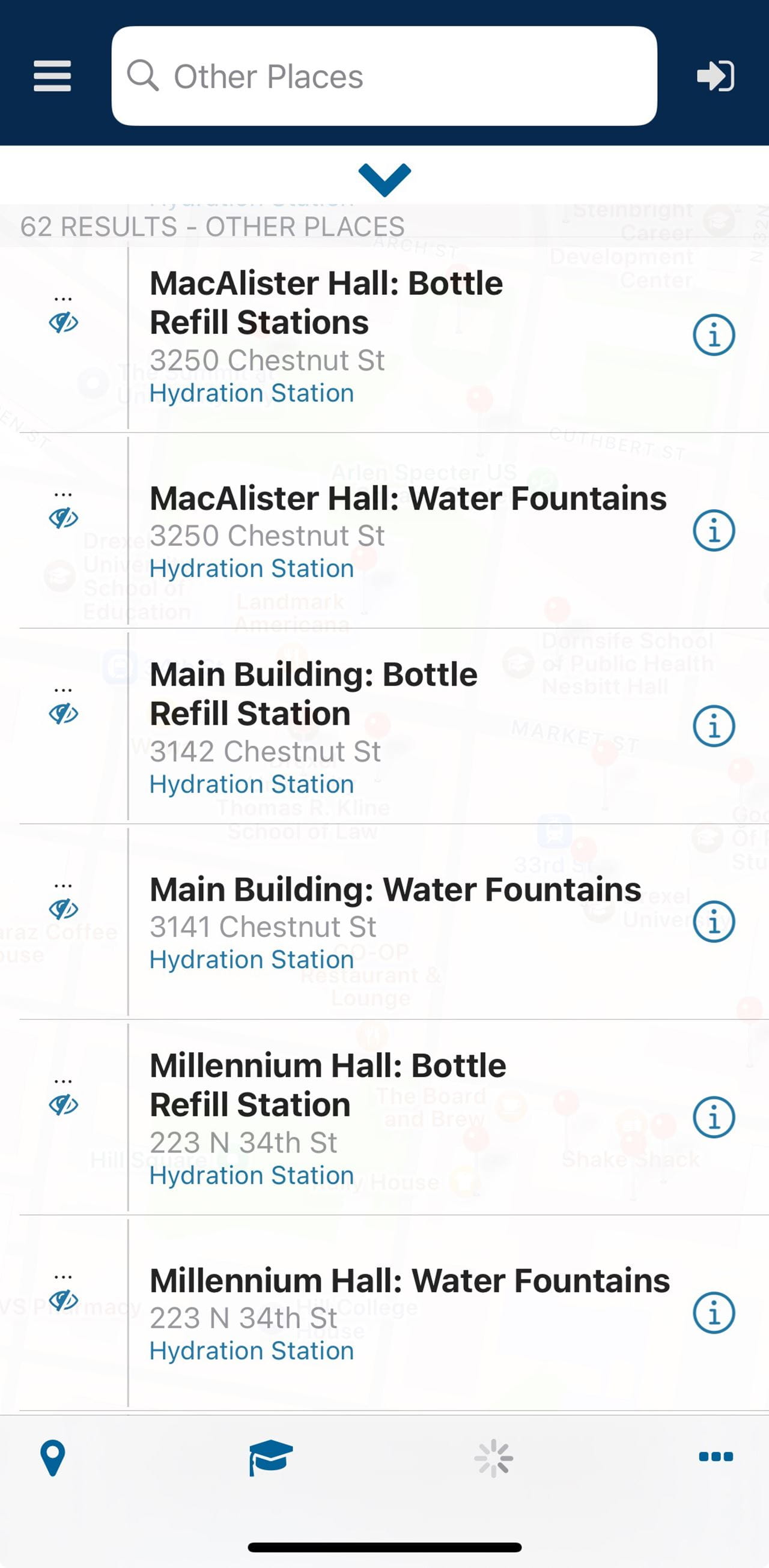
A screenshot of the hydration station map located on the DrexelOne app.
“Philadelphia and Drexel both have safe and clean drinking water that is free and accessible to students via water fountains and hydration stations,” said Casey, who has been EcoReps’ president since April 2024 and first got involved with the organization in 2023.
Climate and Sustainability Executive Director of Sustainable Development Strategy Jen Britton shared that more information about the city's municipal water quality can be found online, and noted that the Drexel campus infrastructure is free of any lead plumbing.
This hydration station count is one of the many ways that Climate and Sustainability and EcoReps members collaborate on University initiatives, host events and create and share resources.
Casey was also part of the Business Practices subcommittee of Drexel’s Climate Action Plan. Britton and Solomon provided logistical leadership and served as subcommittee co-leaders for Academics & Research and Buildings & Energy, respectively. Last summer, Casey also worked with them to develop a Drexel Student Sustainability Guide, which she said was “created with the goal of having a comprehensive resource for incoming and current Drexel students to know about the existing climate and sustainability initiatives and resources on campus.”
Both Climate and Sustainability and EcoReps also created and now manage the Drexel Buy Nothing Depot, which is open every Wednesday from 2–4 p.m. in the PSA Building (3240 Powelton Ave., Room 10).
“One of my main focuses is the Buy Nothing Depot, which is a free supply exchange program that gives the Drexel community free resources like school supplies and household items that would’ve been thrown out otherwise,” said Faulhaber.
EcoReps shares climate education content and information about upcoming events on the @sustainabledrexel Instagram. You can also learn more about Climate and Sustainability’s signature programs, campus initiatives and ways Dragons can get involved through their website.