Communication major Taylor Clark ’28 assisted with coverage of the Winter 2026 Olympics during her co-op at Comcast.
Communication shapes how people understand the world, connect with one another, and participate in society. Drexel’s Bachelor of Arts (BA) in Communication program invites students to explore public relations, journalism, media and culture, technology, storytelling, and human interaction in a rapidly changing digital environment. Students examine how communication influences public life, how media industries and platforms shape culture and democracy, and how emerging technologies, including artificial intelligence, are transforming the ways people create, share, and interpret information and content.
Media and storytelling have the power to change the world, and strategic communication can help people make better, more informed decisions. Drexel’s BA in Communication program provides broad theoretical knowledge and practical skills, while giving students exceptional flexibility to explore their unique interests. With three concentrations in Public Relations, Journalism, and Communication and Media Studies, our curriculum allows students to craft an individualized program of study and to enter the workforce equipped with in-demand skills. Qualified undergraduate students may pursue an accelerated BA/MS in Communication program; majors can also expand their education and career-readiness through minor programs.
From the beginning of their academic journey, Drexel Communication majors learn by doing. Our professional platform, paired with experiential learning in storytelling, strategic communication, reporting, digital content creation, public speaking and writing, connects students with community partners and builds career-relevant skills. Student scholars gain the depth and versatility demanded in the field with faculty-mentored research and project-based courses that focus on the role of communication and media ecosystems in sustaining democratic institutions, ethically and socially responsible corporations, and inclusive communities. Student and industry organizations, as well as civic engagement and study abroad, offer more opportunities to elevate knowledge and technical expertise.
Through the renowned Drexel Co-op program, Communication majors explore high-growth careers across for-profit companies and non-profit organizations. The BA in Communication program can also serve as a bridge to pursue advanced degrees such as a JD, an MBA, or graduate public policy programs.
Visit Our Department
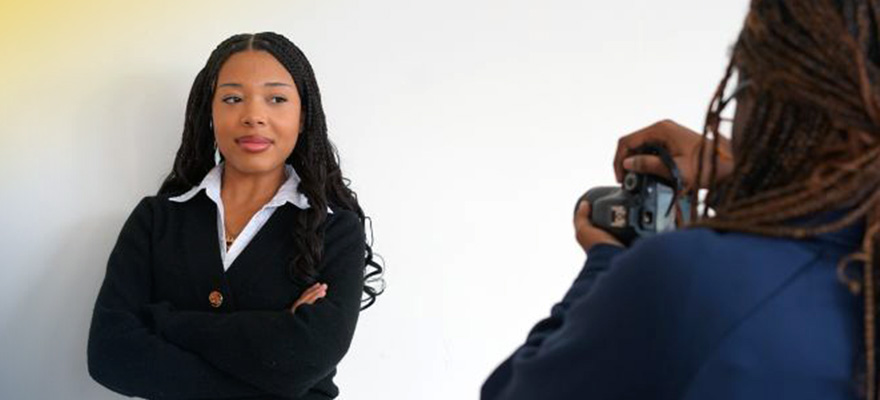
Aspire Scholar Ella Adams, BA communication ’28 with a concentration in public relations, is active with Drexel’s student chapters of the American Marketing Association and Girls Who Lead.
Concentrations
Drexel’s Bachelor of Arts (BA) in Communication degree combines flexibility, professional preparation, and critical understanding of media and society. Students develop practical skills in writing, storytelling, media production, strategic communication, research, and digital media analysis while exploring how communication shapes culture, technology, organizations, and public life.
Communication majors create a highly customized program of study. Each student designs the degree to suit their unique interests by choosing one of three concentrations in Public Relations, Journalism, and Communication and Media Studies. This flexibility allows a student to combine courses and minors across disciplines to pursue broader academic and career paths – such as entertainment and public relations, entertainment and media industries, political science and journalism, digital media and strategic communications, digital culture, and emerging technologies such as artificial intelligence.
The Public Relations (PR) concentration is for students who enjoy high-paced environments and the power of creative storytelling. Successful students learn to manage information, support the needs of different people, foster strong relationships, and solve problems. The Public Relations concentration prepares students to effectively manage communication on behalf of a community, organization, person, or brand. Students gain a broad understanding of the PR industry and awareness of ethical, transparent practices. They learn about public relations-focused writing, planning, reputation management, and social media communication.
The Journalism concentration is for curious students with a strong sense of civic responsibility, ethics, and social justice who want to become skilled storytellers. Students learn to critically evaluate representation, ownership, and power dynamics within the media systems that shape public life. The Journalism concentration prepares students to write, edit, produce audiovisual content, and develop digital storytelling skills while understanding emerging developments in journalism and their impact on society.
The Communication and Media Studies concentration is designed for students interested in digital media, culture, technology, and the social impact of communication. Students examine how media shape identity, politics, communities, entertainment, and everyday life while developing skills in critical analysis, research, and media interpretation. The concentration’s flexible structure allows students to pursue interests in areas such as social media, popular culture, media industries, artificial intelligence, digital platforms, and global communication.
Accelerated Program
Academically qualified undergraduate students can begin earning their master’s degree while completing their bachelor’s degree—graduating sooner than they would in traditional graduate programs. The Master of Science in Strategic & Digital Communication program prepares students for leadership roles across communication, media, and digital industries. This master’s in communication program offers a flexible, personalized curriculum focused on leadership, strategic communication, digital media, and emerging industry skills. While enrolled in the accelerated program, students still enjoy the benefits of Drexel Co-op, study abroad, and other programs that make up the full Drexel experience.
Communication (BA) and Strategic & Digital Communication (MS)
Minor Programs
Undergraduate majors at Drexel can enhance their career-readiness through minor programs that offer a deeper understanding of communication and develop more focused skills.
Communication Minor
Linguistics Minor
Nonprofit Communication Minor
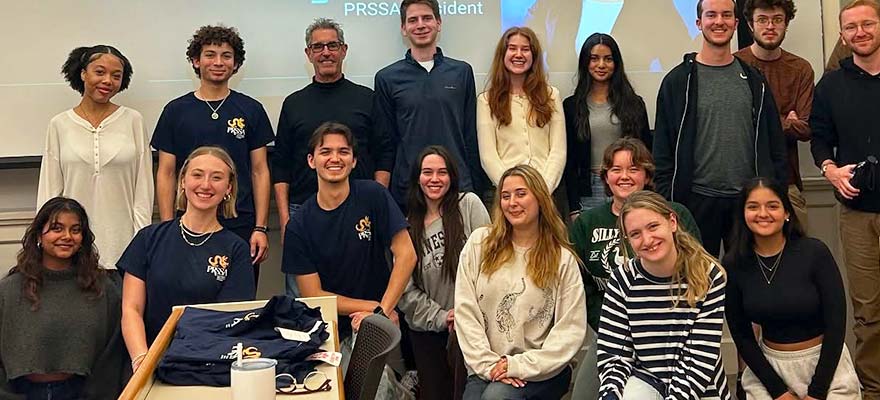
Drexel Communications majors expand hands-on skills, build lifelong peer networks, and make a positive impact through their work with the PRSSA –Drexel’s Public Relations Student Society of America.
Experiential Learning
Communication students don’t just graduate with a degree — they build career-relevant, practical experience through coursework, research, peer organizations, co-op, and internships. Communication majors across each concentration share a common platform of experiential learning through project-based courses that engage with real-world clients and faculty-mentored research exploring topics such as the impact of AI on communication, media, culture, and society.
From the start of their academic journey, majors join a collaborative community where they expand their hands-on skills, develop professional, communicative and interpersonal expertise, and build strong peer networks. Student and industry organizations include Drexel PRSSA (Public Relations Student Society of America), the American Marketing Association, and the Philadelphia Public Relations Association. On-campus, student-run media organizations such as The Triangle newspaper, DUTV, and WKDU 91.7 FM radio, that provide opportunities for journalism and media production experience.
Project-based Courses
Research AREAS
At Drexel, our Communication Department provides students with professional skills as well as skills for critical, in-depth examination of how media shape societies and how rapidly evolving technologies –like AI– are quickly transforming the world of human connection. Opportunities for undergraduate research –starting as early as your first year– allow Communication majors to work alongside internationally respected faculty researchers with expertise in the following areas:
Digital Media, Platforms, and Public Culture
Research in this area focuses on how emerging technologies reshape identity, community, and social interaction. Faculty study social media, AI, gaming, fandom, digital publics, platform infrastructures, and the cultural shifts brought about by the "commodification" of digital spaces.
Public Relations and Strategic Communication
Research in this area focuses on how social entities — such as corporations, nonprofits, and public organizations — build, maintain, and strengthen relationships with diverse stakeholder groups while cultivating their reputations through strategic communication. Faculty study how different components of the communication process –media channels, messages strategies, and audience characteristics– operate across contexts including crisis communication, corporate social responsibility, corporate social advocacy, health and science communication, and public diplomacy.
Journalism, Media Institutions, and Democracy
Research in this area examines the evolving landscape of news production. It combines historical perspectives with cutting-edge computational methods to understand how journalism functions as a democratic safeguard in the 21st century. Faculty explore journalism history, digital news ecosystems, political communication, media governance, representation, and the role of media institutions in public life.
Discourse, Power, and Identity
Research in this area focuses on mediated articulations of power and the dynamics of representation, particularly around gender and marginalized populations. Faculty study the construction, contestation, and circulation of social meanings. They use a wide range of qualitative and mixed methods approaches to examine mediated cultural representation, including celebrity, fandom, youth culture and sports culture.

Drexel’s Rhian Johnson, BA communication ’27 with a concentration in public relations, enjoyed her co-op as a suite supervisor with Aramark during the Eagles’ 2025 Super Bowl game.
Drexel Co-op
Through the renowned Drexel Co-op program, Communication majors gain a competitive edge through hands-on professional experience. Students explore career pathways, strengthen their résumés and portfolios, build professional networks, and prepare for careers across public relations, journalism, media, and other communications-related fields.
As the nation’s fifth-largest media market, Philadelphia offers Drexel Communication students access to leading media organizations, news outlets, corporations, creative industries, public agencies, and non-profit organizations through co-op and internship opportunities.
Recent co-op employers include:
- Calcium+Company
- Comcast Corporation
- Cozen O’Connor
- D’Griot Community Gallery
- Fox Rothschild LLP
- Forbidden Fruit
- Global Indemnity Group, Inc.
- Morgan Lewis Bockius
- Musicopia
- Red Rooster Hot Chicken, LLC
- Josh Shapiro for Governor Campaign
- SHARE Food Program
- Urban Outfitters
- UrbnSeek
- U.S. Squash
- Wexford Science and Technology at uCity Square
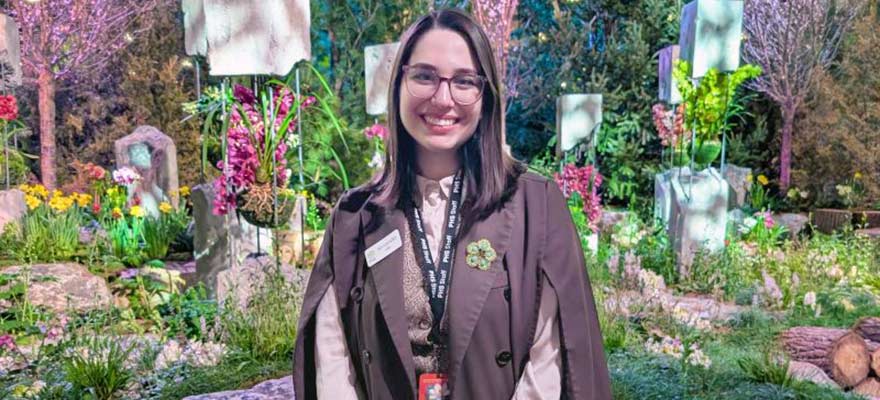
Communication alum Amanda Milo, BA/MS ’23, designs public programming for the Philadelphia Flower Show in her role as manager of activations and events with the Pennsylvania Horticultural Society.
Careers
Outstanding career outcomes for graduates of Drexel’s BA in Communication program reflect our program’s strong focus on professional preparation and in-demand qualifications. With strong analytical, creative, and professional skills, students pursue career paths in storytelling, strategic communication, research, and digital media across the public, private, and non-profit sectors. Professional sectors include communication, journalism, media, digital culture, public relations, and related industries.
Career paths include:
- Audience researchers
- Content producers
- Corporate communicators
- Crisis communications specialists
- Digital content strategists
- Entrepreneurs
- Event managers
- Health communicators
- Human relations
- Content creators and influencers
- Media analysts
- Multimedia journalists
- Non-profit communicators
- Podcasters
- PR account executives
- Media policy researchers
- Public affairs officers
- Public relations specialists
- Publicists
- Science and Sports writers
- Social media managers
- UX specialists
Get In Touch
Reach out to Drexel’s College of Arts and Sciences recruitment team at coas_enroll@drexel.edu with any questions. We look forward to hearing from you!

Janine Guerra
Director of Recruitment
Drexel University
College of Arts and Sciences

Autumn Ellis
Recruitment Specialist
Drexel University
College of Arts and Sciences