Sean O'Donnell

Sean O'Donnell, PhD

Professor, Department of Biodiversity, Earth and Environmental Science and Department of Biology

O’Donnell is a biologist and ecologist with research interests that span evolutionary neurobiology, social behavior, population biology and community ecology. His tropical field work in Costa Rica and Ecuador has focused on social insects such as paperwasps, as well as army ants and their ecological relationships with antbirds. In social insects, O’Donnell’s research focuses on brain plasticity and the evolution of brain and behavior, examining relationships between brain evolution and social structure and behavior. In army ants and ant birds, his research includes behavioral ecology and population genetics of species’ adaptation to elevation as a system for studying impacts of climate change.

O’Donnell is an engaging and outgoing expert on entomology and tropical biology who has appeared in documentary programs including “Animal Superpowers” hosted by Patrick Stewart on National Geographic Wild and “Wild Things” hosted by Dominic Monaghan on BBC America.
In The News

A Neuroscientist Explains How Climate Change Is Altering Animal Brains and Behavior
A piece authored by Sean O'Donnell, PhD, a professor in the College of Arts and Sciences, about how climate change is altering the brains and behavior of animals, published by The Conversation on Nov. 13, was republished by a number of outlets, including Salon and The Chicago Sun Times on Nov. 25.
Climate Change Is Altering Animal Brains and Behavior − a Neuroscientist Explains How
Sean O'Donnell, PhD, a professor in the College of Arts and Sciences, authored a Nov. 13 story for The Conversation about how climate change is altering the brains and behavior of animals.
Ant Brains Grow Proportionally to Communal Responsibilities
Sean O'Donnell, PhD, a professor in the College of Arts and Sciences, was quoted in July 13Geek.com, Earth.com and Laboratory Equipment stories about his research on the development of ant brains.
Little Wasp Bodies Mean Little Wasp Brain Regions
Sean O'Donnell, PhD, a professor in the College of Arts and Sciences, was quoted in a Jan. 3Laboratory Equipment post about his work looking into the evolution of wasp brains.
Is This Artificial Sweetener Too Dangerous to Eat?
A study on the birth control effect that the artificial sweetener behind Trivia has on fruit flies, authored by Sean O'Donnell, PhD, and Daniel Marenda, PhD, both professors in the College of Arts and Sciences, was the focus of a June 1 Food52 article. They were both quoted in a related story on the website of WESH-TV (NBC-2, Orlando, Florida), which was picked up by network affiliates across the country. Fox News' "The Daily Meal" also covered the study on June 12.
This Artificial Sweetener Can Double as a Pesticide: Should You Still Eat It?
Sean O'Donnell, PhD, a professor in the College of Arts and Sciences, was quoted in a June 5 Daily Meal story about his study that showed how the artificial sweetener Truvia limits the egg production of fruit flies.
Is This Artificial Sweetener Too Dangerous to Eat?
A study on the birth control effect that the artificial sweetener behind Trivia has on fruit flies, authored by Sean O'Donnell, PhD, and Daniel Marenda, PhD, both professors in the College of Arts and Sciences, was the focus of a June 1 Food52 article. They were both quoted in a related story on the website of WESH-TV (NBC-2, Orlando, Florida), which was picked up by network affiliates across the country. Fox News' "The Daily Meal" also covered the study on June 12.
Popular Artificial Sweetener Also Works as Pesticide and Insect Birth Control
Sean O’Donnell, PhD, a professor in the College of Arts and Sciences, was quoted in a May 23 UPI story on a study he did with Daniel Marenda, PhD, an associate professor in the College, that showed the sweetener in Truvia is deadly to young flies and can be an effective pesticide. Philly Voice also reported the story.

Related Articles

Army Ant Extreme Temperature Tolerance of Army Ants Could Inform How Animal Populations Will Respond to Changing Climates
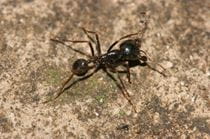
Drexel University researchers sampled a variety of army ant (Eciton burchellii parvispinum) colonies to test how their habitat distribution affected the ants’ tolerances of extreme low and high temperatures.
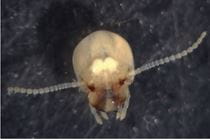
dampwood termite worker head capsule Termite Brains Can Grow in Anticipation of a Single Moment of Flight and Light
New research on dampwood termites shows select members of the colony will experience brain changes in anticipation of cognitive demand. Drexel researchers measured developmental differences in the relative sizes of visual processing brain regions, called optic lobes, among dampwood termite castes to test whether optic lobe investment matches caste differences in exposure to visually complex environments.
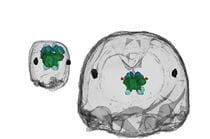
An X-ray view of the heads of a worker and a soldier ant and the brains inside their head. The worker is much smaller with the brain filling more of its head. You Have One Job: Compared to Multi-Tasking Workers, Soldier Ant Brains Small
A Drexel University study found that ant colonies evolved to spend less energy on developing the brains of soldier ants, who have relatively simple jobs, compared to multi-tasking workers.
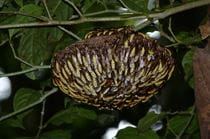
Apoica pallens clustering around their hive. Little Wasp Bodies Means Little Wasp Brain Regions, Study Shows
A Drexel study looking at 19 species of paper wasps found that body size may lead to variation in the complex parts of their brains.
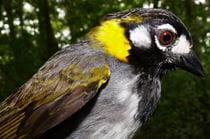
White-eared ground sparrow Birds of All Feathers Work Together to Hunt When Army Ants March
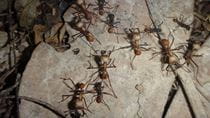
When army ants move out, a new Drexel University study found that, instead of chasing each other away, birds work together to follow the column and hunt the insects that marching ants scare out of hiding.
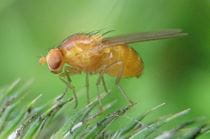
A fruit fly standing on an evergreen branch Common Artificial Sweetener Likely a Safe, Effective Birth Control, Pesticide for Insects, Drexel Study Finds
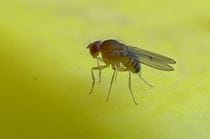
Erythritol, a non-nutritive sweetener found in products like Truvia, has proven effective in killing fly larvae and slowing down their egg production, making it a good candidate for human and pet-safe pesticide use.
Labidus Praedator. Photo by Dinesh Rao. Mountaineering Ants Use Body Heat to Warm Nests
Underground army ants can keep their nests — called bivouacs — warm with their body heat; this social warming may enable fragile offspring to survive in chilly mountain forests , according to Drexel University researchers.
A fruit fly on a compost pile. Photo by John Tann. Ladykiller: Artificial Sweetener Proves Deadly for Female Flies
In testing multiple artificial sweeteners, a Drexel University research team found that one was particularly deadly for female fruit flies — and left males relatively untouched.
Top