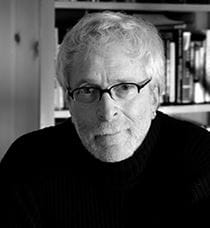
Kelly Joyce, PhD

Director, Center for Science, Technology & Society; Professor
Expertise sociology Society

Joyce's research investigates the role of medical imaging technologies in medical practice; scientific and technological innovations aimed at older people; and the lived experiences of people diagnosed with autoimmune illnesses. Her work highlights the cultural dimensions of medicine. She teaches courses on the social dimensions of health and illness as well as courses on the values embedded in technological design and use. Joyce previously was an associate professor of sociology at the College of William and Mary. She also served as a program director for the Science, Technology and Society program and the Ethics Education in Science and Engineering program at the National Science Foundation from 2009-2011. She received the Director's Award for Collaborative Integration for contributing to the education of ethical scientists, interagency collaboration and extraordinary efforts in integrating ethical expertise with scientific knowledge in 2011. Her book Magnetic Appeal: MRI and the Myth of Transparency won the Eliot Freidson Outstanding Publication Award, which is given by the Medical Sociology section, American Sociological Association.

In The News

What Is Ethical AI and Why Is It Vitally Important?
Kelly Joyce, PhD, a professor in the College of Arts and Sciences and director of the Center for Science, Technology and Society, along with Susan Bell, PhD, also a professor in the College of Arts and Sciences, were quoted in an Oct. 4 CMS Wire article about what is ethical in AI. Their research into the applications of sociology during AI development and training, was prominently featured.

Related Articles

remote assistant The Future of Artificial Intelligence Requires the Guidance of Sociology

In the race to out-compete other companies– artificial intelligence (AI) design is lacking a deep understanding of what data about humans mean and its relation to equity. Two Drexel University sociologists suggest we pay greater attention to the societal impact of AI, as it is appearing more frequently than ever before.

autoimmune ‘But You Don’t Look Sick?’ How Broad Categories like Autoimmune Impact Patient Experience  
When your disease is hard to name and doesn’t have visible symptoms, it can be hard for others to understand that you are sick. And, when people don’t know much about your disease, it can be hard to explain it to family and friends.
Lee Gutkind, founder of the literary magazine Creative Nonfiction, will join Drexel Nov. 3 How to Write True Stories about Science and Society: The ‘Godfather of Creative Nonfiction’ Joins Drexel for Workshop
Lee Gutkind, “the ‘Godfather’ behind creative nonfiction” (Vanity Fair), will join Drexel University on Monday, Nov. 3 from 2 p.m. – 6:30 p.m. for a workshop and discussion to help faculty, students and other scholars, researchers and academics learn how to write about their research for a broad audience. The event aims to help those who have a passion to share their knowledge outside of the classroom, laboratory or institution to communicate their ideas to the public to advance knowledge and create new dialogue.
Top