
Arvin Ebrahimkhanlou

Arvin Ebrahimkhanlou, PhD

Assistant Professor of Civil Engineering
Nick Howley College of Engineering and Computing

Ebrahimkhanlou is an expert on developing new technology to analyze the structural condition of buildings, highways, military assets and aerospace structures. His latest research focuses on using artificial intelligence and robotic technology to perform rapid evaluations of civil, mechanical and aerospace structures.


He has commented in news stories about infrastructure damage and failure and published extensively on specialized use of artificial intelligence, robotics, signal processing, wave propagation, machine learning, computer vision and uncertainty quantification. Ebrahimkhanlou’s recent research efforts led him to develop a method for using graph theory to quantify structural damage in reinforced concrete structures through image processing analysis of surface cracking patterns.


Ebrahimkhanlou holds advanced degrees in engineering and computer science from the University of Buffalo, Georgia Tech and the University of Texas at Austin.  
In The News

Drexel University Researchers Develop AI-Guided Robotic Structural Inspection System
Ali Alamdari, a doctoral student in the College of Engineering, was quoted in a Feb. 12 Archinet post about his research with Arvin Ebrahimkhanlou, PhD, an assistant professor in the College, to develop an AI-guided system for robotic inspection and monitoring of cracks in concrete structures.
How AI Guided Robotic Systems Can Revolutionize Infrastructure Inspection
Research by Arvin Ebrahimkhanlou, PhD, an assistant professor in the College of Engineering, on developing AI algorithms that can guide robots inspecting aging infrastructure, was featured in a Jan. 31 Interesting Engineering story.
Deadly I-95 Collapse Will Impact Commuters and Supply Chain, Buttigieg Warns
Arvin Ebrahimkhanlou, PhD, an assistant professor in the College of Engineering, was interviewed in a June 12 NBC Nightly News story about a fire causing a section of I-95 to collapse in North Philadelphia.

Related Articles

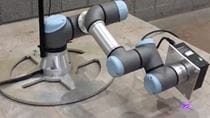
Robotic concrete scanning Drexel Researchers Propose AI-Guided System for Robotic Inspection of Buildings, Roads and Bridges
Our built environment is aging and failing faster than we can maintain it. Recent building collapses and structural failures of roads and bridges are indicators of a problem that’s likely to get worse, according to experts, because it’s just not possible to inspect every crack, creak and crumble to parse dangerous signs of failure from normal wear and tear. In hopes of playing catch-up, researchers in Drexel University’s College of Engineering are trying to give robotic assistants the tools to help inspectors with the job.
Reading Between the Cracks: Artificial Intelligence Can Identify Patterns in Surface Cracking to Assess Damage in Reinforced Concrete Structures
Researchers at Drexel University and the State University of New York at Buffalo are trying to make the structural analysis process more efficient and definitive by using artificial intelligence, combined with a classic mathematical method for quantifying web-like networks, to determine how damaged a concrete structure is, based solely on its pattern of cracking.
Top