Ted Daeschler, PhD

Professor Emeritus

Daeschler has been at the Academy since 1987 and joined the faculty of Drexel’s Department of Biodiversity, Earth and Environmental Science upon its founding in 2012. His responsibilities at the Academy focus on research, collections building and on public programs within the museum. He served as a scientific advisor for the renovation of the Academy’s Dinosaur Hall and a variety of other paleontological exhibits.

Daeschler’s research in vertebrate paleontology focuses on the vertebrate fauna of the Late Devonian Period (385-363 million-years-ago) in eastern North America, including the well-known transitional fish fossil Tiktaalik roseae, which he co-discovered. The research involves active fossil collecting, systematic work focusing on freshwater vertebrates and the nature of early non-marine ecosystems. Fossil discoveries from the incompletely-known Late Devonian interval help answer questions about the diversification of major groups of fishes, the origin of limbed vertebrates, and the invasion of land by plants and animals.
In The News

Started Out as a Fish. How Did It End up Like This?
Ted Daeschler, PhD, curator of Vertebrate Zoology at the Academy of Natural Sciences and a professor in the College of Arts and Sciences, was quoted in an April 29 New York Times article about a meme about the transitional fossil Tiktaalik.
Seen a Bear in the Neighborhood Lately? Quarantine Life May be Attracting Them
Ted Daeschler, PhD, curator of Vertebrate Zoology at the Academy of Natural Sciences and a professor in the College of Arts and Sciences, was interviewed in a KYW Newsradio (1060-AM) segment about the prevalence of bears as quarantine quiets down many neighborhoods.
Cape May Diamonds: The Legend (And the Facts) About the Jersey Shore Gems
Ted Daeschler, PhD, curator of Vertebrate Zoology at the Academy of Natural Sciences and a professor in the College of Arts and Sciences was quoted in an Aug. 15 Penn Live article about the rarity of Cape May “diamonds.”
How to not Get Frostbite, Hypothermia When the Weather is Freezing
Ted Daeschler, PhD, curator of Vertebrate Zoology at the Academy of Natural Sciences and a professor in the College of Arts and Sciences was quoted in a Jan 31 Philly.com article about how not to get frostbite.
DelVal Professor Publishes Paper on New Species of Ancient Aquatic Predator; Fanged, Torpedo-Shaped Fish Would Have Been up to Six Feel Long
Ted Daeschler, PhD, curator of Vertebrate Zoology at the Academy of Natural Sciences and a professor in the College of Arts and Sciences, was quoted in an Aug. 2 Bucks Local News story about a prehistoric fish he named with Jason Downs, PhD, an Academy researcher.
The Wiring for Walking Developed Long Before Fish Left the Sea
Ted Daeschler, PhD, vice president of Collections and the Library at the Academy of Natural Sciences and a professor in the College of Arts and Sciences, was quoted in a Feb. 8 Science News story on a study looking into how ancient fish evolved the brain circuitry that led to walking on land.
'Radio Times' — Dinosaurs and Prehistoric Fish
Ted Daeschler, PhD, vice president of Collections at the Library of the Academy of Natural Sciences and a professor in the College of Arts and Sciences, was interviewed on WHYY-Radio (91-FM)'s "Radio Times" to discuss his work in paleontology, including his trip to Antarctica over the winter. Academy scientist Kenneth Lacovara, PhD, was on the show with Daeschler.
Palaeocast: Late Devonian Vertebrates
Ted Daeschler, PhD, vice president of Collections at the Library of the Academy of Natural Sciences and a professor in the College of Arts and Sciences, was interviewed for a paleontology-focused podcast, Palaeocast, that was released on Aug. 1. Daeschler discussed his work finding Late Devonian period fossils.

Related Articles

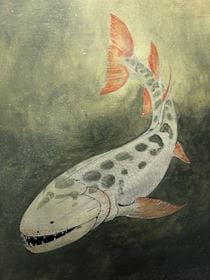
A drawing of the Hyneria Lindae 25 Years of Fossil Collecting Yields Clearest Picture Yet of Extinct 12-Foot Aquatic Predator
More than two decades of exploration at a Pennsylvania fossil site have given Academy of Natural Sciences paleontologists their best idea of how a giant, prehistoric predator would have looked and behaved.
Kevin Sievers stands beneath the Academy's intimidating Tyrannosaurus rex. Fossils Fuel This Student’s Attraction to the Academy
Kevin Sievers has been coming to the Academy of Natural Sciences of Drexel University since he was a little kid to learn about the ancient animal history on display. Now, as a Drexel student, he gets to work there.
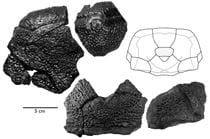
Fossils discovered from the B. rex around a drawing of what the fish's head looked like. A New ‘King’ — New, Gigantic, Ancient Armored Fish Discovered
In the Arctic, a team that included scientists from the Academy of Natural Sciences of Drexel University found fossils of a giant new species of extinct armored fish that they named Bothriolepis rex — the new king of Bothriolepis.
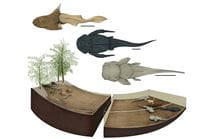
An artist's depiction of what the Strud nursery ecosystem may have looked like, including the three different placoderm species discovered at the site and the likely plant-life there. Image by Justine Jacquot-Hameon/PLOS-One. ‘Nursery’ Discovered in Belgium Provides Insight into Prehistoric Fish Life
The discovery of a group of young, prehistoric fish fossils provides some insights into the extinct creatures’ lives — and how fish today might be similar to them.
DNC pins Drexel Experts Available to Comment on Democratic National Convention
As Philadelphia prepares to host what is likely to be one of the largest and most historically significant Democratic National Conventions, Drexel experts are available to comment on issues ranging from the logistics of putting together the massive gathering and its historical significance, as well as addressing the biggest political issues that will face presumptive nominee Hillary Clinton.
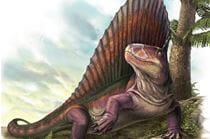
A depiction of Dimetrodon with the section of jaw that is now fossilized and a part of the Academy’s collection highlighted. Drawing by Danielle Dufault of the Royal Ontario Museum. A Dimetrodon By Any Other Name
A unique fossil in the Academy of Natural Science of Drexel University’s collection continues to fuel important paleontological discoveries more than a century after it came into to the museum.
North America: Ted Daeschler (second from right) with his team on Ellesmere Island. Spanning the Globe: Drexel Research Reaches Around the World in 2014
Where in the world have Drexel professors conducted research in 2014? The answer: all seven continents.
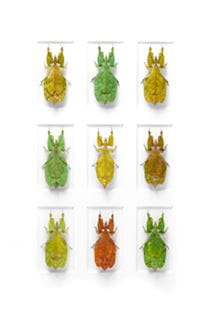
Can Insects Be Art? In Exhibit Coming to the Academy, They Are
For some people, the idea of playing with insects may not sound too appealing. But for Christopher Marley, insects are a vibrant artistic medium.
Top