Megan Creighton

Megan Creighton, PhD

Assistant Professor of Chemical and Biological Engineering
Nick Howley College of Engineering and Computing

Creighton is an expert on scalable, sustainable manufacturing methods. Her research focuses on developing new manufacturing technologies and practices that enable recycling and reuse of materials. With an extensive industry background, including working at 3M and maintaining numerous ongoing collaborations with other industrial partners, Creighton can provide expert insight on current manufacturing technologies and the methods to reduce their environmental impact.


Creighton’s lab is approaching its mission with a focus on identifying more sustainable feedstock materials for manufacturing and new processes to broaden the recyclability of materials. Current projects include developing a new additive manufacturing process for recyclable plastics; studying recycling options for wind turbine blades; and using nanotechnology to develop a safer and a more effective mosquito repellent.


Prior to her time at Drexel, Creighton served as a research assistant at MIT, a science and technology fellow with the U.S. Air Force Research Laboratory and a senior research scientist in the materials lab at 3M Corporate Research. She holds a PhD in chemical and biological engineering from Brown University.
In The News

Drexel Scientists Discover a 'Beneficial Use for Mosquitoes for the First Time'
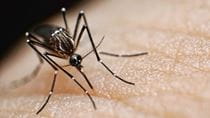
Megan Creighton, PhD, an assistant professor in the College of Engineering, and Ali Afify, PhD, an assistant professor in the College of Arts and Sciences, were quoted in a Jan. 19 Philly Voice feature about their research on using the feeding tube of female mosquitoes as a nozzle for high-definition 3D printing.
Mosquito's blood-sucking organ could reshape precision 3D printing
Megan Creighton, PhD, an assistant professor in the College of Engineering, was quoted in a Dec. 17 New Atlas story and a Jan. 5 Engineering.com story about her research with Ali Afify, PhD, an assistant professor in the College of Arts and Sciences, and researchers at McGill University in Canada to explore using mosquito proboscis tubes as tips for 3D printing.

Related Articles

mosquito Mosquitoes' Bloodsucking Tubes Could Enable High-Definition 3D Printing
In a redeeming development for one of nature’s most universally denounced pests, researchers from McGill and Drexel Universities have discovered that mosquito stingers might one day be used for high-definition 3D bioprinting. Reported in the journal Science Advances, the findings demonstrated how the needle-like structure, called a proboscis, that mosquitoes use to extract blood, when repurposed as a tip for a 3D printer, can extrude lines finer than a human hair — surpassing commercially available 3D printing tips.
Top