Healing Hurt People

Healing Hurt People (HHP) is a hospital and community-linked violence intervention program that provides trauma-specific services (evidence-based therapy, case management, and peer services) to survivors of violent injury (stabbings, shootings, and assaults) or witnesses to such violence between the ages of 5 and 35.

We also work with young people who have lost a loved one to community violence. The scope of HHP’s work includes Philadelphia residents in any zip code.
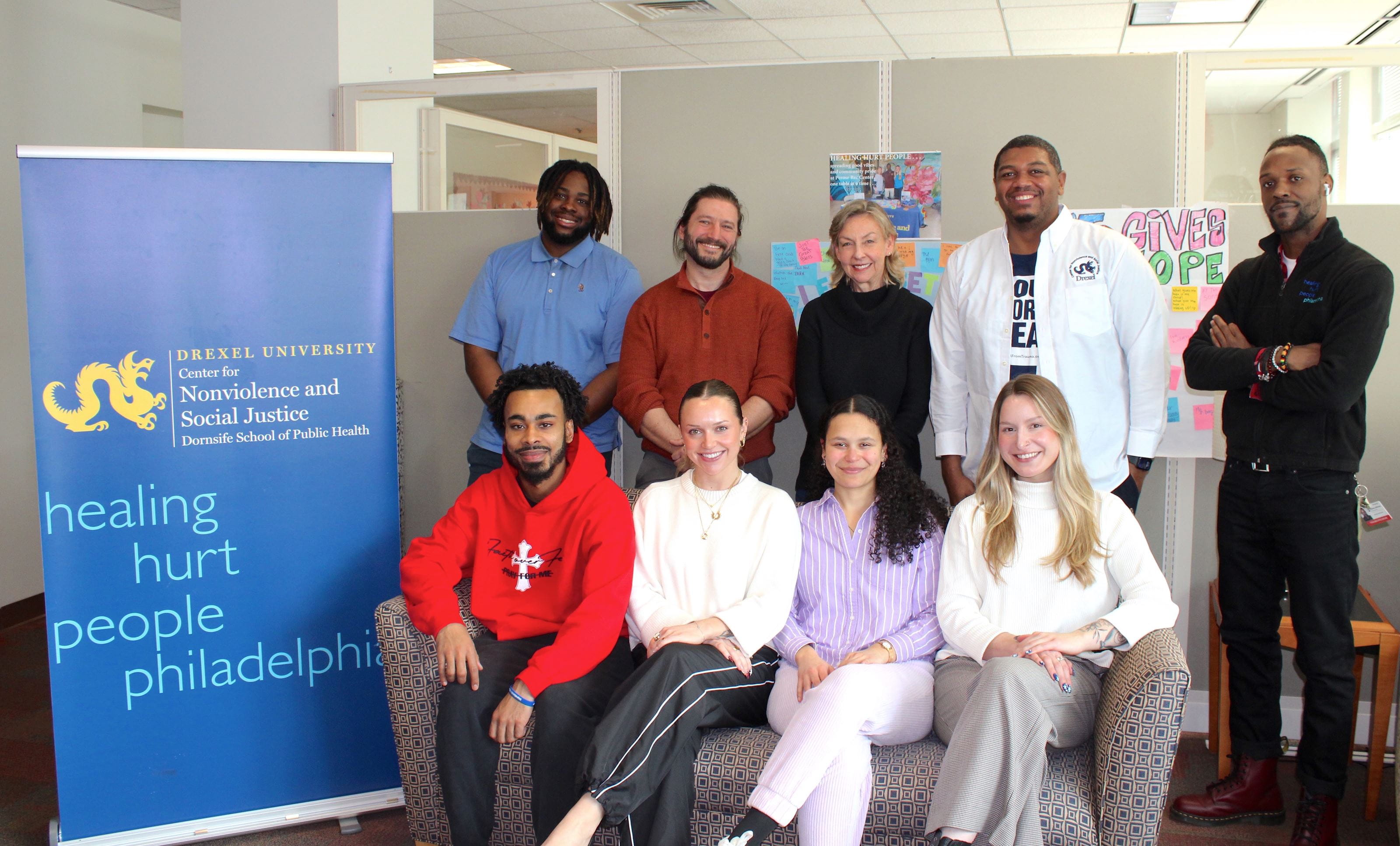
Members of the Healing Hurt People Team.

Recognizing that survivors of violence too often have been impacted by their experience in ways that go unnoticed, HHP addresses the psychological and social wounds of trauma.

HHP's mission is to promote healing and improve health outcomes while interrupting the cycle of violence that affects many Philadelphia communities.

We help young people and their families heal from trauma, stay safe, and plan for their futures. We also connect people to medical follow-up and other community resources as needed.

HHP is possible thanks to the ongoing support of the following funders: Community Behavioral Health (CBH), the Department of Behavioral Health and Intellectual disAbility Services (DBHIDS),the Philadelphia Department of Public Health (PDPH), the Pennsylvania Commission on Crime and Delinquency (PCCD), Substance Abuse and Mental Health Services Administration (SAMHSA), Spring Point Partners, Pew Fund, Vanguard, and Drexel University Dornsife School of Public Health.

Rosemarie Kamal headshot

Rosemarie Kamal, LCSW, MFT

Program Director, Healing Hurt People
Every year
1.5 Million
People are treated in the ER due to violence and survive their injuries.

The Need for Trauma-Informed Practices

Each year, 1.5 million people are treated in an emergency department due to violence and survive their injuries. Most survivors have lived in chronically disinvested neighborhoods and are discharged to the challenging environments in which they were hurt without additional support to address the issues that led to their injuries. National statistics demonstrate the devastating effects of this approach: within five years of their release from the hospital, 45 percent of severely wounded victims will be reinjured; nearly 20 percent will be dead. Our own research shows that up to 75% of these young people will develop PTSD, almost 50% show signs of depression, and many more find themselves and their futures negatively impacted by the effects of trauma.

Beyond hospital emergency departments, there is also a critical need for trauma-informed services among youth who present in a variety of community settings such as schools, primary care practices, and the juvenile justice system. In addition to enduring injuries due to violence, many young people have been witnesses of violence or experience traumatic grief due to losing a loved one to violence.

Donate to Healing Hurt People

Your support helps Healing Hurt People expand our services throughout Philadelphia.

History of the Program

Recognizing the need to intervene in the immediate aftermath of a violent injury, the HHP model was developed at Drexel University by Ted Corbin, MD, MPP, an emergency physician; John Rich, MD, MPH, a primary care physician and public health expert; Linda Rich, MA, a psychologist with extensive experience in health policy and program planning, and Sandra Bloom, MD, a psychiatrist who developed the Sanctuary Model.

Year Milestones
2008 HHP began serving participants at Philadelphia's Hahnemann University Hospital, which has since closed.
2009 HHP establishes its partnership with St. Christopher’s Hospital for Children where our children’s team continues to respond to a robust rate of referrals. HHP’s counseling spaces at St. Christopher’s are used frequently to support youth who have been discharged following treatment for an injury. St. Christopher's is owned by Drexel University and Tower Health in partnership.
HHP is one of seven founding member organizations of the National Network of Hospital-Based Violence Intervention Programs (NNHVIP), since renamed the Health Alliance for Violence Intervention (HAVI).
2011-2014 HHP served as the headquarters for the National Network of Hospital-based Violence Intervention Programs. In addition, HHP worked to advance system-level solutions to prevent violence in Philadelphia — in part through an innovative Citywide Injury Review Panel that engages leaders from law enforcement, medicine, psychiatry, behavioral health, child protection, legal services, and education to glean policy lessons from the experiences of injured youth.
2015-2016 HHP establishes satellite programs at Temple University Hospital, Einstein Medical Center and Penn-Presbyterian Hospital. These hospitals now have their own internal violence intervention programs.
2018 HHP begins providing evidence-based trauma counseling. All clinical staff from this point on are trained in Trauma-Focused Cognitive Behavioral Therapy (TF-CBT) and/or Cognitive Processing Therapy (CPT). HHP becomes the first HVIP in the US to be approved for Medicaid reimbursement for violence intervention services.
2019 With the closing of Hahnemann Hospital, HHP extends its reach to a wider network of referral sources including schools, non-hospital medical facilities, and community organizations. Referral criteria expands to include witnesses of violence and traumatic grief.
2022-2023 HHP expands its reach to over 15 Philadelphia public and charter school sites throughout the city.
2024 HHP establishes its presence as the HVIP for Thomas Jefferson University Hospital/Center City.

From
2011-2014
HHP was headquarters for the national Network of Hospital-based Violence Intervention Programs

National Reach, Local Impact

HHP has gained significant national attention and is a leader in the movement to end violence using a public health approach. The HHP model has been successfully replicated in hospitals in Portland, OR, and Chicago, IL.

Healing Hurt People Today

We proudly offer trauma-informed case management and mentoring with our team of Certified Peer Specialists. Our Peers are young adults with lived experience of trauma, making them uniquely qualified to support violence-impacted young people within a trusting relationship.

HHP provides high-quality, Evidence-Based trauma treatment to children, teens and adults. Our PA state licensed, master's level therapists are all trained in state-of-the-art treatment for PTSD including Trauma-Focused Cognitive Behavioral Therapy (TF-CBT) and Cognitive Processing Therapy (CPT).

All HHP services can be provided in the community (school, home, or St. Christopher’s Hospital), our Center City office, or via telehealth.

Services are available in English and Spanish.

Healing Hurt People Referral Process

HHP is happy to accept referrals of young people impacted by community violence between the ages of 5 and 35 who reside in Philadelphia.

We primarily focus on Philadelphia residents who are Medicaid eligible. However, we accept referrals regardless of insurance coverage and at no cost for the youth and family.

Organizations or individuals can make a referral to HHP by completing our HHP referral form [pdf] and emailing it to hhpreferrals@drexel.edu Referrals can also be made by calling 267-359-2446.

Learn more: Healing Hurt People's Referral Process and Submission Form [pdf]

Contact Us

Donate to Healing Hurt People

Help Healing Hurt People expand our services throughout Philadelphia.

Donate Online