Composing Change, One Note at a Time: Noah Slade's Mission of Healing Through Music
December 17, 2025
“We are the people, we are the memory, we are the dream, we are the free,” sang Noah Slade, a first-year graduate student in the Music Therapy program.
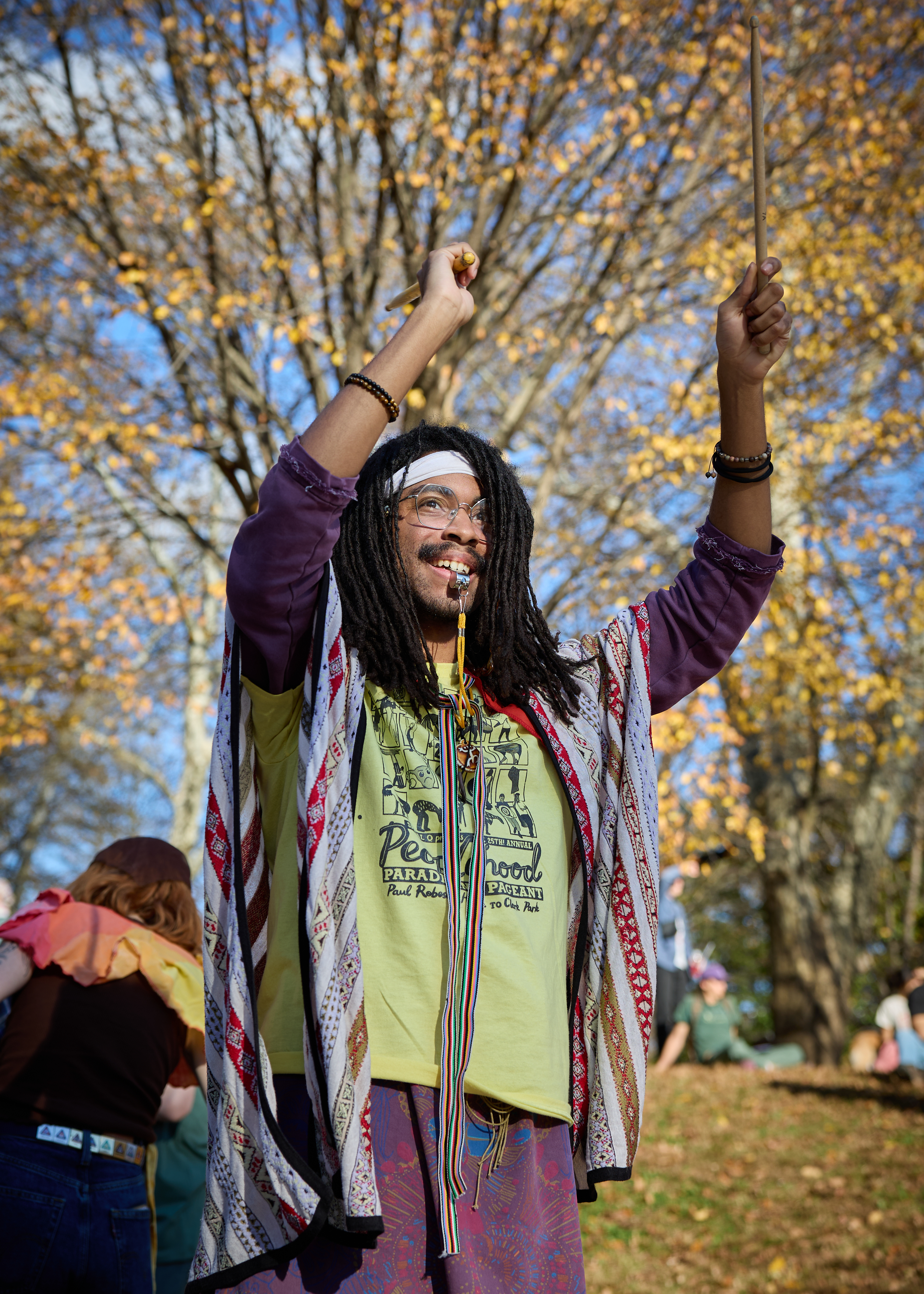
In the energetic landscape of West Philadelphia, a gleeful anticipation filled the western bowl of Clark Park. Puppets, banners, and signs began to pour through the neighborhood where hundreds of people participated in the 25th Annual Peoplehood Parade and Pageant.
Started by community arts organization Spiral Q, the Peoplehood Parade serves as a celebration of creativity and unity, raising awareness about local and global injustice. The parade featured an array of performances from local drill teams, performers, and grand arts displays created by community members.
Finding Slade at the Peoplehood Parade and Pageant was not surprising, given his love of community involvement and helping others find healing through music. As the co-musical director of the Pageant, Slade was responsible for composing and arranging the show’s music, including composing the annual liberation song.
“When I was thinking about the history of peoplehood over the past 24 years, I started thinking about the phenomenon that everyone was engaging in—we’re embodying our collective memories and envisioning a dream for a [better] future. The song was originally intended to be used just for last year, but it had such an impact on the community that they made it an anthem of the program,” Slade explained.
For as long as the New Jersey native could remember, music has been an integral part of his life, with his earliest memories being able to play music by ear at the age of five on his grandmother’s piano.
“I would always use [playing] the piano to process my life. My grandma’s piano was my safe place. Throughout my childhood, I would learn new songs and begin expressing myself there [through music],” Slade recalled. “Music has always been a part of me. I have always felt that I can have dialogue with myself and feel fully present when I’m playing music, experiencing music, or [sharing] music with others.”
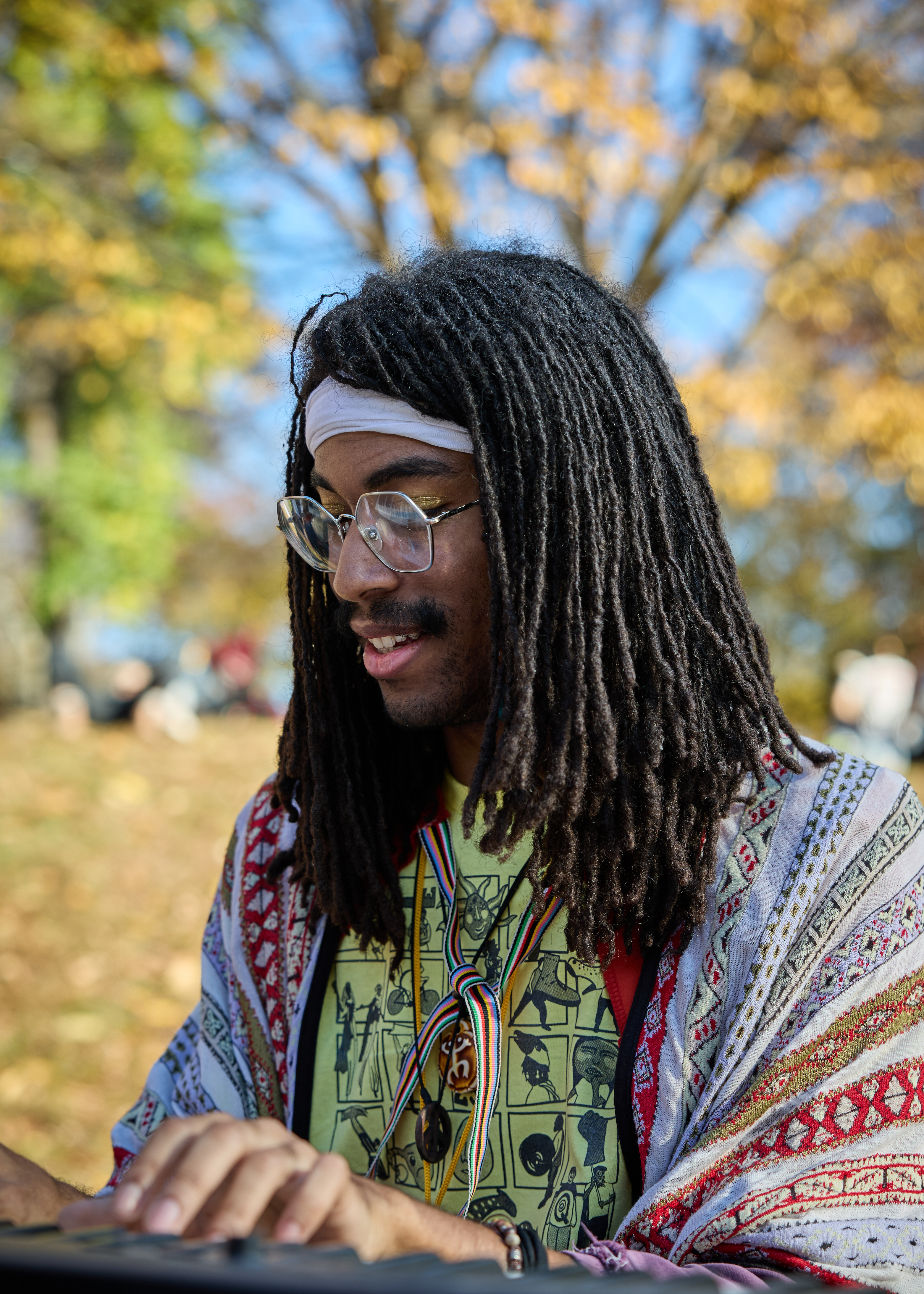
His passion for music took on different media as he experimented with various sounds and ways of expression before he began his scholastic pursuits.
Earlier this year, Slade released his debut album titled ‘Loving Here’ under the moniker PROTOZOA, exploring his musical sound and identity. This marked his first solo album, where everything was produced and recorded in his home.
“[Creating this album] was majorly healing for me,” he says.
His academic career began at Temple University, where he received a Bachelor of Science in Music with a focus on music composition and sociology in 2024. It was during this educational journey that Slade discovered his passion for community, social justice, and healing.
“It was through this experience at Temple that I thought, ‘okay, I want to engage people in music through community and beyond.’ As I was expressing that, I found Spiral Q and became a musical resource for them. After working with them, I realized I wanted to be able to tap into the healing element [of music], and that I would need training to get deeper into therapeutic usage and the music therapy world.” Slade said.
Slade’s journey to Drexel was a no-brainer, as there were already familial ties to the college through his aunt, Ashley Slade, MA ‘14, an alumna of the dance movement therapy and counseling program.
“She’s a huge inspiration to me. My aunt is more like an older sister to me, so my whole life I was fascinated by the work that she was doing, as younger siblings usually are,” Slade says. “But when she [was in graduate school] she told me stories about Drexel, and the community she’s built here, and even watching her ten years later doing this beautiful work and having these lifelong connections that have prepared her [for her field] so well.”
Slade emphasized that the strong community ties and support made his decision in choosing Drexel easy. “I couldn’t even fathom wanting to do [music therapy] anywhere else. This made sense for me. I saw the community and staff members, and they reflected my identity and background; they supported my vision, and they were excited about it. To have people who support you and see you has been super affirming,” he said.
Slade hopes to use his talents to help heal others who are considered healers.
“I see myself being a healer of healers. I see myself facilitating a healing space where people who are healers of humanity can come together and be healed themselves and one another so that they can go back out into the world and do the necessary, hard work,” he says.
While he is still navigating the heart of his graduate research, he hopes to explore personal and collective effervescence and how it can be applied in therapeutic practices in marginalized communities.
Written by Myleah Herbert '25
Photography by Izidor Peterson