
Using the Big Cities Health Inventory to Examine Obesity and City Environment in Select U.S. Cities

The BCHI data platform is primarily funded by the U.S. Centers for Disease Control and Prevention through a cooperative agreement with the National Association of County and City Health Officials. The views expressed in this brief do not necessarily represent the views of the funders.
Date Brief
January 2022
View Obesity and City Environment brief [PDF]
Overview
Over the past 20 years, the prevalence of adult obesity in the U.S. has increased two-fold from below 15% in 1990 to 31% by 2019 and nationwide, is expected to reach a staggering 50% by 2030.1
Public health concerns regarding obesity stem from it being one of the strongest risk factors for numerous morbidities including Type 2 diabetes, hypertension, heart disease, many types of cancers and osteoarthritis.
Public health agencies acknowledge that this rapid rise in obesity prevalence has been due to rapid changes in environmental conditions that have fueled consumption of higher calories and highly processed foods and beverages, as well as increased sedentary behaviors. Multiple domains of our environment are implicated in promoting obesity and discouraging weight loss; often cited are the inter-connected domains of natural and built environments, and economic and policy environments.2
The Big Cities Health Coalition (BCHC) is a forum for the lead health officials of the nation’s largest metropolitan health departments to exchange strategies and jointly address issues to promote the health and safety of the 62 million people they serve. This brief uses data from the Big Cities Health Inventory (BCHI) data platform. The platform includes over 100 metrics related to health and allows for comparison of metrics across BCHC member jurisdictions (currently 29 cities) which are among the country’s largest, most urban cities. Visitors to the data platform can explore metrics, view data charts by city or select multiple cities for comparison, and download charts and data. Visit the BCHI data platform (bigcitieshealthdata.org) to learn more.
Metrics from the BCHI Data Platform
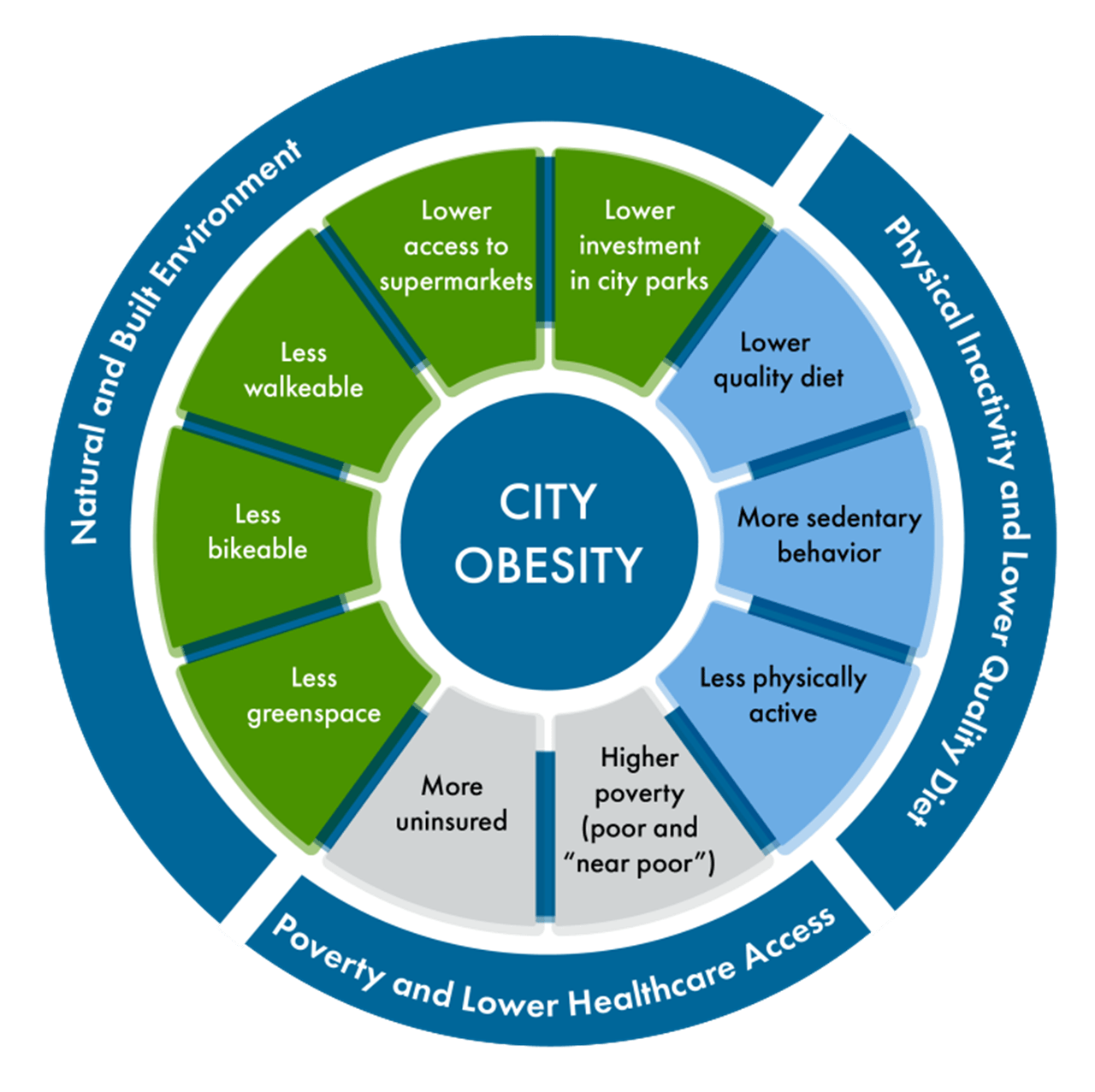
Using data available in the BCHI data platform, we describe the prevalence of obesity and city barriers to reducing city prevalence of obesity: 1) less favorable natural and built environments, 2) higher poverty and less healthcare access, and 3) physical inactivity and lower dietary quality, see Figure 1.
We used two obesity metrics (adult and teen obesity), five city environment metrics related to natural and built environment, and two city metrics related to poverty and lower healthcare access (health insurance). We examined health behavior metrics to confirm expected linkages between city obesity and city physical inactivity and lower quality diet.
Findings from the BCHI Data Platform
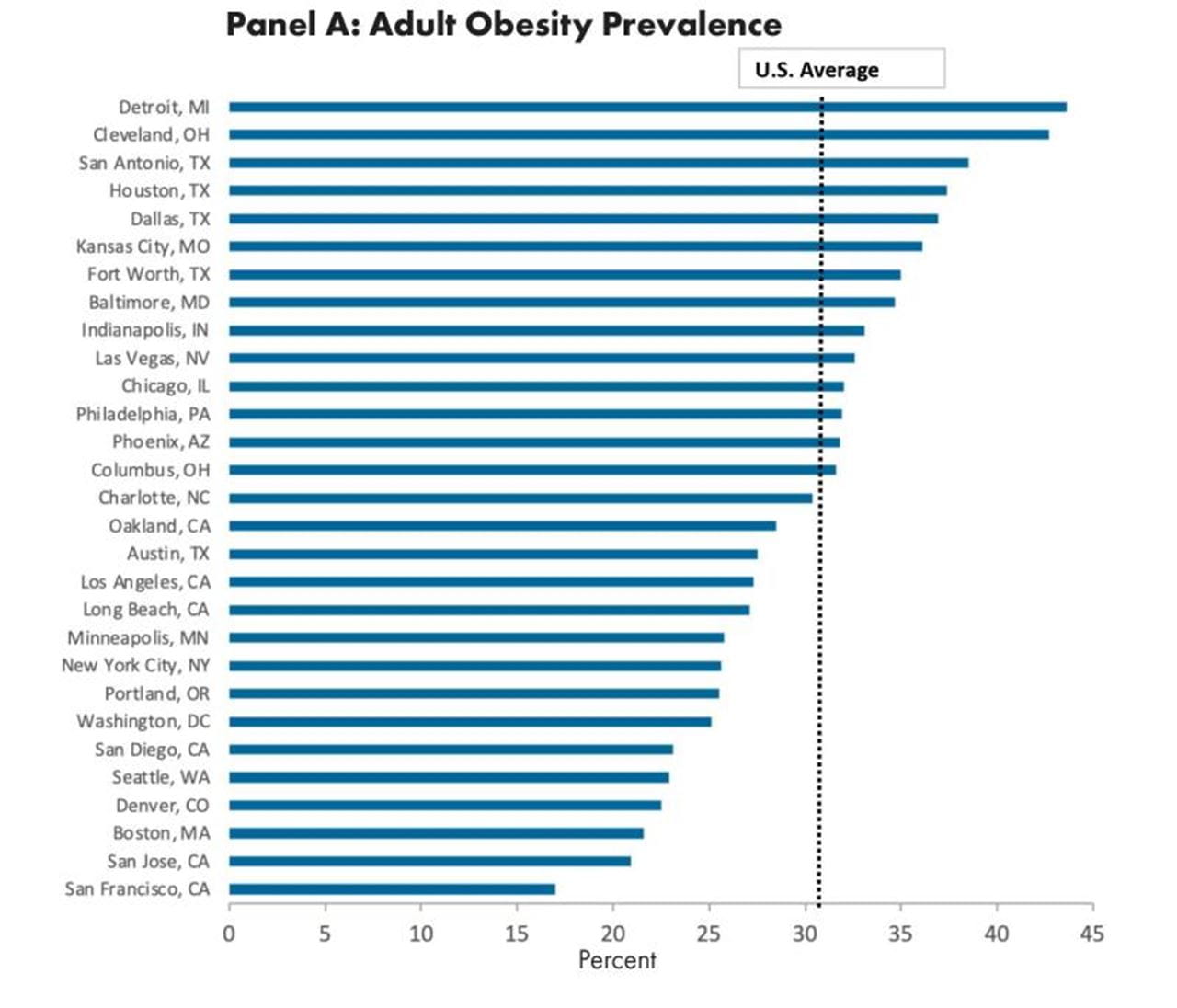
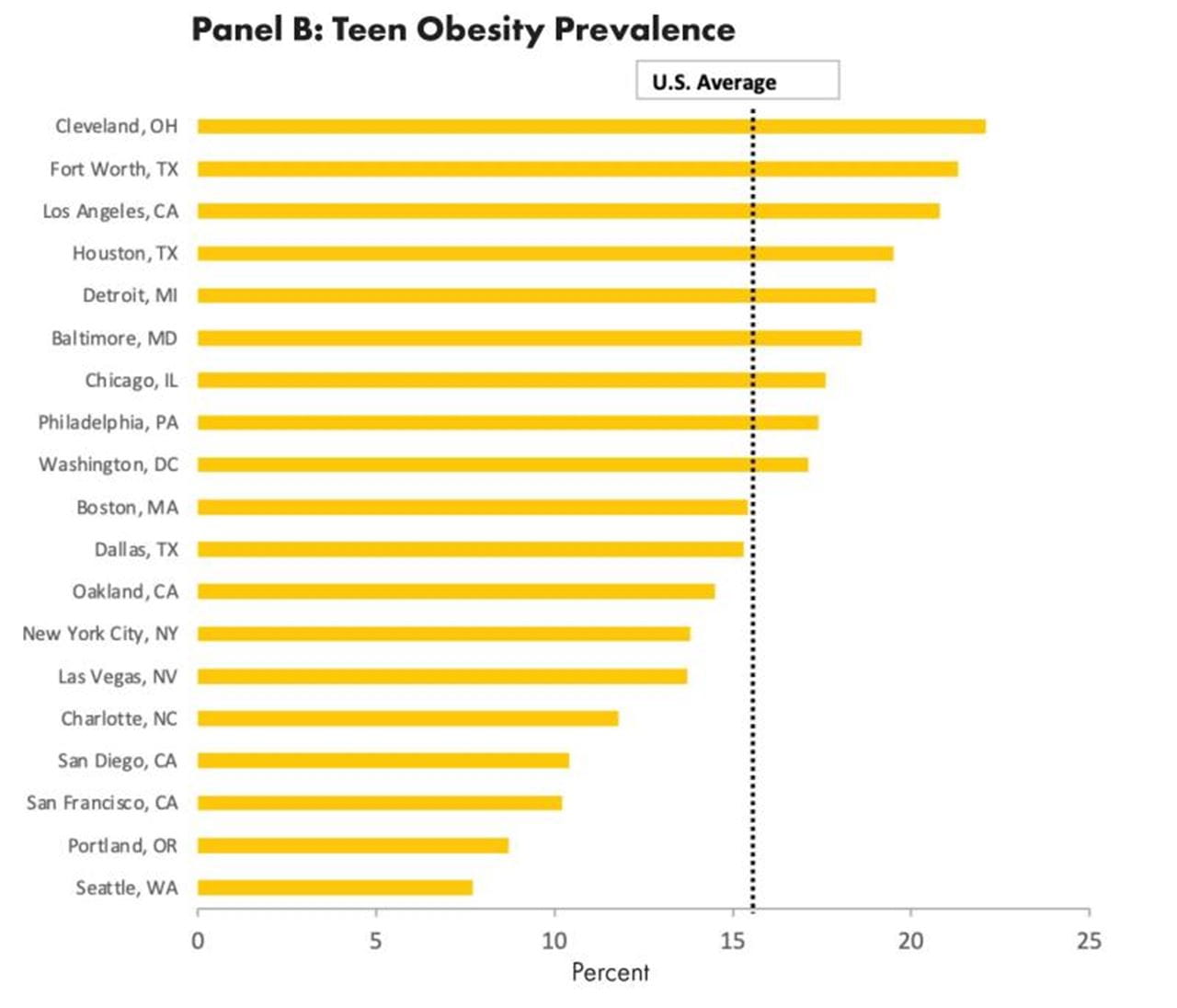
In recent years, adult obesity prevalence in BCHC cities slightly increased (median 27% to median 30% between 2014 and 2019) and teen obesity prevalence was roughly stable at 15.5%. CDC's Healthy People 2020 goals are that, by year 2020, adult obesity would not exceed 30.5% and teen obesity would not exceed 14.5%. The majority of BCHC cities have met Healthy People 2020 goals.
However, obesity prevalence varied substantially between cities. As shown in Figure 2 and 3, adult obesity ranged from 17% to 43.6% (Figure 2) and teen obesity ranged from 7.7% to 22.1% (Figure 3), data are available for only 19 BCHC cities.
As expected, adult and teen inactivity and poor dietary quality roughly align with city obesity prevalence (data not shown in figure).
On average, mean obesity was approximately 6 percentage points higher for cities with higher prevalence of teen inactivity/poor dietary quality (12.6% versus 18.3%) and 10 percentage points higher for cities with higher prevalence of adult inactivity (25.1% versus 35.1%).
Read the full data brief for more on the themes of natural environment, built environment, poverty, and health insurance.
Lowering and preventing increases in city obesity prevalence will be a significant challenge for all cities. This information from the Big Cities Health Inventory data platform can be used to inform city health priorities and potential policy actions as well as anticipate where BCHC member cities may see increases in health disparities between and within cities. In the case of obesity, data from the platform showed that cities with higher obesity tended to be more disadvantaged on multiple dimensions: poorer and more uninsured, and had natural and built environments that were less supportive of physical activity and healthier eating.