
Cancer and Cancer Health Disparities in Philadelphia
A UHC report—developed in collaboration with the Philadelphia Department of Public Health—explored how cancer varied by age, race, and income based in 2016.

Community Brief
September 2020
View the brief: Cancer and Cancer Health Disparities in Philadelphia [PDF]
What is Cancer?
Cancer is a disease that occurs when cells in the body grow out of control and spread to other parts of the body. There are many types of cancer. Screening tests may help find some types of cancer before a person has symptoms. Many different treatments are now available for cancer. Early diagnosis and treatment can improve how people do after they are diagnosed with cancer.
How Common is Cancer in Philadelphia?
In 2016, 7,972 people in Philadelphia were newly diagnosed with cancer. This amounts to 478 new cases of cancer for every 100,000 Philadelphians (this number is called the incidence rate). Cancer is somewhat more common in men than in women: there were 528 new cases of cancer for every 100,000 men and 446 new cases of cancer for every 100,000 women in the city in 2016.1
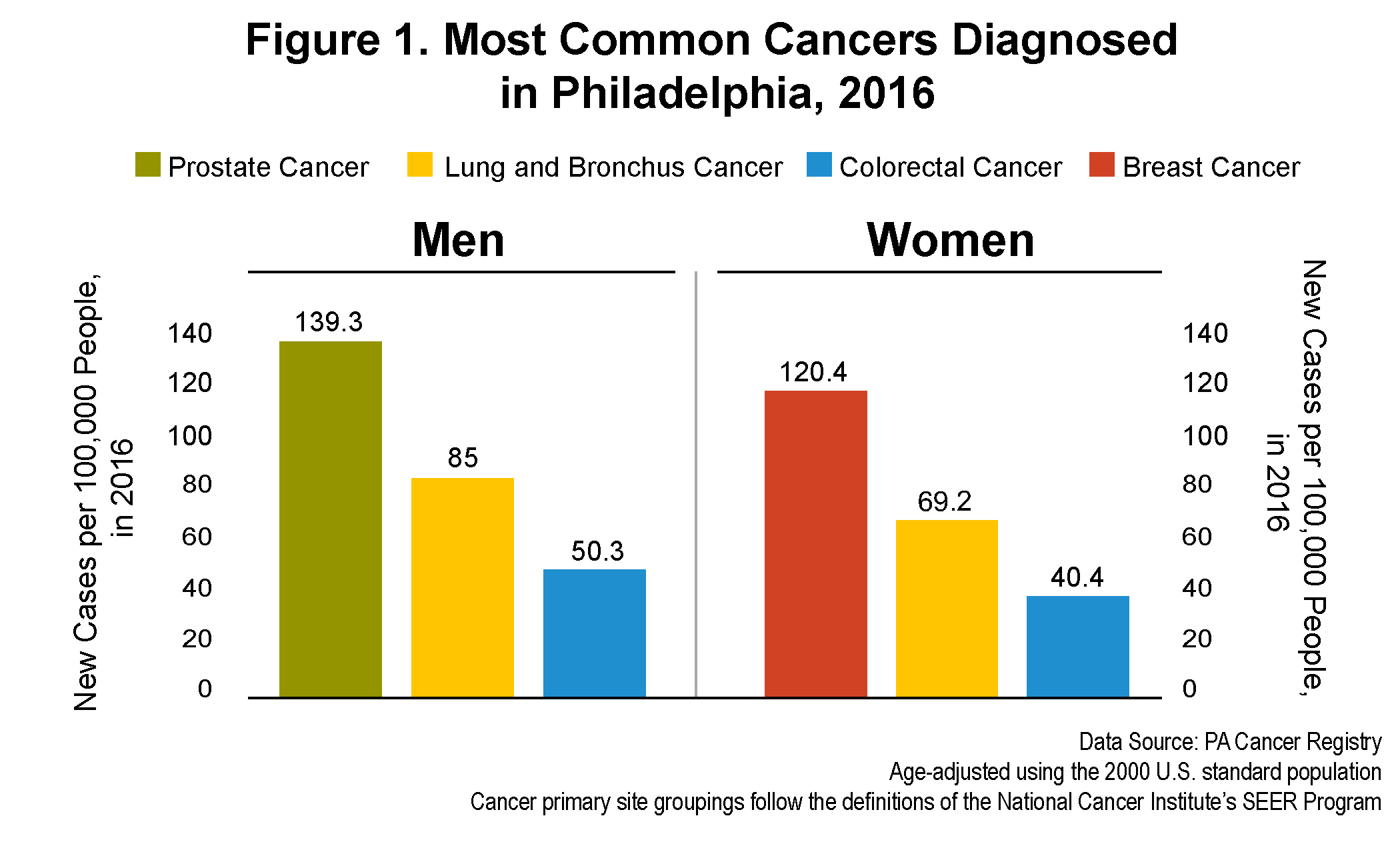
In 2016, there were 3,127 deaths due to cancer in Philadelphia. This amounts to 190 deaths for every 100,000 Philadelphians (this number is called the mortality rate).2 Figure 2 shows the mortality rates of cancer in 2016 for the three most common types of cancer deaths in men and women. Lung cancer is the leading cause of cancer death in both men and women although it is not the most common type of cancer diagnosed.

Some of the differences seen in cancer between men and women are because of biological differences. For example, breast cancer is much more common in women. Other differences result from known risk factors like tobacco use, which has been historically higher among men. However, increases in smoking by women over time have resulted in more lung cancer cases in women (see Figure 3 in the brief).
Explore the full brief Cancer and Cancer Health Disparities in Philadelphia [PDF] for data on cancer incidence by race, income, and age. The brief also provides prevention tips to improve your overall health and reduce the risk of cancer.