Meet Drexel’s First Astronaut Scholar: Thomas O’Keeffe
 By Alissa Falcone

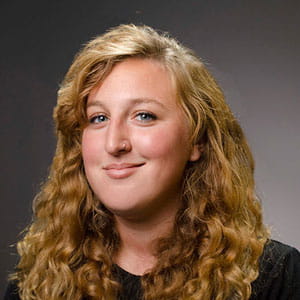
Photo courtesy Thomas O'Keeffe.
“One of my goals going into college was to get involved in research very early, and that was something that my mom and dad both impressed upon me. They pointed out that if you come to college and you're not spending time with faculty in world-class facilities, then you're just taking classes, and you can take classes anywhere,” remembered Thomas O’Keeffe, BS/MS computer engineering ’26 with minors in mathematics and computer science.
In the penultimate year of his dual undergraduate and graduate degrees at Drexel University, O’Keeffe was named Drexel’s first-ever Astronaut Scholar, receiving a $15,000 scholarship and connections for mentorship, professional development and networking through the Astronaut Scholarship Foundation (ASF). He was selected for his extensive student research experience spanning multiple labs and independent projects — a core focus of the highly competitive award.
He has worked closely with several faculty mentors who engaged him as an undergraduate researcher and guided his independent studies. Those long-term, on-campus professional and academic experiences helped jumpstart his career as he completed three six-month cooperative education (co-op) professional work experiences at two companies.
As O’Keeffe now tries to answer the crucial question of what comes after graduation, he’ll have more opportunities to pursue as an Astronaut Scholar. He’d already decided to hold off on going for a PhD right after graduation, but meeting his fellow Astronaut Scholars, connecting with a professional mentor through the program and being more involved with the foundation’s community has expanded his horizons beyond options he’d already considered.
As the name suggests, the Astronaut Scholarship Foundation is tied to space exploration: It was founded by the Mercury 7 astronauts, the first U.S. astronauts. The ASF provides scholarships and support to science, technology, engineering and mathematics (STEM) undergraduate students entering their junior or senior year who already have significant research experience, which does not have to pertain to space.
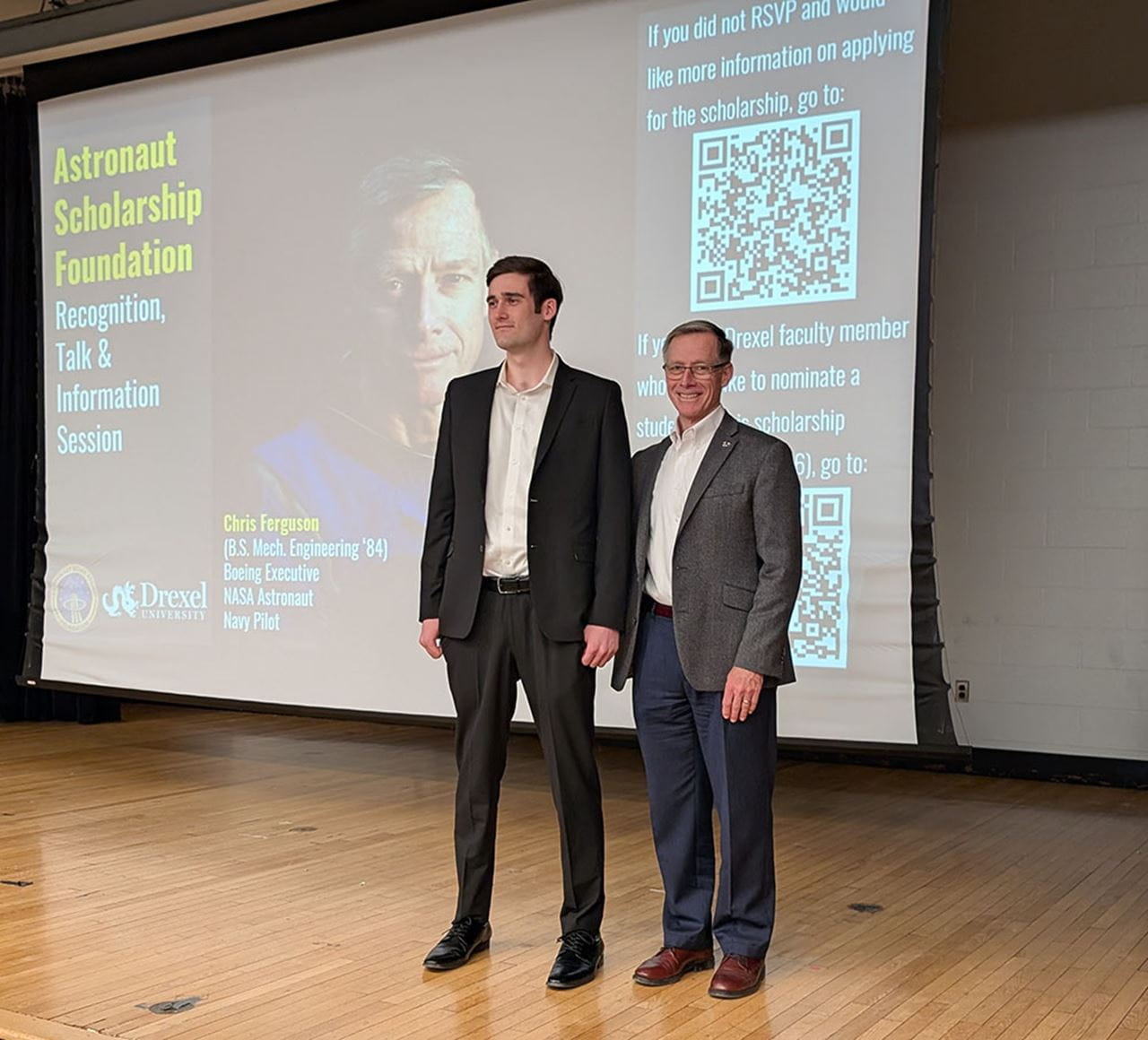
The ASF partners with colleges and universities with high-quality research status, and Astronaut Scholars are candidates from those institutions. Drexel applied to become an ASF partner in 2024 after some initial encouragement by someone who knew both organizations well: Christopher J. Ferguson, BS mechanical engineering ’84. He flew three missions to the International Space Station (ISS) with NASA and is now a member of both the Drexel University Board of Trustees and the Astronaut Scholarship Foundation’s Board of Directors. Ferguson is also a member of the Drexel 100, the University’s alumni hall of fame.
College of Engineering Associate Dean of Undergraduate Affairs and Teaching Professor Christopher Weyant, PhD, led the University’s successful application process. He has continued as the designated University liaison after Drexel’s inaugural year as a partner university in academic year 2025–2026. Part of his duties include liaising with the organization, supervising on-campus events and managing the application and approval process to select two Drexel students as nominees to represent the University for the Astronaut Scholarship program (ASF selects the winner).
Ferguson visited campus in January 2025 to speak at an ASF New Partner University kick-off event at Drexel. Fellow Drexel and NASA alumnus Paul W. Richards, BS mechanical engineering ’87, who flew on a mission to the ISS and is also a member of the Drexel 100, also attended the event. They discussed the Astronaut Scholarship, as well as their careers before, during and after their experiences as astronauts. O’Keeffe was in the audience and heard about the scholarship.
“Basically, what they were saying aligned pretty well with what I’ve done while at Drexel,” he remembered.
By February of his first year at Drexel, he had already secured an undergraduate research position in the Drexel Wireless Systems Lab led by College of Engineering’s Interim Dean Kapil Dandekar, PhD, who is also the E. Warren Colehower Chair Professor of Electrical and Computer Engineering. He ultimately spent about two years there, writing software for an embedded microcontroller designed in the lab with an array of applications.
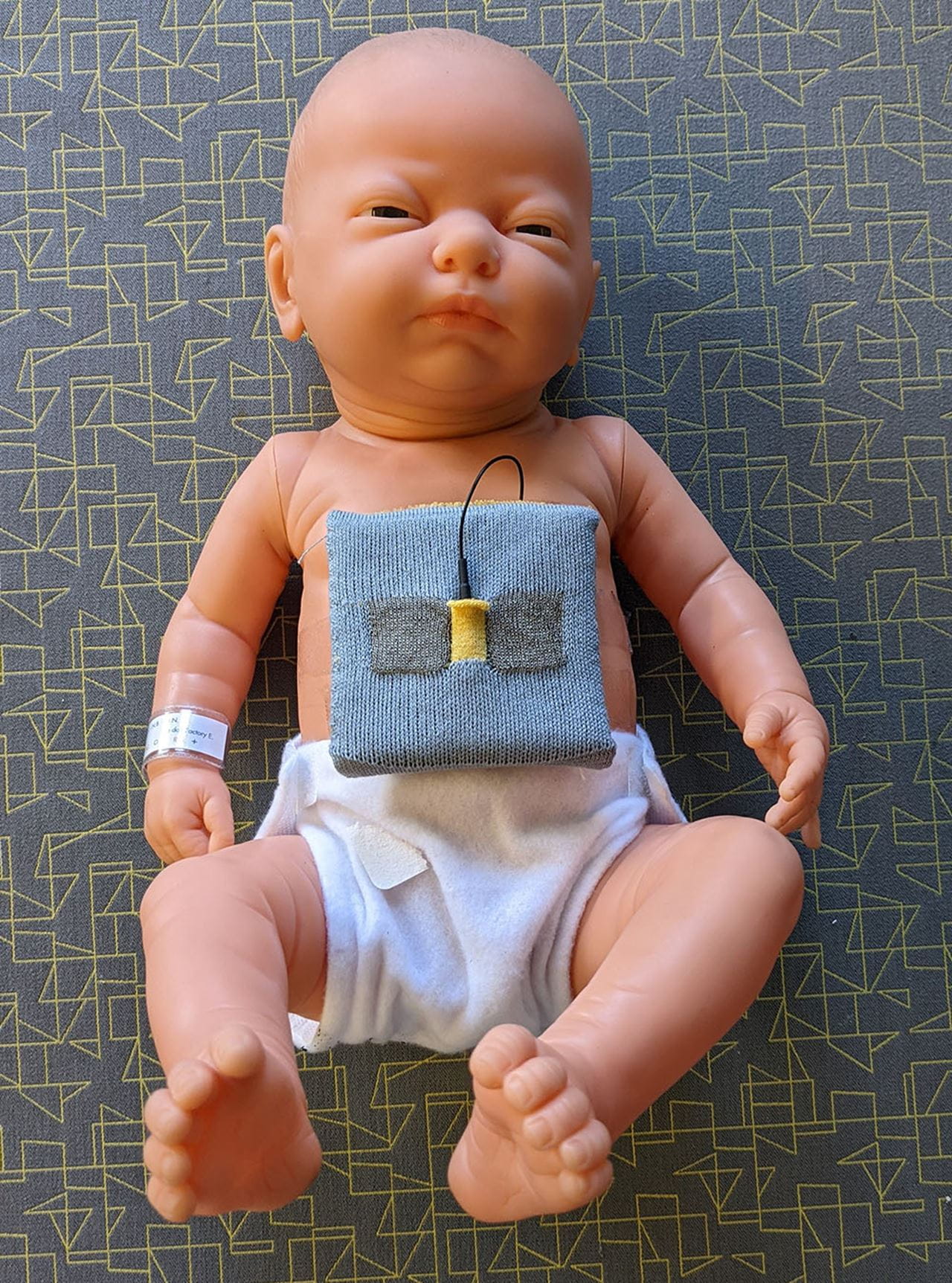
O’Keeffe completed and presented his research from the lab as part of the STAR (Students Tackling Advanced Research) Scholars Program in the Pennoni Honors College. It’s a highly selective program through which first-year students complete a paid, faculty-mentored undergraduate research scholarship, or creative experience during the summer after their first year. O’Keeffe developed firmware to interpret raw data from several medical sensors on a circuit board called the Belly Band, which collects and transmits biometric over Bluetooth.
“I had a lot of practical experience in the lab and with STAR,” said O’Keeffe, who attributes both with giving him a leg up when interviewing for his first co-op.
He was hired as an embedded software and Field-Programmable Gate Arrays (FPGAs) engineer at Woodward McCoach, an electronic design and software development firm. His second co-op was as a software developer at Susquehanna International Group, where he explored high-performance computing at the global quantitative trading firm. He received offers from both companies to return for his third co-op but ultimately chose to return to Woodward McCoach as an FPGA engineer, in part because of its mentorship program and the opportunity to gain more experience with FPGAs.
“In my opinion, Woodward McCoach is one of the best computer engineering co-op employers, just because of the level of practical experience you get there. It’s very hands-on,” he said, adding that he’s encouraged students he’s mentored to work there too.
In between his first and second co-ops, and after completing his research at the Drexel Wireless Systems Lab, O’Keeffe took classes and an independent study with Nagarajan Kandasamy, PhD, department head and professor of electrical and computer engineering in the School of Engineering in the Nick Howley College of Engineering and Computing (his teaching assistant was a PhD alumnus now working at Nvidia). After his second co-op, he started research and a different independent study with Anup Das, PhD, associate professor of electrical and computer engineering and associate department head for graduate affairs and research in the College of Engineering; Das became O’Keeffe’s thesis advisor for his master’s degree.

O’Keeffe wrote about these experiences as part of the personal essay submission requirement for the Astronaut Scholarship application; he also submitted letters of recommendations from Das and his co-op employer.
He learned he was named Drexel’s Astronaut Scholar in May 2025 and was recognized at a special on-campus ceremony the following February — about a year after he attended that information session for the Astronaut Scholarship. Ferguson attended the February ceremony and co-sponsored the Drexel University Astronaut Scholarship along with Richards and others. The event also presented information about the scholarship and program for the next Drexel cohort to apply.
“Being an Astronaut Scholar makes the path to space seem a lot more possible because you get to meet so many people involved in the space program,” he said. “It’s changed my perspective about what doors are open going forward.”
O’Keeffe has enjoyed meeting and learning from his fellow 2025 recipients, about 70 students from different backgrounds and disciplines. Already, he has presented his research at the foundation’s Innovators Gala and Symposium in Houston, Texas, during August 2025 and regularly meets with his mentor. He also attended a virtual livestream of the Artemis II launch in April with members of the program; one of the Artemis II astronauts, Christina Koch, is the first Astronaut Scholar to be selected as a NASA astronaut. Outside of events, the Astronaut Scholars maintain a group chat to swap tips and advice for grant and PhD applications, share what it was like finding labs and faculty mentors, and offer different perspectives and support.
“That continued community is probably one of the most valuable things from this experience,” O’Keeffe said. “They’re all very successful people, so it’s very motivating and inspiring to continue to do better.”